Pharmaceutical promotion and transfer-pricing comparability principles limited disallowances, while uncorroborated search allegations and unsupported ...
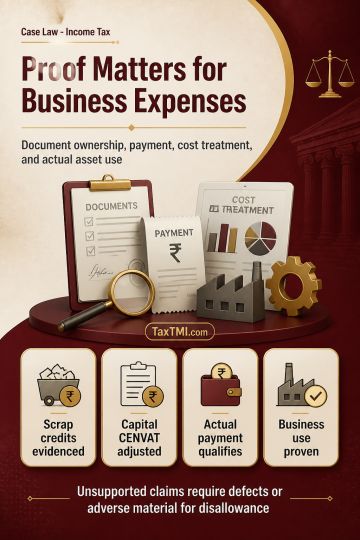
Business expenditure substantiation supports scrap credits, statutory payments and expense claims, while depreciation requires proof of actual busines...
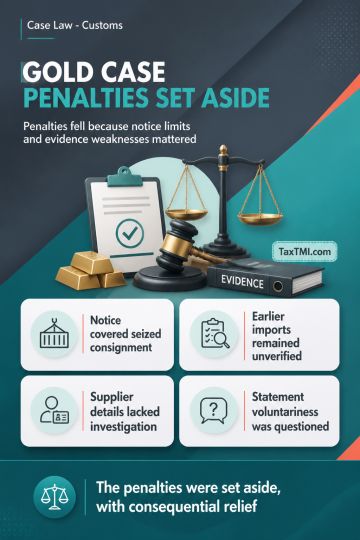
The appellant challenged the demand of customs duty and penalties imposed on the grounds of alleged clandestine clearance of short found goods from their factory premises. The Tribunal held that the Revenue failed to provide corroborative evidence or conduct proper investigation from the transporter and buyer to establish the clandestine removal. Relying solely on the statement of the appellant's director without cross-examination is not sustainable. The burden of proof lies on the Revenue to establish their case beyond doubt with sufficient evidence. As the Revenue failed to discharge this burden effectively, the demand was set aside, and the appeal was allowed.
The appellant challenged the demand of customs duty and penalties imposed on the grounds of alleged clandestine clearance of short found goods from their factory premises. The Tribunal held that the Revenue failed to provide corroborative evidence or conduct proper investigation from the transporter and buyer to establish the clandestine removal. Relying solely on the statement of the appellant's director without cross-examination is not sustainable. The burden of proof lies on the Revenue to establish their case beyond doubt with sufficient evidence. As the Revenue failed to discharge this burden effectively, the demand was set aside, and the appeal was allowed.
Note: It is a system-generated summary and is for quick reference only.
 TaxTMI
 of 4805










 Join Channel


 TaxTMI
