Anonymous donation classification fails where charitable trusts maintain undisputed donor identity records and evidence corpus contributions' intended...
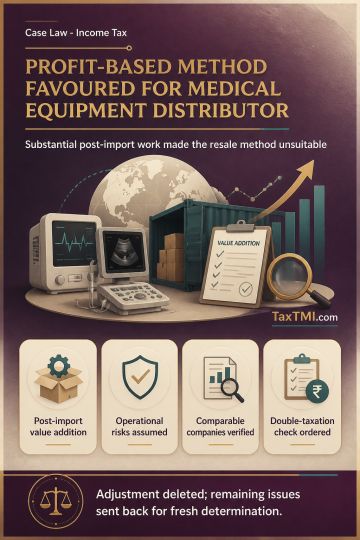
Transfer pricing method selection favours TNMM where medical-equipment distribution involves substantial post-import value addition and operational ri...
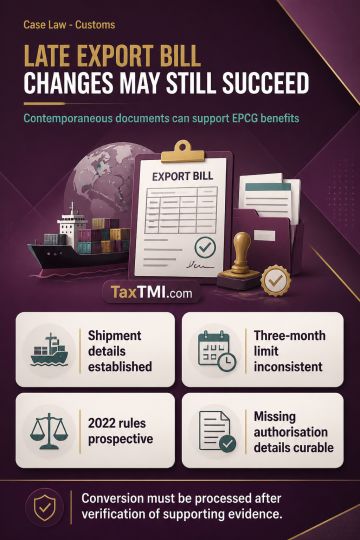
Post-export shipping bill conversion remains available where contemporaneous evidence supports EPCG benefits despite curable procedural omissions and ...
The appellant challenged the demand of customs duty and penalties imposed on the grounds of alleged clandestine clearance of short found goods from their factory premises. The Tribunal held that the Revenue failed to provide corroborative evidence or conduct proper investigation from the transporter and buyer to establish the clandestine removal. Relying solely on the statement of the appellant's director without cross-examination is not sustainable. The burden of proof lies on the Revenue to establish their case beyond doubt with sufficient evidence. As the Revenue failed to discharge this burden effectively, the demand was set aside, and the appeal was allowed.
The appellant challenged the demand of customs duty and penalties imposed on the grounds of alleged clandestine clearance of short found goods from their factory premises. The Tribunal held that the Revenue failed to provide corroborative evidence or conduct proper investigation from the transporter and buyer to establish the clandestine removal. Relying solely on the statement of the appellant's director without cross-examination is not sustainable. The burden of proof lies on the Revenue to establish their case beyond doubt with sufficient evidence. As the Revenue failed to discharge this burden effectively, the demand was set aside, and the appeal was allowed.
Note: It is a system-generated summary and is for quick reference only.
 TaxTMI
 of 4800












 Join Channel


 TaxTMI
