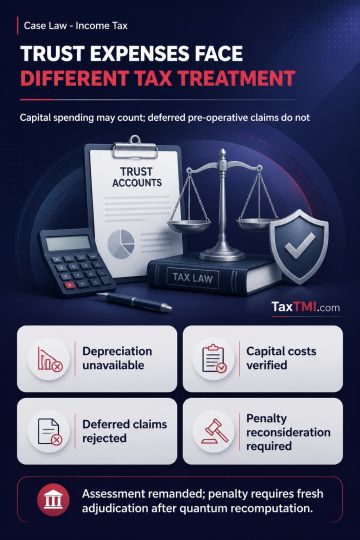
Charitable trust income application permits verified capital expenditure but rejects deferred pre-operative claims and requires reconsideration of con...
Reinsurance premium deductions require established regulatory breaches, while independently acquired software qualifies within the computer depreciati...
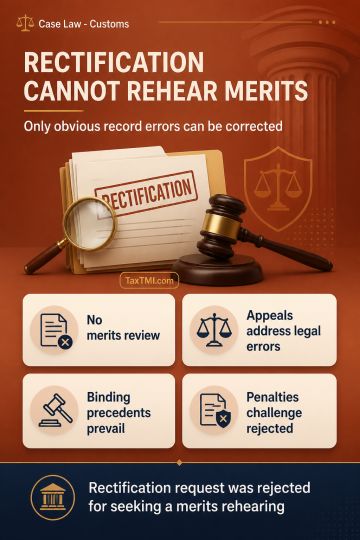
Rectification of mistake remains limited to self-evident record errors, preventing merits review through miscellaneous applications and preserving fin...
Tender creditworthiness conditions may extend to de facto Promoter Directors, with post-participation challenges generally barred absent arbitrariness...
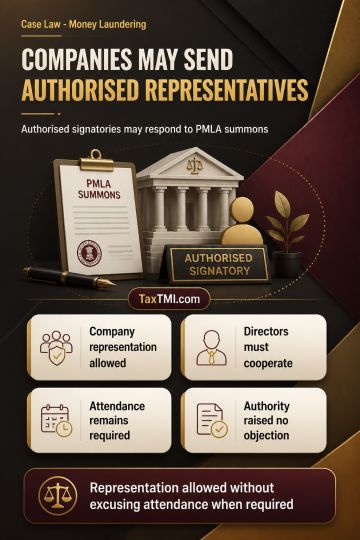
Corporate representation in PMLA summons proceedings permitted through an authorised signatory, subject to directors' continuing cooperation and atten...
The petition alleges oppression and mismanagement by the company's majority shareholders against the petitioners, who were removed as directors through an Extraordinary General Meeting (EGM). The key points are: The burden is on the petitioners to prove oppressive conduct u/s 242. The EGM notice for removal complied with legal requirements, and the meeting was validly held. The majority shareholders' decision to remove directors cannot be judicially scrutinized as it is part of corporate democracy. Mere inconvenience caused by the legal process doesn't negate its validity. Oppression requires continuous wrongful acts by the majority against the minority, not just lack of confidence. The petitioners failed to prove mismanagement or likelihood of future prejudicial conduct due to the change in management. Consequently, the petition was dismissed for lack of evidence of oppression or mismanagement.
The petition alleges oppression and mismanagement by the company's majority shareholders against the petitioners, who were removed as directors through an Extraordinary General Meeting (EGM). The key points are: The burden is on the petitioners to prove oppressive conduct u/s 242. The EGM notice for removal complied with legal requirements, and the meeting was validly held. The majority shareholders' decision to remove directors cannot be judicially scrutinized as it is part of corporate democracy. Mere inconvenience caused by the legal process doesn't negate its validity. Oppression requires continuous wrongful acts by the majority against the minority, not just lack of confidence. The petitioners failed to prove mismanagement or likelihood of future prejudicial conduct due to the change in management. Consequently, the petition was dismissed for lack of evidence of oppression or mismanagement.
Note: It is a system-generated summary and is for quick reference only.
 TaxTMI
 of 4805


















 Join Channel


 TaxTMI
