Interactive touchscreen panels with integrated computing functions fall under automatic data-processing machines rather than display monitors for cust...
Ex parte injunction service requirements were substantially met, while civil recovery and SFIO investigation into provident fund defalcation continued...
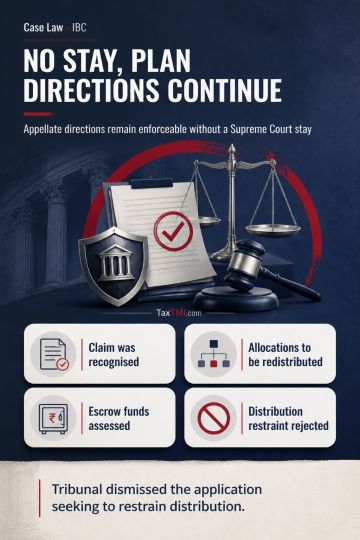
Enforcement of resolution-plan directions continues without a Supreme Court stay, preventing suspension of redistribution and escrowed-fund distributi...
Third-party ownership claims over attached property require Special Court adjudication where purchasers lack registered sale deeds and bona fides rema...
Pure-agent reimbursements in clearing and forwarding services are excluded from taxable value when qualifying third-party payments are properly record...
Customs relief for Strait of Hormuz maritime disruptions remains available, with existing conditions continuing unchanged through the extended validit...
The petition alleges oppression and mismanagement by the company's majority shareholders against the petitioners, who were removed as directors through an Extraordinary General Meeting (EGM). The key points are: The burden is on the petitioners to prove oppressive conduct u/s 242. The EGM notice for removal complied with legal requirements, and the meeting was validly held. The majority shareholders' decision to remove directors cannot be judicially scrutinized as it is part of corporate democracy. Mere inconvenience caused by the legal process doesn't negate its validity. Oppression requires continuous wrongful acts by the majority against the minority, not just lack of confidence. The petitioners failed to prove mismanagement or likelihood of future prejudicial conduct due to the change in management. Consequently, the petition was dismissed for lack of evidence of oppression or mismanagement.
The petition alleges oppression and mismanagement by the company's majority shareholders against the petitioners, who were removed as directors through an Extraordinary General Meeting (EGM). The key points are: The burden is on the petitioners to prove oppressive conduct u/s 242. The EGM notice for removal complied with legal requirements, and the meeting was validly held. The majority shareholders' decision to remove directors cannot be judicially scrutinized as it is part of corporate democracy. Mere inconvenience caused by the legal process doesn't negate its validity. Oppression requires continuous wrongful acts by the majority against the minority, not just lack of confidence. The petitioners failed to prove mismanagement or likelihood of future prejudicial conduct due to the change in management. Consequently, the petition was dismissed for lack of evidence of oppression or mismanagement.
Note: It is a system-generated summary and is for quick reference only.
 TaxTMI
 of 4803



















 Join Channel


 TaxTMI