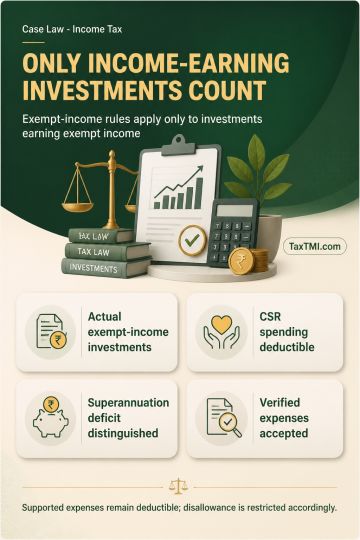
Exempt-income expenditure disallowance is confined to investments that actually generated exempt income, while supported business expenses remain dedu...
Objective characteristics and principal use govern mining-tyre classification, while fresh advance ruling applications may rely on additional technica...
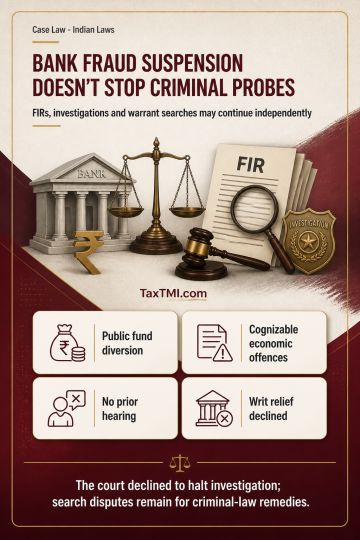
Administrative fraud classification suspension does not halt independent criminal investigation or warrant-based searches into alleged economic offenc...
The petition filed u/s 213(b) of the Companies Act, 2013 alleged that the business of the respondent companies was being conducted with intent to defraud creditors, members, or others, or for fraudulent or unlawful purposes, or oppressively. However, the averments were not supported by material documents to substantiate such allegations. The documents filed failed to corroborate the allegations of fraudulent or unlawful conduct by the respondent company. The petitioner failed to make a prima facie case u/s 213(b). Consequently, the tribunal dismissed the petition in limine for lack of sufficient evidence to warrant appointing an inspector to investigate the respondent companies' affairs.
The petition filed u/s 213(b) of the Companies Act, 2013 alleged that the business of the respondent companies was being conducted with intent to defraud creditors, members, or others, or for fraudulent or unlawful purposes, or oppressively. However, the averments were not supported by material documents to substantiate such allegations. The documents filed failed to corroborate the allegations of fraudulent or unlawful conduct by the respondent company. The petitioner failed to make a prima facie case u/s 213(b). Consequently, the tribunal dismissed the petition in limine for lack of sufficient evidence to warrant appointing an inspector to investigate the respondent companies' affairs.
Note: It is a system-generated summary and is for quick reference only.
 TaxTMI
 of 4805


















 Join Channel


 TaxTMI