Online bond platforms may offer overseas-regulated products and tax-specific bonds subject to disclosures, compliance safeguards and revised complianc...
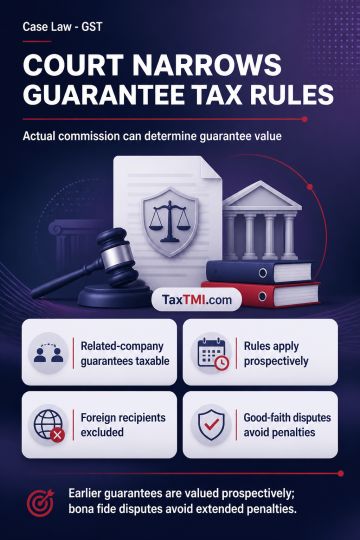
Corporate guarantee valuation permits actual ascertainable commission while barring retroactive application and extended-period penalties for bona fid...
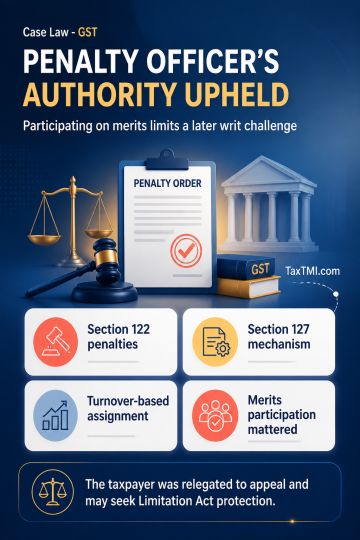
Proper-officer jurisdiction under UPGST penalty provisions upheld; participation on merits prevents bypassing the statutory appellate remedy through w...
Transitioned CENVAT credit may validly satisfy mandatory pre-deposit requirements for legacy service tax appeals through Electronic Credit Ledger debi...
Building-plan sanction charges require statutory authority; unauthorised fees and GST were quashed, while labour cess must follow prescribed collectio...
Pure-agent exclusion fails where hotel booking facilitators receive third-party services themselves, making entire customer consideration taxable as r...
Mintainability of a company petition u/s 399 of the Companies Act, 1956, focusing on the pre-conditions envisaged under sub-sections (1) and (3). It examines whether the amendments made to the Articles of Association and declarations filed before the Registrar of Companies were prejudicial to the interests of the public, the company, and the petitioner, amounting to oppression and mismanagement. The Tribunal held that the petitioners failed to satisfy the condition precedent under sub-section (3) of Section 399 by not obtaining written consent from the rest of the members before filing the petition. Additionally, the allegations of illegal transfer of shares were barred by limitation, as the annual returns were available on the MCA website, constituting public notice. Ultimately, the Tribunal concluded that none of the allegations survived the law of limitation or constituted acts of oppression and mismanagement, leading to the dismissal of the petition as misconceived.
Mintainability of a company petition u/s 399 of the Companies Act, 1956, focusing on the pre-conditions envisaged under sub-sections (1) and (3). It examines whether the amendments made to the Articles of Association and declarations filed before the Registrar of Companies were prejudicial to the interests of the public, the company, and the petitioner, amounting to oppression and mismanagement. The Tribunal held that the petitioners failed to satisfy the condition precedent under sub-section (3) of Section 399 by not obtaining written consent from the rest of the members before filing the petition. Additionally, the allegations of illegal transfer of shares were barred by limitation, as the annual returns were available on the MCA website, constituting public notice. Ultimately, the Tribunal concluded that none of the allegations survived the law of limitation or constituted acts of oppression and mismanagement, leading to the dismissal of the petition as misconceived.
Note: It is a system-generated summary and is for quick reference only.
 TaxTMI
 of 4800












 Join Channel


 TaxTMI