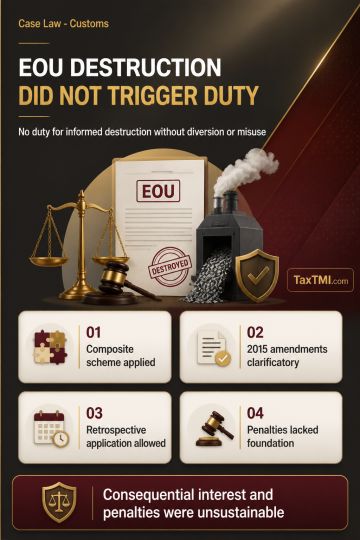
Defined public benefit can retain charitable character; registration renewal requires examining genuine activities and legal compliance, not surplus a...
Capital reduction is distinct from share buy-back, preventing buy-back tax; restructuring interest and related business deductions also survive scruti...
Transfer pricing and tax deductions upheld on established principles, while employee contributions and warranty provisions returned for fresh examinat...
Captive transfer pricing relies on industrial consumer tariffs, while genuine quotations can benchmark effluent treatment transfers under the Other Me...
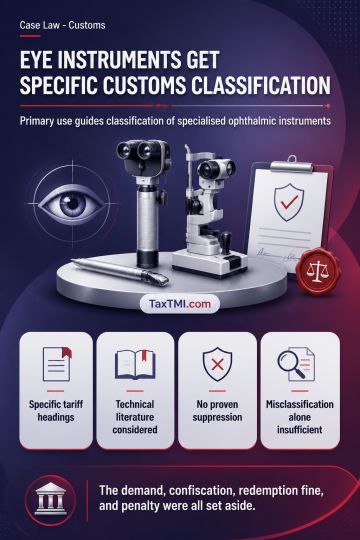
Specific tariff classification for ophthalmic instruments and extended limitation principles determine the treatment of duty demands, confiscation, an...
Mintainability of a company petition u/s 399 of the Companies Act, 1956, focusing on the pre-conditions envisaged under sub-sections (1) and (3). It examines whether the amendments made to the Articles of Association and declarations filed before the Registrar of Companies were prejudicial to the interests of the public, the company, and the petitioner, amounting to oppression and mismanagement. The Tribunal held that the petitioners failed to satisfy the condition precedent under sub-section (3) of Section 399 by not obtaining written consent from the rest of the members before filing the petition. Additionally, the allegations of illegal transfer of shares were barred by limitation, as the annual returns were available on the MCA website, constituting public notice. Ultimately, the Tribunal concluded that none of the allegations survived the law of limitation or constituted acts of oppression and mismanagement, leading to the dismissal of the petition as misconceived.
Mintainability of a company petition u/s 399 of the Companies Act, 1956, focusing on the pre-conditions envisaged under sub-sections (1) and (3). It examines whether the amendments made to the Articles of Association and declarations filed before the Registrar of Companies were prejudicial to the interests of the public, the company, and the petitioner, amounting to oppression and mismanagement. The Tribunal held that the petitioners failed to satisfy the condition precedent under sub-section (3) of Section 399 by not obtaining written consent from the rest of the members before filing the petition. Additionally, the allegations of illegal transfer of shares were barred by limitation, as the annual returns were available on the MCA website, constituting public notice. Ultimately, the Tribunal concluded that none of the allegations survived the law of limitation or constituted acts of oppression and mismanagement, leading to the dismissal of the petition as misconceived.
Note: It is a system-generated summary and is for quick reference only.
 TaxTMI
 of 4805




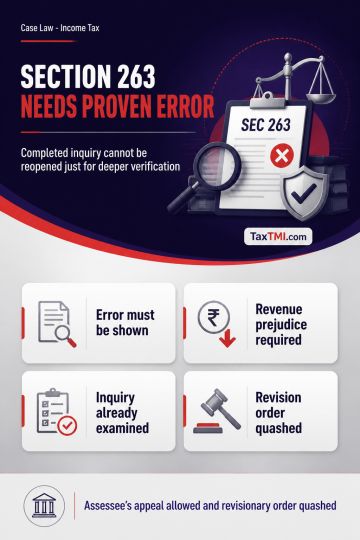
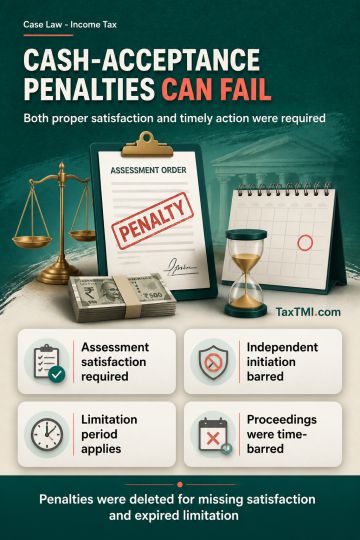
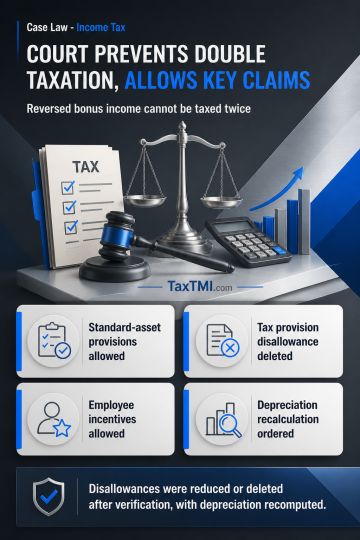













 Join Channel


 TaxTMI