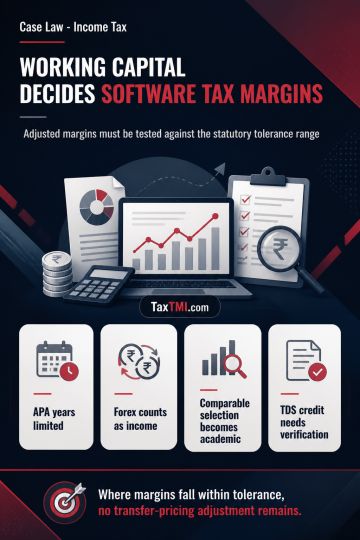
Working-capital adjustment determines whether software-services transfer-pricing margins fall within the statutory tolerance range, eliminating any ad...
Permanent establishment deductions upheld for expatriate salaries, direct costs and trading losses, while head-office costs require fresh classificati...
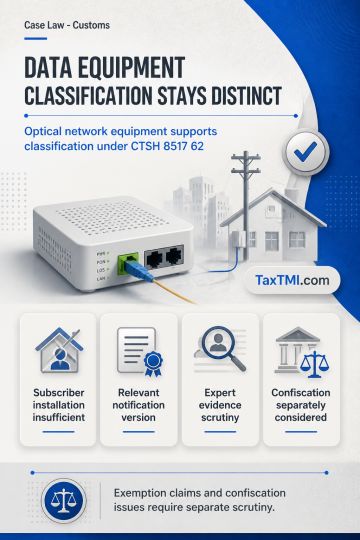
Data transmission equipment classification under CTSH 8517 62 remains distinct from residual classification, with exemption evidence requiring scrutin...
The summary focuses on the irregular availment of the Composition scheme and various demands raised by the adjudicating authority, along with the CESTAT's findings. It covers short payment of tax due to discharge at an incorrect rate, improper application of accrual/realization basis, discrepancies in GL codes and returns, non-maintenance of separate records for dutiable and exempt services, and irregular reversal of Cenvat credit for bad debts written off. The CESTAT examined each issue, relying on relevant legal provisions and judicial precedents. It set aside several demands, upheld a minor demand, and held that extended period invocation and penalties were not warranted due to lack of suppression of facts with intent to evade tax. The appellant's compliance with record-keeping requirements and regular filing of returns were also considered.
The summary focuses on the irregular availment of the Composition scheme and various demands raised by the adjudicating authority, along with the CESTAT's findings. It covers short payment of tax due to discharge at an incorrect rate, improper application of accrual/realization basis, discrepancies in GL codes and returns, non-maintenance of separate records for dutiable and exempt services, and irregular reversal of Cenvat credit for bad debts written off. The CESTAT examined each issue, relying on relevant legal provisions and judicial precedents. It set aside several demands, upheld a minor demand, and held that extended period invocation and penalties were not warranted due to lack of suppression of facts with intent to evade tax. The appellant's compliance with record-keeping requirements and regular filing of returns were also considered.
Note: It is a system-generated summary and is for quick reference only.
 TaxTMI
 of 4805













 Join Channel


 TaxTMI