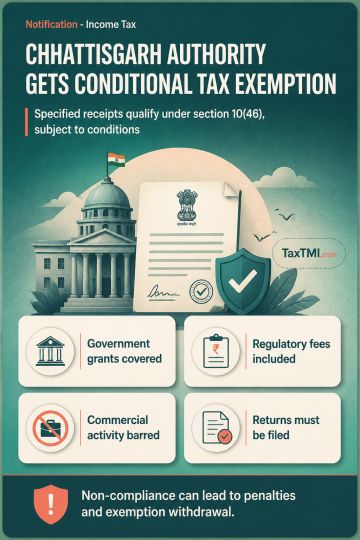
Specified regulatory authority income receives conditional tax exemption, subject to non-commercial activity, unchanged income character, and return f...
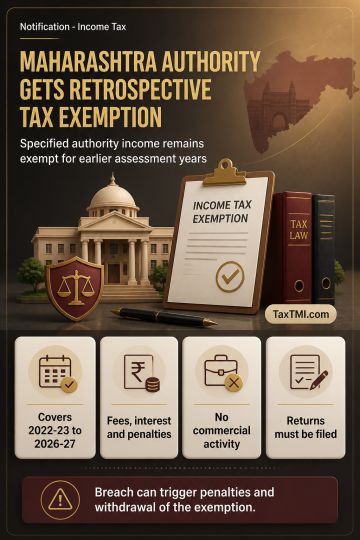
Tax exemption for regulatory authority income applies retrospectively, subject to non-commercial activity, unchanged income sources, and return-filing...
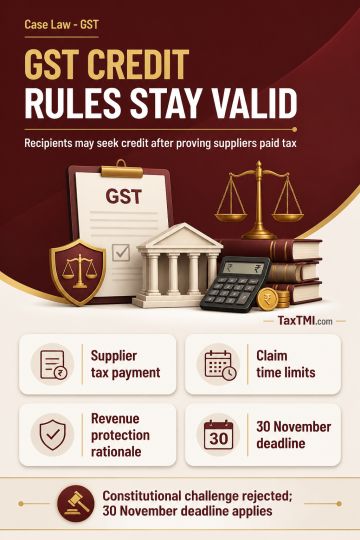
Input tax credit conditions remain constitutionally valid, with eligible recipient claims considered under GST circulars and retrospective filing dead...
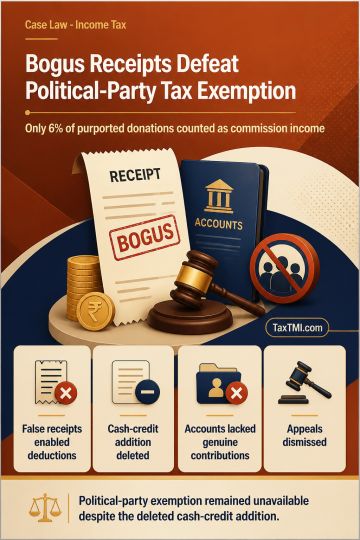
Bogus donation receipts justified commission income assessment and defeated political-party tax exemption for inaccurate accounts and reporting failur...
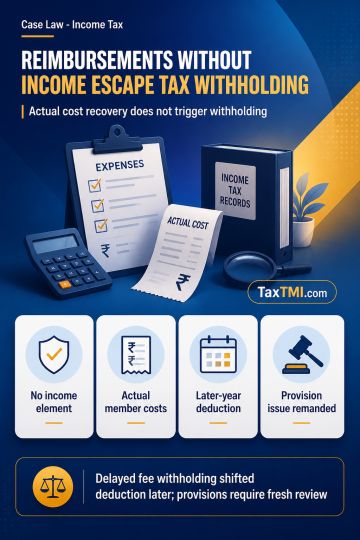
Pure reimbursement without income element escapes tax withholding, while delayed withholding and unsupported provisions face deferred or renewed scrut...
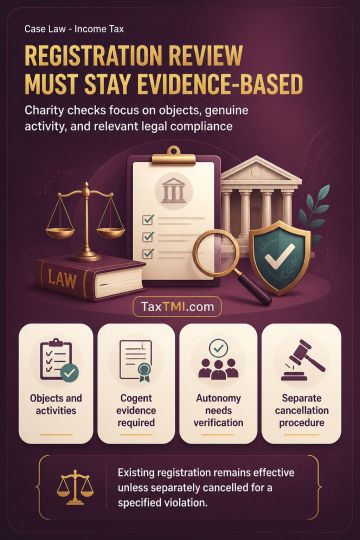
Public benefit requirement defeats charitable registration where residents' association services are reciprocal, member-only facilities governed by mu...
The summary focuses on the irregular availment of the Composition scheme and various demands raised by the adjudicating authority, along with the CESTAT's findings. It covers short payment of tax due to discharge at an incorrect rate, improper application of accrual/realization basis, discrepancies in GL codes and returns, non-maintenance of separate records for dutiable and exempt services, and irregular reversal of Cenvat credit for bad debts written off. The CESTAT examined each issue, relying on relevant legal provisions and judicial precedents. It set aside several demands, upheld a minor demand, and held that extended period invocation and penalties were not warranted due to lack of suppression of facts with intent to evade tax. The appellant's compliance with record-keeping requirements and regular filing of returns were also considered.
The summary focuses on the irregular availment of the Composition scheme and various demands raised by the adjudicating authority, along with the CESTAT's findings. It covers short payment of tax due to discharge at an incorrect rate, improper application of accrual/realization basis, discrepancies in GL codes and returns, non-maintenance of separate records for dutiable and exempt services, and irregular reversal of Cenvat credit for bad debts written off. The CESTAT examined each issue, relying on relevant legal provisions and judicial precedents. It set aside several demands, upheld a minor demand, and held that extended period invocation and penalties were not warranted due to lack of suppression of facts with intent to evade tax. The appellant's compliance with record-keeping requirements and regular filing of returns were also considered.
Note: It is a system-generated summary and is for quick reference only.
 TaxTMI
 of 4805




 Join Channel


 TaxTMI