Cooperative society deposits, member-interest TDS exemption and credit-facility deduction claims require verification through records and supporting e...
Customs jurisdiction over EPCG condition breaches survives export-obligation discharge certificates, requiring alleged fraud and misdeclaration to be ...
Contractual tolerance requires consideration; breach recoveries, qualifying public infrastructure services and road works escape service tax liability...
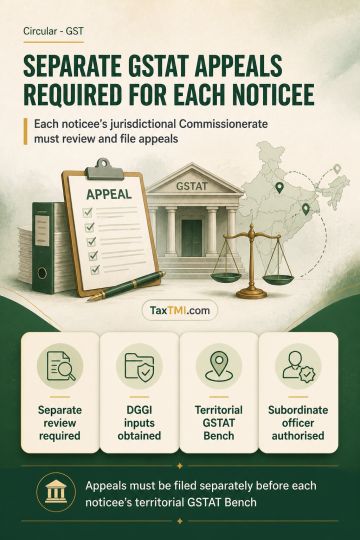
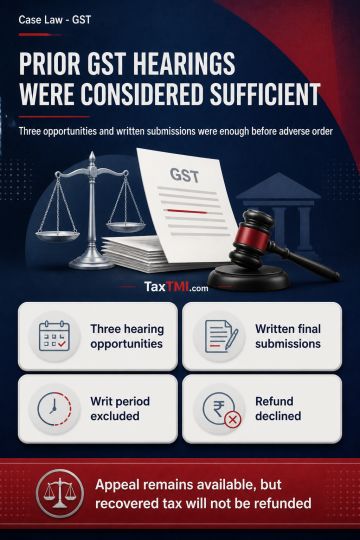
Personal hearing requirements in GST adjudication were satisfied by prior opportunities and written submissions; appellate limitation received writ-pe...
The Appellate Court exceeded its jurisdiction u/s 37 of the Arbitration and Conciliation Act, 1996, by setting aside an arbitral award that had already been confirmed u/s 34. The Supreme Court reiterated that courts should not interfere with arbitral awards lightly, and mere possibility of an alternative interpretation does not warrant reversal. The scope of intervention is confined to grounds specified u/s 34, and the appellate power u/s 37 is limited to examining if the court u/s 34 acted within its limits. The Appellate Court cannot reappraise evidence on merits as an ordinary court of appeal. Since the arbitral award was reasonable, based on evidence, and not against public policy or law, it was rightly upheld u/s 34. The Appellate Court erred by setting it aside without finding any illegality u/s 34. Merely having a better view is no ground for interference. The Supreme Court set aside the Appellate Court's judgment and restored the arbitral award.
The Appellate Court exceeded its jurisdiction u/s 37 of the Arbitration and Conciliation Act, 1996, by setting aside an arbitral award that had already been confirmed u/s 34. The Supreme Court reiterated that courts should not interfere with arbitral awards lightly, and mere possibility of an alternative interpretation does not warrant reversal. The scope of intervention is confined to grounds specified u/s 34, and the appellate power u/s 37 is limited to examining if the court u/s 34 acted within its limits. The Appellate Court cannot reappraise evidence on merits as an ordinary court of appeal. Since the arbitral award was reasonable, based on evidence, and not against public policy or law, it was rightly upheld u/s 34. The Appellate Court erred by setting it aside without finding any illegality u/s 34. Merely having a better view is no ground for interference. The Supreme Court set aside the Appellate Court's judgment and restored the arbitral award.
Note: It is a system-generated summary and is for quick reference only.
 TaxTMI
 of 4805














 Join Channel


 TaxTMI