Statutory transfer formalities invalidated alleged share and property transfers, while retrospective record manipulation constituted oppression and mi...
Provisional attachment of laundered funds and equivalent-value property sustained, with statutory protection limited to pension, gratuity and providen...
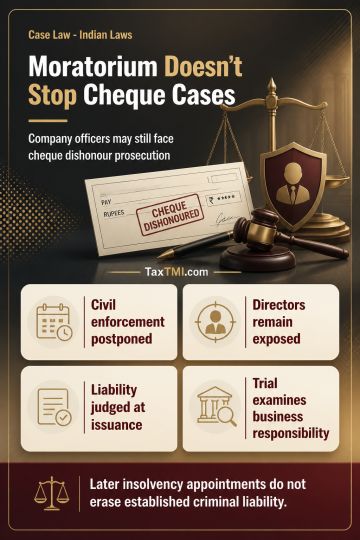
Insolvency moratorium does not shield company officers from cheque dishonour prosecution for liability arising before corporate insolvency proceedings...
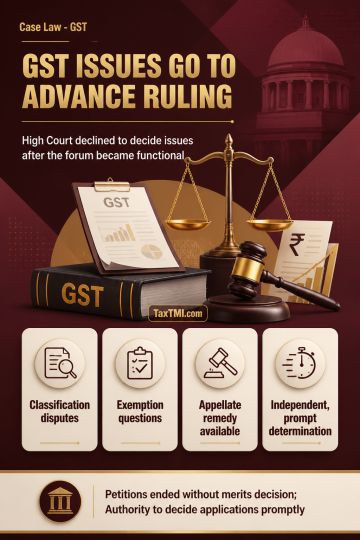
Advance-ruling mechanism governs pending GST classification, exemption and taxability disputes, limiting writ review once the specialised forum functi...
Page of 4788
Press 'Enter' after typing page number.
581 to 600 of 95752 Results
❮
❯
❯❯
0 / 200
Expand Note
Add to Folder
No Folders have been created
+
Are you sure you want to delete "My most important" ?
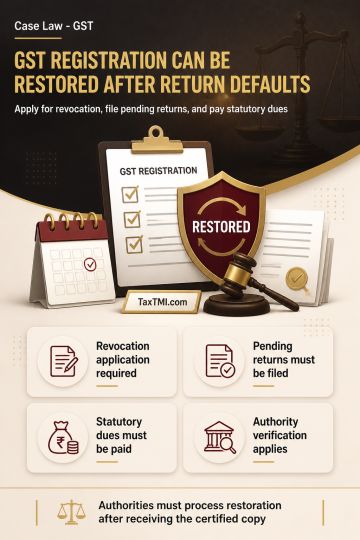
The petitioner, a contractor enrolled under the GST Act, 2017, had his GSTN registration canceled due to non-filing of returns for six months. Despite claiming to have handed over documents to an accountant, the petitioner failed to file an appeal within the statutory 90-day period due to being unaware of the proceedings. The court held that the Bombay High Court had previously ruled that the limitation period should not be an issue in registration cancellation cases as it does not adversely affect the state's rights. The GST Act aims to promote trade, and denying registration affects the petitioner's livelihood under Article 21. Small entrepreneurs may struggle with technology, so the GST department should amend provisions, convey notices via SMS and regional languages, and relax rules to avoid stifling small businesses. The writ petitions were disposed of.
The petitioner, a contractor enrolled under the GST Act, 2017, had his GSTN registration canceled due to non-filing of returns for six months. Despite claiming to have handed over documents to an accountant, the petitioner failed to file an appeal within the statutory 90-day period due to being unaware of the proceedings. The court held that the Bombay High Court had previously ruled that the limitation period should not be an issue in registration cancellation cases as it does not adversely affect the state's rights. The GST Act aims to promote trade, and denying registration affects the petitioner's livelihood under Article 21. Small entrepreneurs may struggle with technology, so the GST department should amend provisions, convey notices via SMS and regional languages, and relax rules to avoid stifling small businesses. The writ petitions were disposed of.
Note: It is a system-generated summary and is for quick reference only.
 TaxTMI
 of 4788











 Join Channel


 TaxTMI