Mutual fund maturity rules require proper rollover, redemption, disclosure, and due diligence; investor gains cannot excuse regulatory breaches or pen...
Threshold exemption excludes exempt services, while stamp-paper purchases avoid reverse charge; consequential service tax penalties were also set asid...
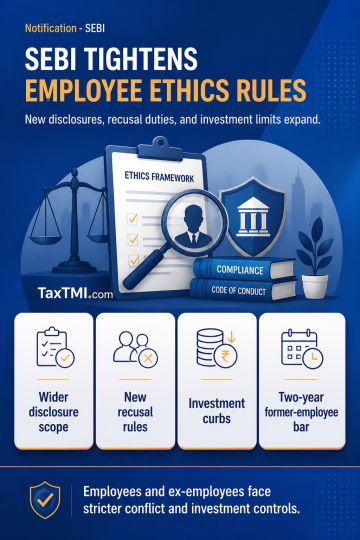
Employee conflict disclosures and investment restrictions expand with new recusal duties, post-employment limits, and compliance reporting requirement...
The High Court quashed the reassessment proceedings initiated by the Assessing Officer u/s 148 of the Income Tax Act, holding it to be a case of "change of opinion" and not a valid reassessment. The assessee had acquired equity shares of a closely held company at below fair market value under the 'Right Issue'. Initially, the Principal Commissioner of Income Tax (PCIT) had dropped the proceedings u/s 263 after considering the assessee's submissions. However, the Assessing Officer subsequently issued a notice u/s 148A(b) to reopen the assessment on the same issue. The Court held that reassessment can only be initiated on grounds not previously considered during the original assessment proceedings. Since the PCIT had already examined the issue and decided in favor of the assessee, the Assessing Officer could not reopen the assessment merely on a "change of opinion" based on the same facts. The approval granted by the higher authority (PCCIT) did not confer legitimacy to the reassessment action, as it violated the settled principles governing valid reassessment. Consequently, the reassessment notice, order, and consequential proceedings were quashed.
The High Court quashed the reassessment proceedings initiated by the Assessing Officer u/s 148 of the Income Tax Act, holding it to be a case of "change of opinion" and not a valid reassessment. The assessee had acquired equity shares of a closely held company at below fair market value under the 'Right Issue'. Initially, the Principal Commissioner of Income Tax (PCIT) had dropped the proceedings u/s 263 after considering the assessee's submissions. However, the Assessing Officer subsequently issued a notice u/s 148A(b) to reopen the assessment on the same issue. The Court held that reassessment can only be initiated on grounds not previously considered during the original assessment proceedings. Since the PCIT had already examined the issue and decided in favor of the assessee, the Assessing Officer could not reopen the assessment merely on a "change of opinion" based on the same facts. The approval granted by the higher authority (PCCIT) did not confer legitimacy to the reassessment action, as it violated the settled principles governing valid reassessment. Consequently, the reassessment notice, order, and consequential proceedings were quashed.
Note: It is a system-generated summary and is for quick reference only.
 TaxTMI
 of 4796














 Join Channel


 TaxTMI
