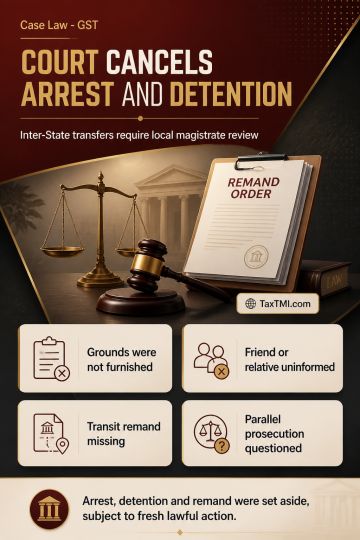
Arrest safeguards and transit remand requirements invalidated detention following inter-State transfer without communicated grounds or magistrate auth...
Arrest safeguards require disclosed grounds, relative intimation and transit remand, while duplicate prosecution under the CGST framework is unsustain...
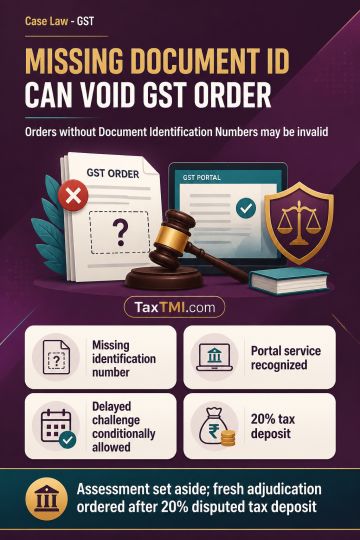
Document Identification Number defects can invalidate GST assessments, with delayed challenges entertained conditionally where patent irregularities e...
Windmill commissioning evidence supported higher depreciation where grid connection and electricity generation proved operational use before the relev...
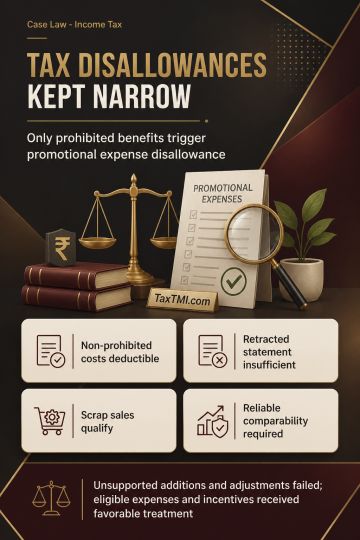
Pharmaceutical promotion and transfer-pricing comparability principles limited disallowances, while uncorroborated search allegations and unsupported ...
Business expenditure substantiation supports scrap credits, statutory payments and expense claims, while depreciation requires proof of actual busines...
The key points are regarding the penalty imposed u/s 271D read with Section 269SS, and the issue of whether the penalty orders were time-barred. The Assessing Officer made a recommendation for initiating penalty on 08/12/2017. According to Section 275(1)(c), the first condition is that the financial year in which the penalty proceedings were initiated should have expired on 31/03/2018. The second condition is that six months from the end of the month in which the action for penalty imposition was initiated should have expired on 30/06/2018. However, the Additional Commissioner of Income Tax (Appeals) initiated the penalty on 07/07/2018, despite the recommendation being made on 08/12/2017. Therefore, the penalty orders are barred by the limitation period prescribed u/s 275(1)(c) of the Income Tax Act. Consequently, the orders imposing penalty were deleted, and the decision was against the revenue authorities.
The key points are regarding the penalty imposed u/s 271D read with Section 269SS, and the issue of whether the penalty orders were time-barred. The Assessing Officer made a recommendation for initiating penalty on 08/12/2017. According to Section 275(1)(c), the first condition is that the financial year in which the penalty proceedings were initiated should have expired on 31/03/2018. The second condition is that six months from the end of the month in which the action for penalty imposition was initiated should have expired on 30/06/2018. However, the Additional Commissioner of Income Tax (Appeals) initiated the penalty on 07/07/2018, despite the recommendation being made on 08/12/2017. Therefore, the penalty orders are barred by the limitation period prescribed u/s 275(1)(c) of the Income Tax Act. Consequently, the orders imposing penalty were deleted, and the decision was against the revenue authorities.
Note: It is a system-generated summary and is for quick reference only.
 TaxTMI
 of 4792













 Join Channel


 TaxTMI