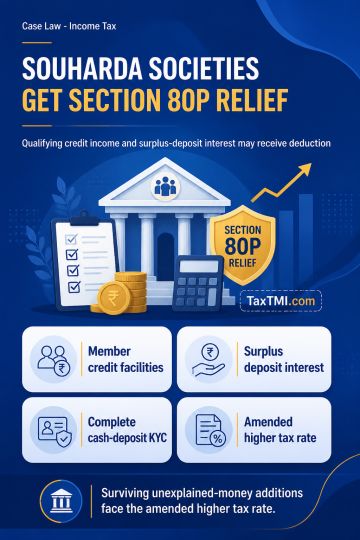
Section 80P deduction covers Souharda credit societies, including qualifying surplus-deposit interest, subject to member KYC verification for cash dep...
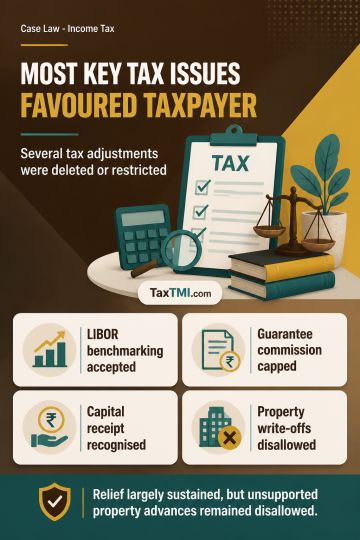
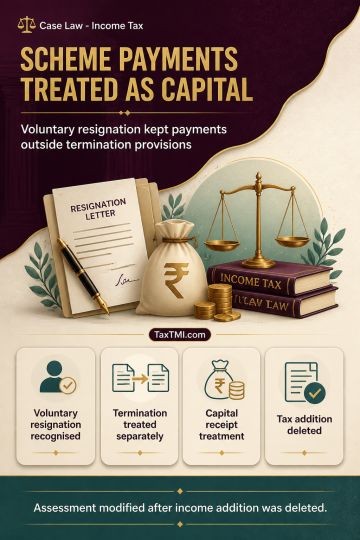
Transfer-pricing benchmarking and capital-receipt principles sustained taxpayer relief, while unsupported property-advance write-offs remained disallo...
Pre-existing operational debt disputes require genuine evidence, while undirected running-account payments may be appropriated on a first-in-first-out...
Agency in CNG distribution makes outlet operators commission agents, rendering taxable Business Auxiliary Service rather than purchasing goods for res...
The petitioner, accused of money laundering under the Prevention of Money Laundering Act (PMLA), sought bail. The court held that Section 45 of PMLA imposes stringent conditions for granting bail, requiring the court to be satisfied that there are reasonable grounds to believe the accused is not guilty and is unlikely to commit an offence while on bail. The prosecution alleged the petitioner influenced a bank to sanction loans to Kiran P.P., from which the petitioner received Rs. 14 crore. The court found prima facie evidence supporting the allegations, including inconsistent statements, unexplained cash credits, and unaccounted capital in the petitioner's business. Relying on Supreme Court precedents, the court concluded there were no reasonable grounds to believe the petitioner was not guilty and denied bail, considering the serious nature of the accusations.
The petitioner, accused of money laundering under the Prevention of Money Laundering Act (PMLA), sought bail. The court held that Section 45 of PMLA imposes stringent conditions for granting bail, requiring the court to be satisfied that there are reasonable grounds to believe the accused is not guilty and is unlikely to commit an offence while on bail. The prosecution alleged the petitioner influenced a bank to sanction loans to Kiran P.P., from which the petitioner received Rs. 14 crore. The court found prima facie evidence supporting the allegations, including inconsistent statements, unexplained cash credits, and unaccounted capital in the petitioner's business. Relying on Supreme Court precedents, the court concluded there were no reasonable grounds to believe the petitioner was not guilty and denied bail, considering the serious nature of the accusations.
Note: It is a system-generated summary and is for quick reference only.
 TaxTMI
 of 4792













 Join Channel


 TaxTMI
