Cooperative society deposits, member-interest TDS exemption and credit-facility deduction claims require verification through records and supporting e...
Customs jurisdiction over EPCG condition breaches survives export-obligation discharge certificates, requiring alleged fraud and misdeclaration to be ...
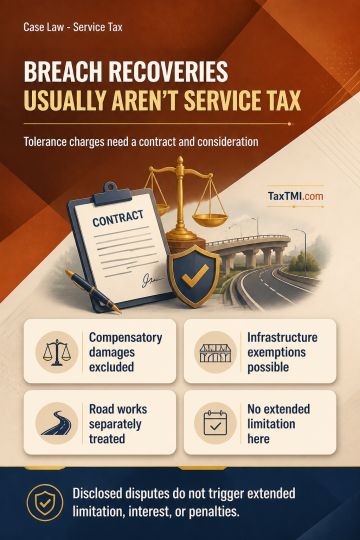
Contractual tolerance requires consideration; breach recoveries, qualifying public infrastructure services and road works escape service tax liability...
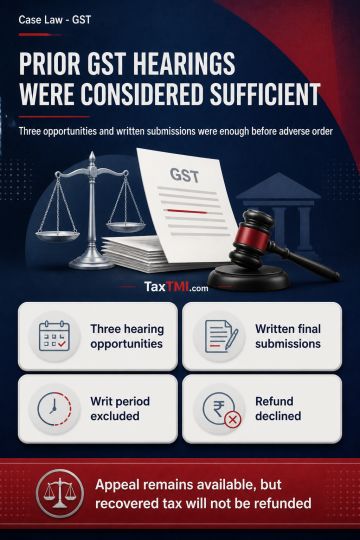
Personal hearing requirements in GST adjudication were satisfied by prior opportunities and written submissions; appellate limitation received writ-pe...
The petitioner, accused of money laundering under the Prevention of Money Laundering Act (PMLA), sought bail. The court held that Section 45 of PMLA imposes stringent conditions for granting bail, requiring the court to be satisfied that there are reasonable grounds to believe the accused is not guilty and is unlikely to commit an offence while on bail. The prosecution alleged the petitioner influenced a bank to sanction loans to Kiran P.P., from which the petitioner received Rs. 14 crore. The court found prima facie evidence supporting the allegations, including inconsistent statements, unexplained cash credits, and unaccounted capital in the petitioner's business. Relying on Supreme Court precedents, the court concluded there were no reasonable grounds to believe the petitioner was not guilty and denied bail, considering the serious nature of the accusations.
The petitioner, accused of money laundering under the Prevention of Money Laundering Act (PMLA), sought bail. The court held that Section 45 of PMLA imposes stringent conditions for granting bail, requiring the court to be satisfied that there are reasonable grounds to believe the accused is not guilty and is unlikely to commit an offence while on bail. The prosecution alleged the petitioner influenced a bank to sanction loans to Kiran P.P., from which the petitioner received Rs. 14 crore. The court found prima facie evidence supporting the allegations, including inconsistent statements, unexplained cash credits, and unaccounted capital in the petitioner's business. Relying on Supreme Court precedents, the court concluded there were no reasonable grounds to believe the petitioner was not guilty and denied bail, considering the serious nature of the accusations.
Note: It is a system-generated summary and is for quick reference only.
 TaxTMI
 of 4792














 Join Channel


 TaxTMI