Just a moment...

Top
Help
×

By creating an account you can:

Logo TaxTMI
>
Call Us / Help / Feedback

Contact Us At :

E-mail: [email protected]

Call / WhatsApp at: +91 99117 96707

For more information, Check Contact Us

FAQs :

To know Frequently Asked Questions, Check FAQs

Most Asked Video Tutorials :

For more tutorials, Check Video Tutorials

Submit Feedback/Suggestion :

Email :
Please provide your email address so we can follow up on your feedback.
Category :
Description :
Min 15 characters0/2000
Add to...
You have not created any category. Kindly create one to bookmark this item!
Create New Category
Hide
Title :
Description :
❮❮ Hide
Default View
Expand ❯❯
Close ✕
🔎 Highlights - Adv. Search
TEXT SEARCH:

Press 'Enter' to add multiple search terms. Rules for Better Search

Search In:
Main Text + AI Text
  • Main Text
  • Main Text + AI Text
  • AI Text
Law:
---- All Laws----
  • ---- All Laws----
  • Income Tax
  • Direct Taxes
  • Benami Property
  • Central GST Laws
  • SGST - State GST Laws
  • Customs
  • FTP - Foreign Trade Policy
  • SEZ - Special Economic Zone
  • FEMA - Foreign Exchange Management
  • Companies Law
  • SEBI - Securities & Exchange Board of India
  • IBC - Insolvency and Bankruptcy
  • Law of Competition
  • PMLA - Money-Laundering
  • Indian Laws
  • Bill / Finance Bills
  • Wealth Tax
  • Service Tax
  • Central Excise
  • VAT / Sales Tax
Month:
---- All Months ----
  • ---- All Months ----
  • January
  • February
  • March
  • April
  • May
  • June
  • July
  • August
  • September
  • October
  • November
  • December
Year:
---- All Years ----
  • ---- All Years ----
  • 2026
  • 2025
  • 2024
  • 2023
  • 2022
  • 2021
  • 2020
  • 2019
  • 2018
  • 2017
  • 2016
  • 2015
  • 2014
  • 2013
  • 2012
  • 2011
Sort By: ?
In Sort By 'Default', exact matches for text search are shown at the top, followed by the remaining results in their regular order.
RelevanceDefaultDate
    Foreign-currency loan benchmarking follows the loan currency, while export hedging losses qualify as non-speculative business losses.
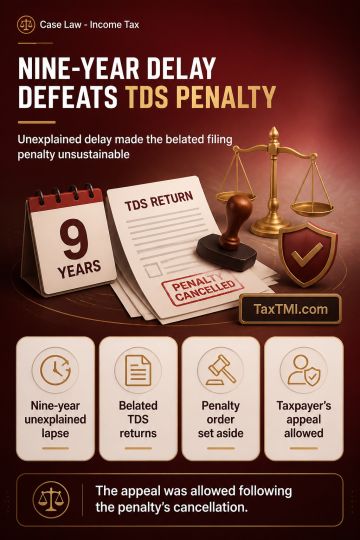
    Delayed initiation of TDS return penalties after nine years rendered the penalty illegal and unsustainable.
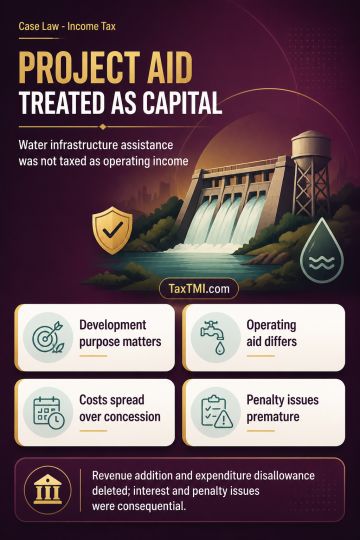
    Project-development assistance treated as capital, while infrastructure construction costs may be amortised over the concession period.
    Delayed trade receivables require separate transfer pricing benchmarking, subject to debt-free status and an appropriate credit period.
    Modified returns, MAT book profit limits, and tested-party selection shape transfer pricing treatment of integrated intra-group services.
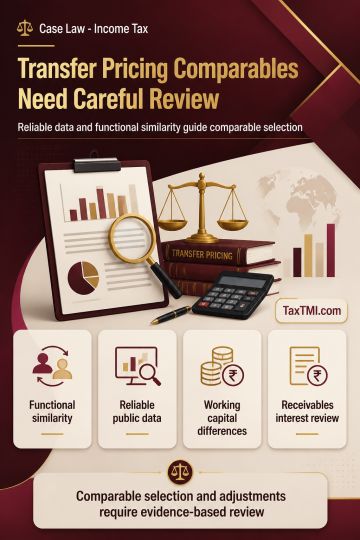
    Transfer pricing comparability requires functional alignment, reliable financial data, and careful review of working capital and receivables adjustmen...
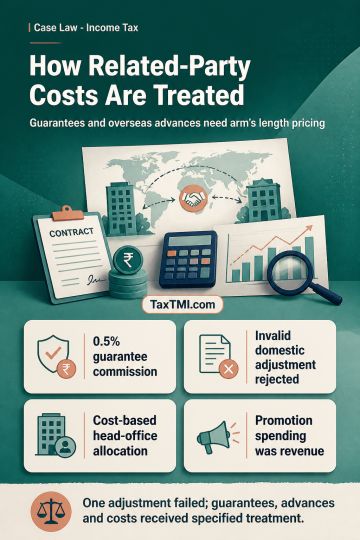
    Transfer pricing rules require benchmarking corporate guarantees and associated-enterprise advances, while invalid domestic-transaction adjustments ca...
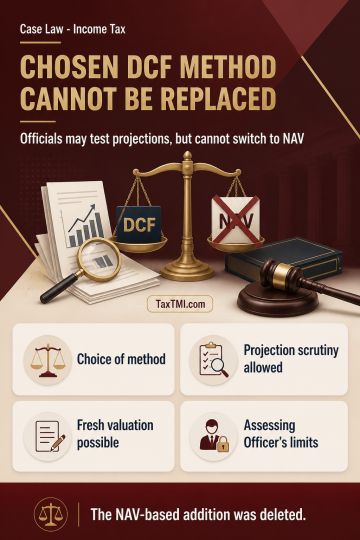
    Share valuation method choice protects DCF valuations from replacement with NAV, though projections remain open to scrutiny.
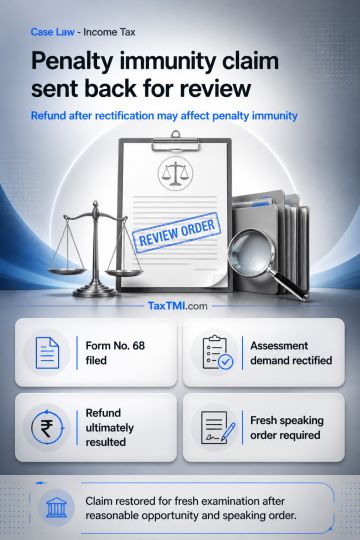
    Penalty immunity requires reconsideration where rectification removes the assessment demand and leaves a refund instead.
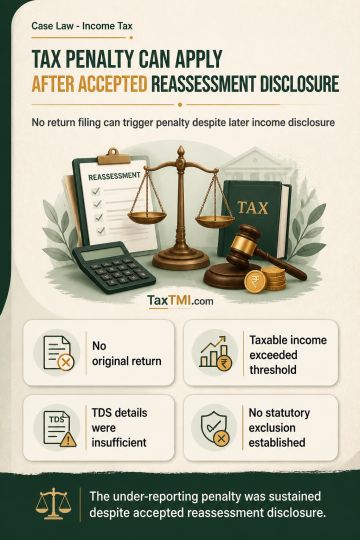
    Under-reporting penalty applies when taxable income is not returned, even if reassessment disclosure is accepted without additions.
    Benami RTGS credits unsupported by independent evidence justified attachment, while unproven prejudice defeated the natural justice challenge.
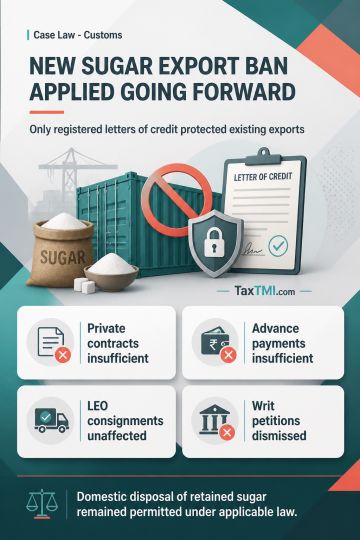
    Prospective sugar export prohibition required registered letters of credit; private contracts and export quotas created no enforceable continuation ri...
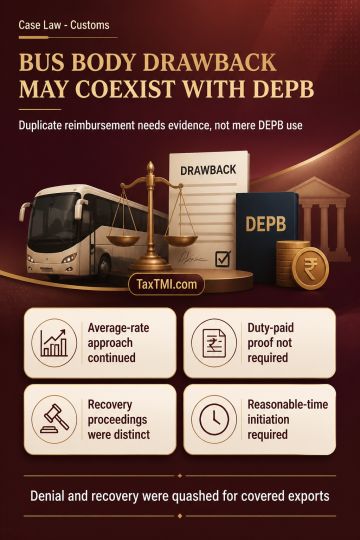
    Brand rate drawback for bus bodies may coexist with DEPB where duplicate duty reimbursement is not established by evidence.
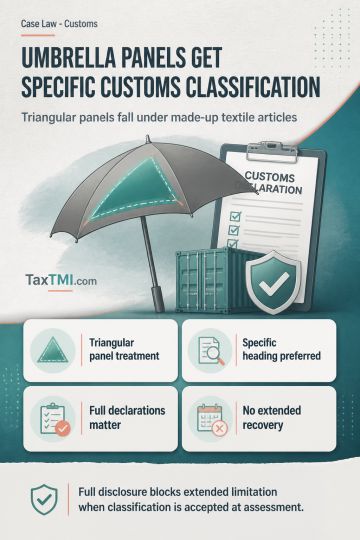
    Made-up textile article classification governs triangular umbrella panels, while full customs disclosure prevents extended limitation in classificatio...
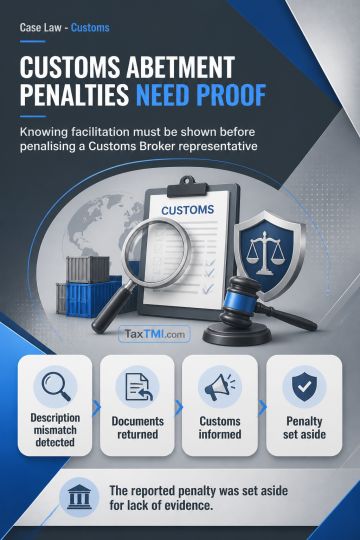
    Abetment penalties require proof that a Customs Broker representative knowingly facilitated improper importation of prohibited goods.
    Actual user conditions prohibit disguised sales of duty-free inputs through arrangements labelled as job work.
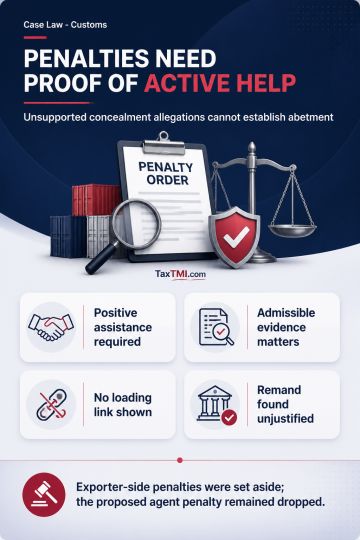
    Abetment of attempted export requires proven positive assistance or knowledge; penalties cannot rest on unsupported allegations of concealment.
    Unsubmitted arbitral award claims are extinguished by approved resolution plans, while court-deposited security remains the corporate debtor's asset.
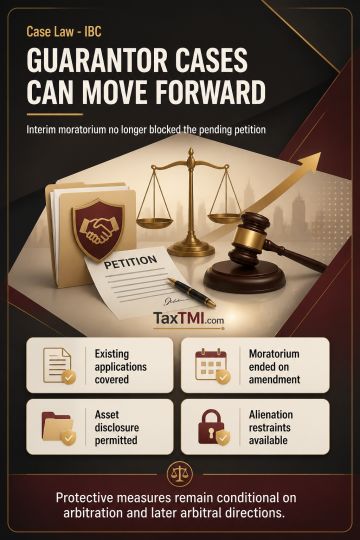
    Retroactive interim-moratorium exclusion permits protective asset disclosure and preservation measures against personal guarantors pending arbitration...
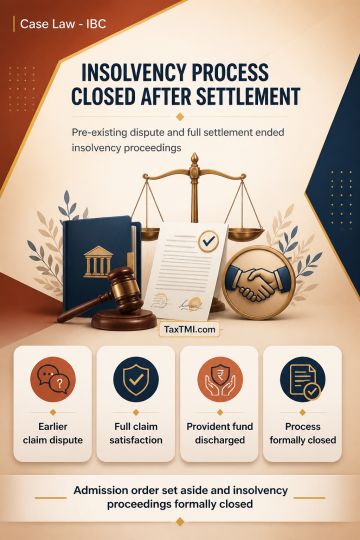
    Pre-existing operational debt dispute and post-admission settlement led to reversal of CIRP admission and closure of insolvency proceedings.
❯❯
MaximizeMaximizeMaximize
0 / 200
Expand Note
Add to Folder

No Folders have been created

    +

    Are you sure you want to delete "My most important" ?

    NOTE:

    Highlights
    Showing Results for :
    Reset Filters
    Results Found:
    Show All SummariesHide All Summaries

    Highlights

    Back

    All Highlights

    Showing Results for :
    Reset Filters
      No Records Found

      Highlights

      Back

      All Highlights

      whatsappJoin Channel
      Showing Results for : Reset Filters

      This is a summary of a court judgment regarding the...

      Court Clarifies Rule 86A: Temporary ITC Blocking for Suspected Fraud, Emphasizes Proper Procedure for Revenue Protection.

      Contents
      Summary
      Note

      Note

      -

      Bookmark

      Print

      Print

      GSTSeptember 27, 2024Case LawsHC
      This is a summary of a court judgment regarding the interpretation of Rule 86A of the Central Goods and Services Tax (CGST) Rules, which deals with the blocking of input tax credit (ITC). The key points are: Input tax credit is a statutory right subject to conditions under the CGST Act. Rule 86A empowers tax authorities to block debit from a taxpayer's electronic credit ledger (ECL) if there is reason to believe the ITC was availed fraudulently or is ineligible. However, the blocking can only be done to the extent of ITC available in the ECL at that time, not exceeding it. The court held that Rule 86A is a drastic power for temporary protection of revenue interests, not for recovery of dues. The words "credit available in the ECL" plainly refer to the credit presently available, not previously availed and utilized ITC. If the tainted ITC is less than the ECL credit, the blocking must be limited to that amount. Authorities must follow procedures u/ss 73/74 of the CGST Act to determine wrongful availment and demand tax, interest or penalty. Rule 86A cannot require replenishing the ECL for past utilization of allegedly inadmissible ITC, as that would amount to recovery. The impugned orders exceeding the available ECL credit.

      Topics

      ActsIncome Tax