Prolonged sterilisation of development rights supports capital-gains treatment, while business-income disallowances cannot govern capital-gains comput...
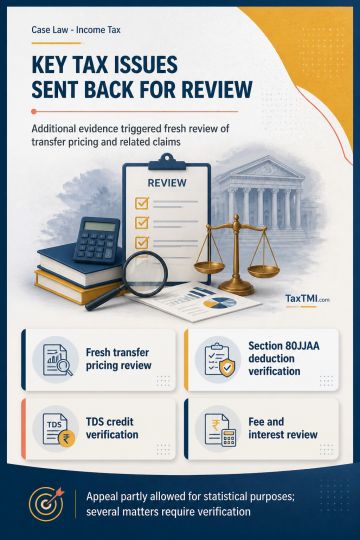
Additional evidence in transfer pricing dispute leads to fresh examination, while tax deductions, TDS credit, fee and refund interest require verifica...
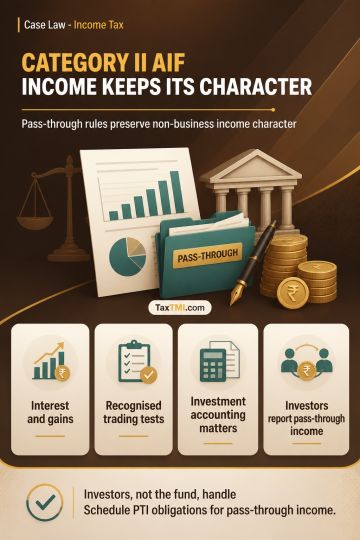
Category II AIF pass-through taxation preserves non-business income character; investment receipts cannot be reclassified without applying recognised ...
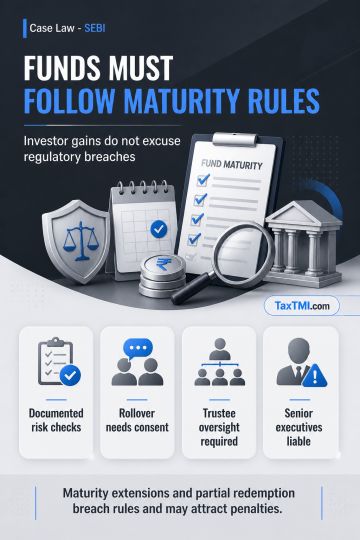
Mutual fund maturity rules require proper rollover, redemption, disclosure, and due diligence; investor gains cannot excuse regulatory breaches or pen...
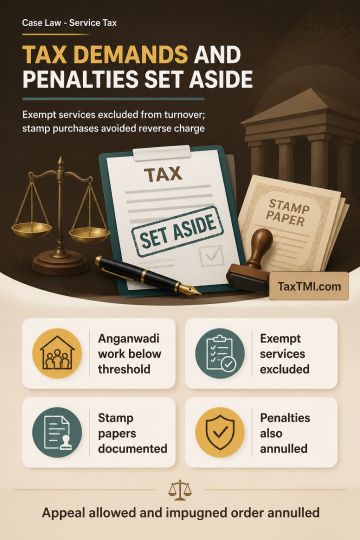
Threshold exemption excludes exempt services, while stamp-paper purchases avoid reverse charge; consequential service tax penalties were also set asid...
This is a summary of a court judgment regarding the interpretation of Rule 86A of the Central Goods and Services Tax (CGST) Rules, which deals with the blocking of input tax credit (ITC). The key points are: Input tax credit is a statutory right subject to conditions under the CGST Act. Rule 86A empowers tax authorities to block debit from a taxpayer's electronic credit ledger (ECL) if there is reason to believe the ITC was availed fraudulently or is ineligible. However, the blocking can only be done to the extent of ITC available in the ECL at that time, not exceeding it. The court held that Rule 86A is a drastic power for temporary protection of revenue interests, not for recovery of dues. The words "credit available in the ECL" plainly refer to the credit presently available, not previously availed and utilized ITC. If the tainted ITC is less than the ECL credit, the blocking must be limited to that amount. Authorities must follow procedures u/ss 73/74 of the CGST Act to determine wrongful availment and demand tax, interest or penalty. Rule 86A cannot require replenishing the ECL for past utilization of allegedly inadmissible ITC, as that would amount to recovery. The impugned orders exceeding the available ECL credit.
This is a summary of a court judgment regarding the interpretation of Rule 86A of the Central Goods and Services Tax (CGST) Rules, which deals with the blocking of input tax credit (ITC). The key points are: Input tax credit is a statutory right subject to conditions under the CGST Act. Rule 86A empowers tax authorities to block debit from a taxpayer's electronic credit ledger (ECL) if there is reason to believe the ITC was availed fraudulently or is ineligible. However, the blocking can only be done to the extent of ITC available in the ECL at that time, not exceeding it. The court held that Rule 86A is a drastic power for temporary protection of revenue interests, not for recovery of dues. The words "credit available in the ECL" plainly refer to the credit presently available, not previously availed and utilized ITC. If the tainted ITC is less than the ECL credit, the blocking must be limited to that amount. Authorities must follow procedures u/ss 73/74 of the CGST Act to determine wrongful availment and demand tax, interest or penalty. Rule 86A cannot require replenishing the ECL for past utilization of allegedly inadmissible ITC, as that would amount to recovery. The impugned orders exceeding the available ECL credit.
Note: It is a system-generated summary and is for quick reference only.
 TaxTMI
 of 4792









 Join Channel


 TaxTMI
