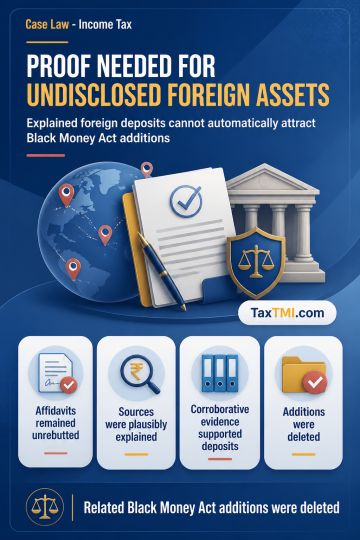
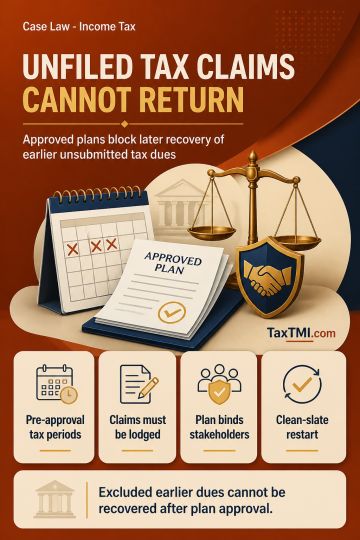
Approved resolution plans extinguish unsubmitted pre-approval tax claims, preventing later recovery outside the insolvency process and preserving a cl...
Transfer pricing comparability requires functional alignment and permits working capital adjustment, while APA margins cannot govern non-covered years...
Treaty benefit, goodwill depreciation and hedging costs: export commission disallowed, while key business deductions and depreciation claims succeeded...
Undisclosed foreign asset classification requires an unexplained source; unrebutted affidavits and corroborative evidence defeated the Black Money Act...
Page of 4788
Press 'Enter' after typing page number.
641 to 660 of 95749 Results
❮
❯
❯❯
0 / 200
Expand Note
Add to Folder
No Folders have been created
+
Are you sure you want to delete "My most important" ?
This is a summary of a court judgment regarding the interpretation of Rule 86A of the Central Goods and Services Tax (CGST) Rules, which deals with the blocking of input tax credit (ITC). The key points are: Input tax credit is a statutory right subject to conditions under the CGST Act. Rule 86A empowers tax authorities to block debit from a taxpayer's electronic credit ledger (ECL) if there is reason to believe the ITC was availed fraudulently or is ineligible. However, the blocking can only be done to the extent of ITC available in the ECL at that time, not exceeding it. The court held that Rule 86A is a drastic power for temporary protection of revenue interests, not for recovery of dues. The words "credit available in the ECL" plainly refer to the credit presently available, not previously availed and utilized ITC. If the tainted ITC is less than the ECL credit, the blocking must be limited to that amount. Authorities must follow procedures u/ss 73/74 of the CGST Act to determine wrongful availment and demand tax, interest or penalty. Rule 86A cannot require replenishing the ECL for past utilization of allegedly inadmissible ITC, as that would amount to recovery. The impugned orders exceeding the available ECL credit.
This is a summary of a court judgment regarding the interpretation of Rule 86A of the Central Goods and Services Tax (CGST) Rules, which deals with the blocking of input tax credit (ITC). The key points are: Input tax credit is a statutory right subject to conditions under the CGST Act. Rule 86A empowers tax authorities to block debit from a taxpayer's electronic credit ledger (ECL) if there is reason to believe the ITC was availed fraudulently or is ineligible. However, the blocking can only be done to the extent of ITC available in the ECL at that time, not exceeding it. The court held that Rule 86A is a drastic power for temporary protection of revenue interests, not for recovery of dues. The words "credit available in the ECL" plainly refer to the credit presently available, not previously availed and utilized ITC. If the tainted ITC is less than the ECL credit, the blocking must be limited to that amount. Authorities must follow procedures u/ss 73/74 of the CGST Act to determine wrongful availment and demand tax, interest or penalty. Rule 86A cannot require replenishing the ECL for past utilization of allegedly inadmissible ITC, as that would amount to recovery. The impugned orders exceeding the available ECL credit.
Note: It is a system-generated summary and is for quick reference only.
 TaxTMI
 of 4788







 Join Channel


 TaxTMI