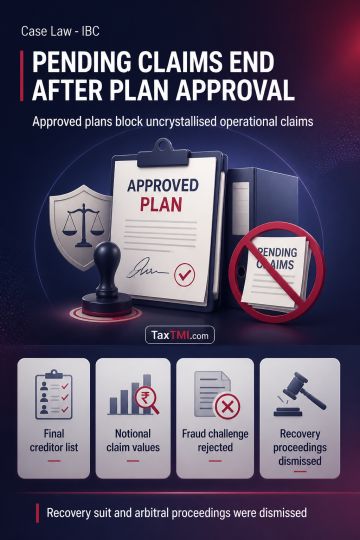
Clean slate principle extinguishes uncrystallised operational claims and bars continuation of pending recovery and arbitral proceedings after plan app...
Works contract classification governs composite layout-development contracts where VAT-paid goods are transferred alongside construction and infrastru...
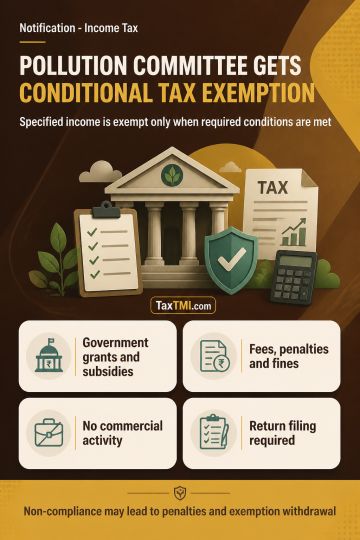
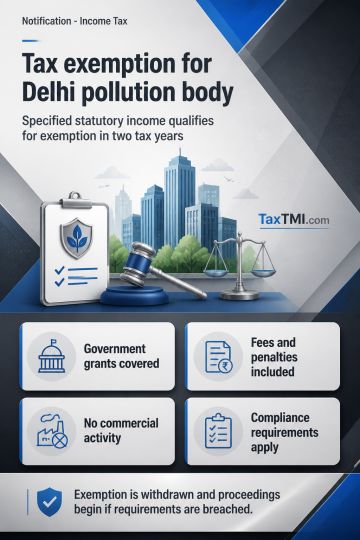
Specified income tax exemption for pollution control body remains conditional on non-commercial activity, unchanged income character, and return filin...
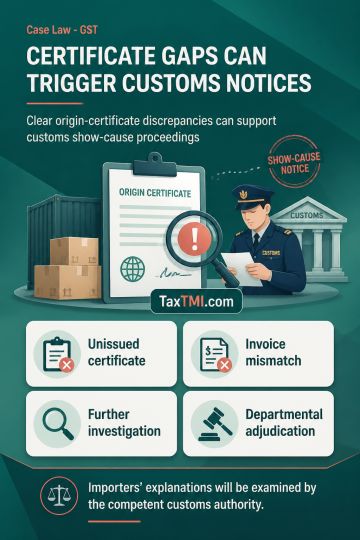
Jurisdictional facts in certificate-of-origin discrepancies can support customs show-cause proceedings, leaving factual explanations for departmental ...
The Tribunal held that in a case involving a requisition u/s 132A of the Act, the jurisdiction to complete the assessment is governed by the provisions of Section 153A. The department's arguments for rectification u/s 254(2) were rejected as they did not point out any mistake apparent on record. The Tribunal observed that the department's contentions required lengthy deliberation and debate, which does not qualify as a mistake apparent from record for rectification. The Tribunal clarified that it has limited powers to rectify apparent and glaring mistakes, and cannot rehear the entire case on merits or revisit its earlier order based on arguments. The department's request for rehearing/review in the garb of rectification through long-drawn reasoning and arguments is neither permissible nor allowed under the Act. The Miscellaneous Application was rejected as the department failed to identify any mistake apparent from record warranting rectification u/s 254(2).
The Tribunal held that in a case involving a requisition u/s 132A of the Act, the jurisdiction to complete the assessment is governed by the provisions of Section 153A. The department's arguments for rectification u/s 254(2) were rejected as they did not point out any mistake apparent on record. The Tribunal observed that the department's contentions required lengthy deliberation and debate, which does not qualify as a mistake apparent from record for rectification. The Tribunal clarified that it has limited powers to rectify apparent and glaring mistakes, and cannot rehear the entire case on merits or revisit its earlier order based on arguments. The department's request for rehearing/review in the garb of rectification through long-drawn reasoning and arguments is neither permissible nor allowed under the Act. The Miscellaneous Application was rejected as the department failed to identify any mistake apparent from record warranting rectification u/s 254(2).
Note: It is a system-generated summary and is for quick reference only.
 TaxTMI
 of 4792






 Join Channel


 TaxTMI