Additional evidence in transfer pricing dispute leads to fresh examination, while tax deductions, TDS credit, fee and refund interest require verifica...
Category II AIF pass-through taxation preserves non-business income character; investment receipts cannot be reclassified without applying recognised ...
Mutual fund maturity rules require proper rollover, redemption, disclosure, and due diligence; investor gains cannot excuse regulatory breaches or pen...
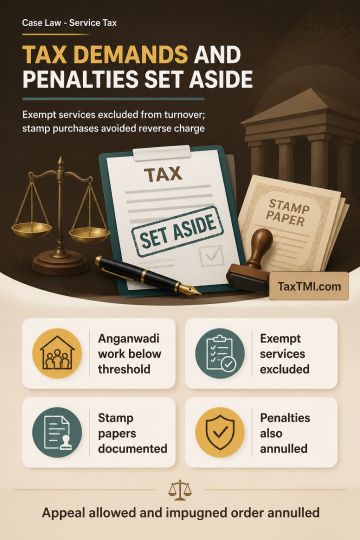
Threshold exemption excludes exempt services, while stamp-paper purchases avoid reverse charge; consequential service tax penalties were also set asid...
Employee conflict disclosures and investment restrictions expand with new recusal duties, post-employment limits, and compliance reporting requirement...
The appeal challenges the liability to pay stamp duty and penalty on agreements executed prior to the sale deed for two properties. The court determined the real intention from the instrument's contents and language. Section 4(1) states that where multiple instruments complete a transaction, the principal instrument alone is chargeable with the highest duty prescribed in Schedule I. The proviso allows parties to determine the principal instrument themselves. In this case, although the agreements mentioned conveyance and the sale deed followed, the properties' value exceeded Rs.100, and possession was handed over on the agreement date, implying acquisition of possessory rights u/s 53A of the Transfer of Property Act, requiring proper stamp duty and registration u/s 17 of the Registration Act. The subsequent sale deed does not absolve the liability to pay appropriate stamp duty on the agreements, which were the principal documents under Explanation I of Article 25 of Schedule-I of the Act. The trial court rightly impounded the documents and directed adjudication of stamp duty and penalty by the Collector. The High Court correctly held no interference was warranted. The Supreme Court affirmed the orders and dismissed the appeal.
The appeal challenges the liability to pay stamp duty and penalty on agreements executed prior to the sale deed for two properties. The court determined the real intention from the instrument's contents and language. Section 4(1) states that where multiple instruments complete a transaction, the principal instrument alone is chargeable with the highest duty prescribed in Schedule I. The proviso allows parties to determine the principal instrument themselves. In this case, although the agreements mentioned conveyance and the sale deed followed, the properties' value exceeded Rs.100, and possession was handed over on the agreement date, implying acquisition of possessory rights u/s 53A of the Transfer of Property Act, requiring proper stamp duty and registration u/s 17 of the Registration Act. The subsequent sale deed does not absolve the liability to pay appropriate stamp duty on the agreements, which were the principal documents under Explanation I of Article 25 of Schedule-I of the Act. The trial court rightly impounded the documents and directed adjudication of stamp duty and penalty by the Collector. The High Court correctly held no interference was warranted. The Supreme Court affirmed the orders and dismissed the appeal.
Note: It is a system-generated summary and is for quick reference only.
 TaxTMI
 of 4803


















 Join Channel


 TaxTMI
