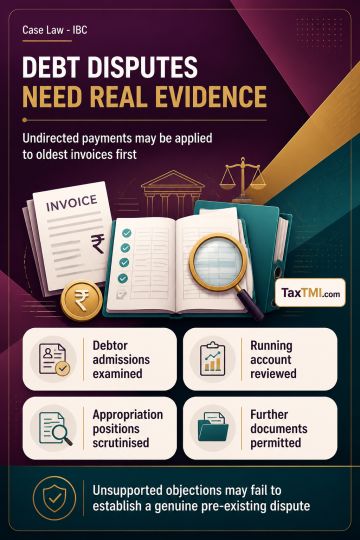
Pre-existing operational debt disputes require genuine evidence, while undirected running-account payments may be appropriated on a first-in-first-out...
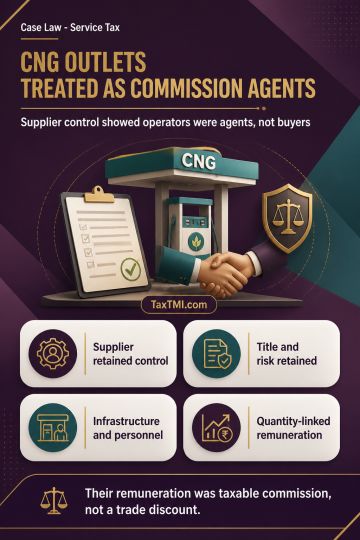
Agency in CNG distribution makes outlet operators commission agents, rendering taxable Business Auxiliary Service rather than purchasing goods for res...
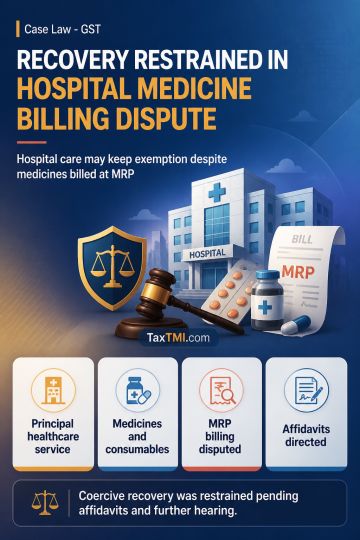
Composite inpatient healthcare supply may retain exemption despite MRP medicine billing, while separate taxable sale characterisation remains disputed...
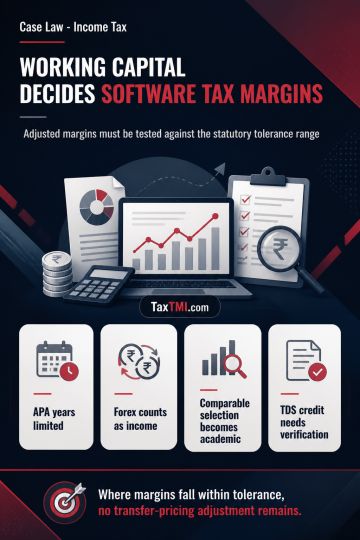
Working-capital adjustment determines whether software-services transfer-pricing margins fall within the statutory tolerance range, eliminating any ad...
Page of 4798
Press 'Enter' after typing page number.
921 to 940 of 95957 Results
❮
❯
❯❯
0 / 200
Expand Note
Add to Folder
No Folders have been created
+
Are you sure you want to delete "My most important" ?
The appeal challenges the liability to pay stamp duty and penalty on agreements executed prior to the sale deed for two properties. The court determined the real intention from the instrument's contents and language. Section 4(1) states that where multiple instruments complete a transaction, the principal instrument alone is chargeable with the highest duty prescribed in Schedule I. The proviso allows parties to determine the principal instrument themselves. In this case, although the agreements mentioned conveyance and the sale deed followed, the properties' value exceeded Rs.100, and possession was handed over on the agreement date, implying acquisition of possessory rights u/s 53A of the Transfer of Property Act, requiring proper stamp duty and registration u/s 17 of the Registration Act. The subsequent sale deed does not absolve the liability to pay appropriate stamp duty on the agreements, which were the principal documents under Explanation I of Article 25 of Schedule-I of the Act. The trial court rightly impounded the documents and directed adjudication of stamp duty and penalty by the Collector. The High Court correctly held no interference was warranted. The Supreme Court affirmed the orders and dismissed the appeal.
The appeal challenges the liability to pay stamp duty and penalty on agreements executed prior to the sale deed for two properties. The court determined the real intention from the instrument's contents and language. Section 4(1) states that where multiple instruments complete a transaction, the principal instrument alone is chargeable with the highest duty prescribed in Schedule I. The proviso allows parties to determine the principal instrument themselves. In this case, although the agreements mentioned conveyance and the sale deed followed, the properties' value exceeded Rs.100, and possession was handed over on the agreement date, implying acquisition of possessory rights u/s 53A of the Transfer of Property Act, requiring proper stamp duty and registration u/s 17 of the Registration Act. The subsequent sale deed does not absolve the liability to pay appropriate stamp duty on the agreements, which were the principal documents under Explanation I of Article 25 of Schedule-I of the Act. The trial court rightly impounded the documents and directed adjudication of stamp duty and penalty by the Collector. The High Court correctly held no interference was warranted. The Supreme Court affirmed the orders and dismissed the appeal.
Note: It is a system-generated summary and is for quick reference only.
 TaxTMI
 of 4798







 Join Channel


 TaxTMI