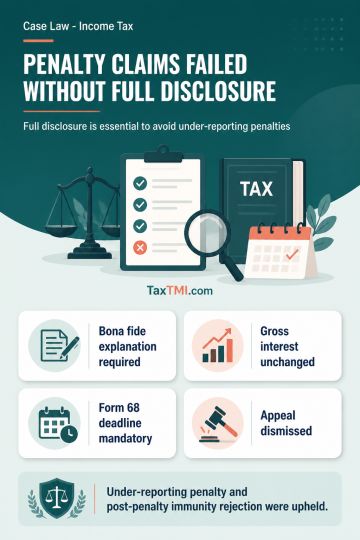
Bona fide disclosure requirements govern under-reporting penalties, and post-penalty immunity applications cannot secure available statutory protectio...
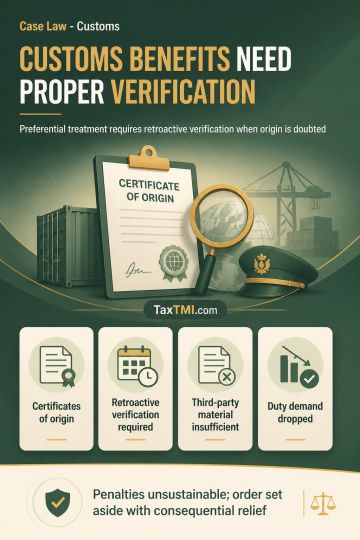
Certificate-of-origin verification procedure governs preferential customs benefits; denial without retroactive verification was set aside with consequ...
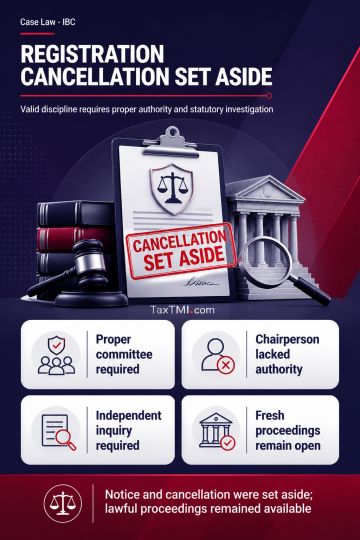
Disciplinary Committee jurisdiction and mandatory investigation requirements invalidated cancellation of an insolvency professional's registration and...
Retention of seized property survives where recorded reasons support proceeds of crime, while stayed investigation periods are excluded from limitatio...
Page of 4800
Press 'Enter' after typing page number.
1121 to 1140 of 95999 Results
❮
❯
❯❯
0 / 200
Expand Note
Add to Folder
No Folders have been created
+
Are you sure you want to delete "My most important" ?
The High Court quashed the order rejecting the refund claim of the petitioner, an SEZ Unit, on the ground that the petitioner was not allowed to claim a refund under the GST law. The Court held that the ratio laid down in the Britannia Industries Limited case, where it was held that the refund claim for the tax period on supplies made to an SEZ Unit/Developer can be claimed by the supplier of goods or services, is still binding. The Appellate Authority erred in not following the dictum laid down in the Britannia case merely because an appeal against it is pending before a higher forum without a stay. The facts in the present case and the Britannia case being identical, a different view cannot be taken. Consequently, the High Court allowed the petition and quashed the impugned order of the Appellate Authority.
The High Court quashed the order rejecting the refund claim of the petitioner, an SEZ Unit, on the ground that the petitioner was not allowed to claim a refund under the GST law. The Court held that the ratio laid down in the Britannia Industries Limited case, where it was held that the refund claim for the tax period on supplies made to an SEZ Unit/Developer can be claimed by the supplier of goods or services, is still binding. The Appellate Authority erred in not following the dictum laid down in the Britannia case merely because an appeal against it is pending before a higher forum without a stay. The facts in the present case and the Britannia case being identical, a different view cannot be taken. Consequently, the High Court allowed the petition and quashed the impugned order of the Appellate Authority.
Note: It is a system-generated summary and is for quick reference only.
 TaxTMI
 of 4800










 Join Channel


 TaxTMI
