Development agreements require legal possession or effective enjoyment for capital gains transfer; permissive possession and deferred consideration de...
Prolonged sterilisation of development rights supports capital-gains treatment, while business-income disallowances cannot govern capital-gains comput...
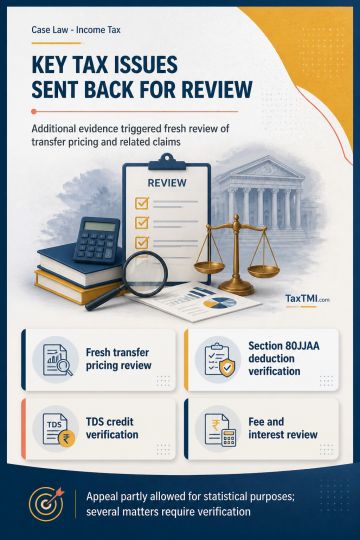
Additional evidence in transfer pricing dispute leads to fresh examination, while tax deductions, TDS credit, fee and refund interest require verifica...
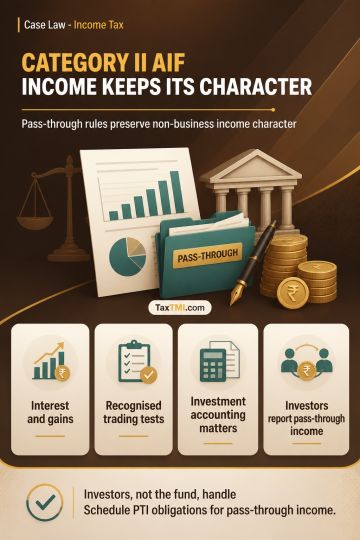
Category II AIF pass-through taxation preserves non-business income character; investment receipts cannot be reclassified without applying recognised ...
The provisions of section 69A allow for additions if the assessee is found to be the owner of unrecorded money, bullion, jewelry, or valuable articles. However, when sales are duly recorded and supported by the books of account, additions cannot be made u/s 69A. The assessee's books were rejected, and profits were estimated at 10% on the money deposited in the bank account. The Assessing Officer made a trading addition without reducing the profit already reflected in the books. The tribunal directed the Assessing Officer to reduce the profit already declared by the assessee at 5.74% and consider the remaining 4.26% as a trading addition. Regarding section 145(3), once the books of account are rejected based on detailed reasons, rejecting the method of accounting and stock valuation is not necessary. The assessee did not challenge the rejection of books, and the tribunal found no infirmity in the findings of the lower authorities.
The provisions of section 69A allow for additions if the assessee is found to be the owner of unrecorded money, bullion, jewelry, or valuable articles. However, when sales are duly recorded and supported by the books of account, additions cannot be made u/s 69A. The assessee's books were rejected, and profits were estimated at 10% on the money deposited in the bank account. The Assessing Officer made a trading addition without reducing the profit already reflected in the books. The tribunal directed the Assessing Officer to reduce the profit already declared by the assessee at 5.74% and consider the remaining 4.26% as a trading addition. Regarding section 145(3), once the books of account are rejected based on detailed reasons, rejecting the method of accounting and stock valuation is not necessary. The assessee did not challenge the rejection of books, and the tribunal found no infirmity in the findings of the lower authorities.
Note: It is a system-generated summary and is for quick reference only.
 TaxTMI
 of 4801












 Join Channel


 TaxTMI