Necessary-party requirements limit impleadment of independent entities, while deferred consideration does not create an appealable adverse determinati...
Food supplement classification requires common parlance and authoritative tests, preventing treatment as proprietary Ayurvedic medicines without suppo...
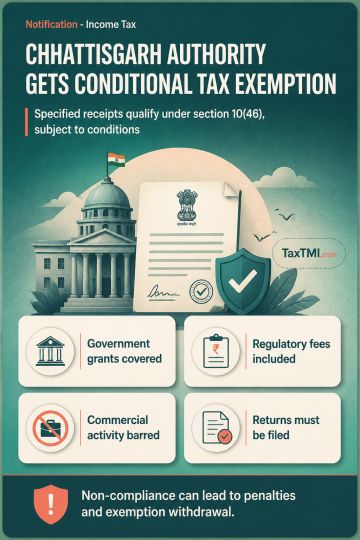
Specified regulatory authority income receives conditional tax exemption, subject to non-commercial activity, unchanged income character, and return f...
Tax exemption for regulatory authority income applies retrospectively, subject to non-commercial activity, unchanged income sources, and return-filing...
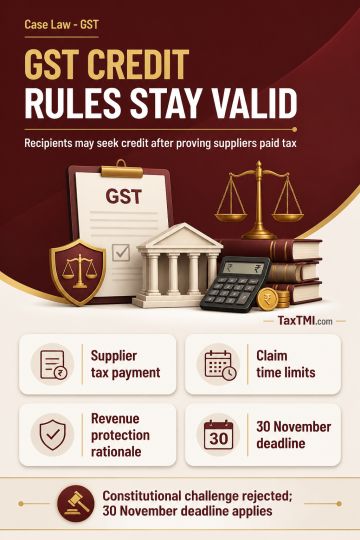
Input tax credit conditions remain constitutionally valid, with eligible recipient claims considered under GST circulars and retrospective filing dead...
The provisions of section 69A allow for additions if the assessee is found to be the owner of unrecorded money, bullion, jewelry, or valuable articles. However, when sales are duly recorded and supported by the books of account, additions cannot be made u/s 69A. The assessee's books were rejected, and profits were estimated at 10% on the money deposited in the bank account. The Assessing Officer made a trading addition without reducing the profit already reflected in the books. The tribunal directed the Assessing Officer to reduce the profit already declared by the assessee at 5.74% and consider the remaining 4.26% as a trading addition. Regarding section 145(3), once the books of account are rejected based on detailed reasons, rejecting the method of accounting and stock valuation is not necessary. The assessee did not challenge the rejection of books, and the tribunal found no infirmity in the findings of the lower authorities.
The provisions of section 69A allow for additions if the assessee is found to be the owner of unrecorded money, bullion, jewelry, or valuable articles. However, when sales are duly recorded and supported by the books of account, additions cannot be made u/s 69A. The assessee's books were rejected, and profits were estimated at 10% on the money deposited in the bank account. The Assessing Officer made a trading addition without reducing the profit already reflected in the books. The tribunal directed the Assessing Officer to reduce the profit already declared by the assessee at 5.74% and consider the remaining 4.26% as a trading addition. Regarding section 145(3), once the books of account are rejected based on detailed reasons, rejecting the method of accounting and stock valuation is not necessary. The assessee did not challenge the rejection of books, and the tribunal found no infirmity in the findings of the lower authorities.
Note: It is a system-generated summary and is for quick reference only.
 TaxTMI
 of 4792

















 Join Channel


 TaxTMI