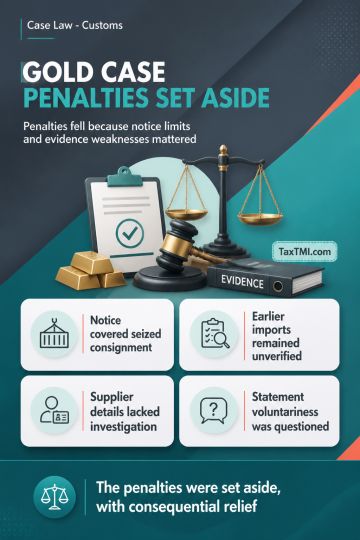
Arrest safeguards and transit remand requirements invalidated detention following inter-State transfer without communicated grounds or magistrate auth...
Arrest safeguards require disclosed grounds, relative intimation and transit remand, while duplicate prosecution under the CGST framework is unsustain...
Document Identification Number defects can invalidate GST assessments, with delayed challenges entertained conditionally where patent irregularities e...
Windmill commissioning evidence supported higher depreciation where grid connection and electricity generation proved operational use before the relev...
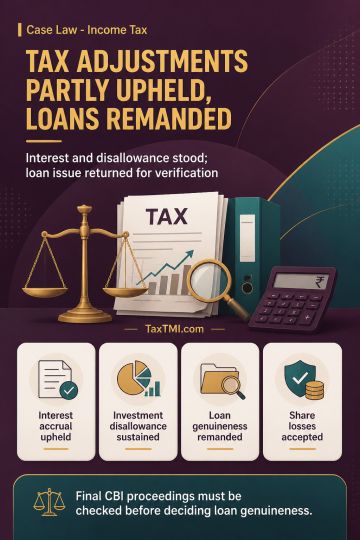
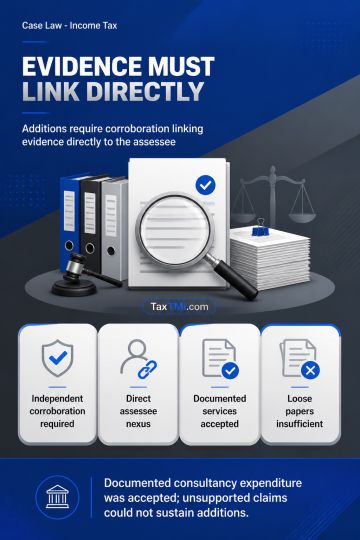
Pharmaceutical promotion and transfer-pricing comparability principles limited disallowances, while uncorroborated search allegations and unsupported ...
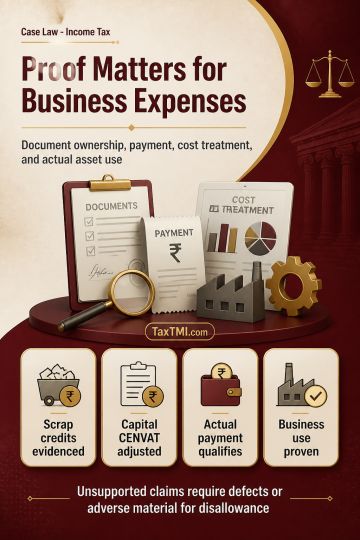
Business expenditure substantiation supports scrap credits, statutory payments and expense claims, while depreciation requires proof of actual busines...
The Commissioner of Income Tax (CIT) invoked Section 263 to revise the Assessing Officer's (AO) order, disallowing the amount paid on termination of an agreement, considering it as capital expenditure, and disallowing the amount paid on termination of a License and Supply Agreement, considering it as liquidated damages/penalty u/s 37. The key points are: The AO failed to conduct proper inquiries before allowing the expenditure as revenue, such as verifying the commercial expediency, terms of novated agreements, liability for termination fees, and accounting treatment. Explanation 2 to Section 263, effective from 01/06/2015, deems an AO's order erroneous if proper inquiries or verification were not made, prejudicing revenue interests. Since the AO's order was passed on 31/01/2018, Explanation 2 applies. The termination charges of Rs. 340.45 crores paid under the Asset Purchase Agreement were for purchasing assets, constituting capital expenditure, not revenue expenditure. The liquidated damages of Rs. 6.19 crores paid for terminating the License and Distribution Agreement were not incurred wholly and exclusively for the assessee's business, hence disallowed u/s 37. The ITAT dismissed the assessee's grounds, upholding the CIT's revision order.
The Commissioner of Income Tax (CIT) invoked Section 263 to revise the Assessing Officer's (AO) order, disallowing the amount paid on termination of an agreement, considering it as capital expenditure, and disallowing the amount paid on termination of a License and Supply Agreement, considering it as liquidated damages/penalty u/s 37. The key points are: The AO failed to conduct proper inquiries before allowing the expenditure as revenue, such as verifying the commercial expediency, terms of novated agreements, liability for termination fees, and accounting treatment. Explanation 2 to Section 263, effective from 01/06/2015, deems an AO's order erroneous if proper inquiries or verification were not made, prejudicing revenue interests. Since the AO's order was passed on 31/01/2018, Explanation 2 applies. The termination charges of Rs. 340.45 crores paid under the Asset Purchase Agreement were for purchasing assets, constituting capital expenditure, not revenue expenditure. The liquidated damages of Rs. 6.19 crores paid for terminating the License and Distribution Agreement were not incurred wholly and exclusively for the assessee's business, hence disallowed u/s 37. The ITAT dismissed the assessee's grounds, upholding the CIT's revision order.
Note: It is a system-generated summary and is for quick reference only.
 TaxTMI
 of 4792


















 Join Channel


 TaxTMI