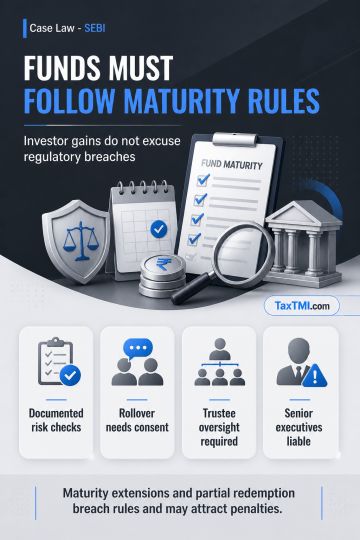
Mutual fund maturity rules require proper rollover, redemption, disclosure, and due diligence; investor gains cannot excuse regulatory breaches or pen...
Threshold exemption excludes exempt services, while stamp-paper purchases avoid reverse charge; consequential service tax penalties were also set asid...
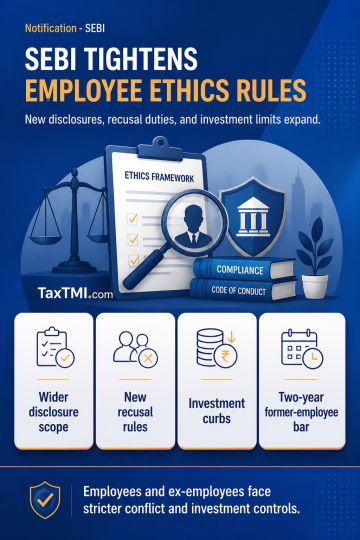
Employee conflict disclosures and investment restrictions expand with new recusal duties, post-employment limits, and compliance reporting requirement...
The NCLAT upheld the NCLT's decision to refuse waiver u/ss 244(1)(a) and (b) of the Companies Act 2013 to the Appellants, who held only 5.83% shareholding, to file an oppression and mismanagement case u/s 241. While the NCLAT can make a preliminary assessment to determine if the petition falls within Sections 241 and 244, it found no exceptional circumstances to bypass the minimum shareholding requirement. The Appellants' primary grievance revolved around the removal of one Appellant as Director, which the Supreme Court has held cannot trigger oppression relief u/ss 241 and 242. The petition did not substantiate a genuine case of oppression and mismanagement, and the NCLT rightly refused the waiver based on its assessment.
The NCLAT upheld the NCLT's decision to refuse waiver u/ss 244(1)(a) and (b) of the Companies Act 2013 to the Appellants, who held only 5.83% shareholding, to file an oppression and mismanagement case u/s 241. While the NCLAT can make a preliminary assessment to determine if the petition falls within Sections 241 and 244, it found no exceptional circumstances to bypass the minimum shareholding requirement. The Appellants' primary grievance revolved around the removal of one Appellant as Director, which the Supreme Court has held cannot trigger oppression relief u/ss 241 and 242. The petition did not substantiate a genuine case of oppression and mismanagement, and the NCLT rightly refused the waiver based on its assessment.
Note: It is a system-generated summary and is for quick reference only.
 TaxTMI
 of 4801













 Join Channel


 TaxTMI
