Retention of seized property survives where recorded reasons support proceeds of crime, while stayed investigation periods are excluded from limitatio...
Specified income of Baddi Barotiwala Nalagarh Development Authority receives conditional tax exemption, retrospectively covering its designated assess...
Specified development authority income receives retrospective tax exemption, subject to non-commercial activity, unchanged income sources, and return-...
Unified Brand India framework introduces voluntary Trust Mark certification and funding support for export branding, packaging and global promotional ...
Origin Declaration authentication governs preferential tariff claims under India-UK CETA, requiring a validated reference number before import clearan...
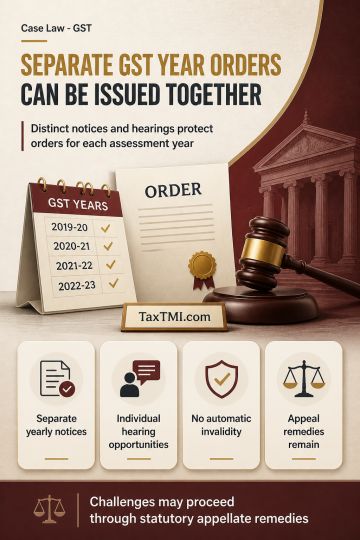
Separate assessment orders for different years remain valid when distinct notices and hearing opportunities prevent prejudice from combined proceeding...
The NCLAT upheld the NCLT's decision to refuse waiver u/ss 244(1)(a) and (b) of the Companies Act 2013 to the Appellants, who held only 5.83% shareholding, to file an oppression and mismanagement case u/s 241. While the NCLAT can make a preliminary assessment to determine if the petition falls within Sections 241 and 244, it found no exceptional circumstances to bypass the minimum shareholding requirement. The Appellants' primary grievance revolved around the removal of one Appellant as Director, which the Supreme Court has held cannot trigger oppression relief u/ss 241 and 242. The petition did not substantiate a genuine case of oppression and mismanagement, and the NCLT rightly refused the waiver based on its assessment.
The NCLAT upheld the NCLT's decision to refuse waiver u/ss 244(1)(a) and (b) of the Companies Act 2013 to the Appellants, who held only 5.83% shareholding, to file an oppression and mismanagement case u/s 241. While the NCLAT can make a preliminary assessment to determine if the petition falls within Sections 241 and 244, it found no exceptional circumstances to bypass the minimum shareholding requirement. The Appellants' primary grievance revolved around the removal of one Appellant as Director, which the Supreme Court has held cannot trigger oppression relief u/ss 241 and 242. The petition did not substantiate a genuine case of oppression and mismanagement, and the NCLT rightly refused the waiver based on its assessment.
Note: It is a system-generated summary and is for quick reference only.
 TaxTMI
 of 4800


















 Join Channel


 TaxTMI
