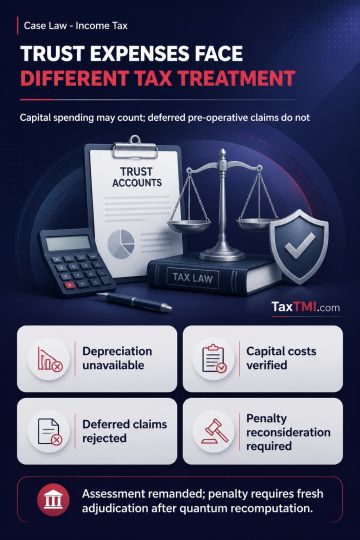
Charitable trust income application permits verified capital expenditure but rejects deferred pre-operative claims and requires reconsideration of con...
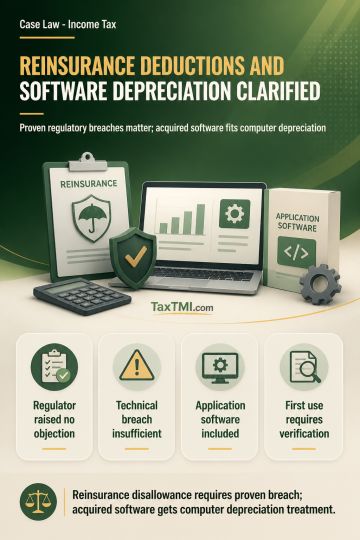
Reinsurance premium deductions require established regulatory breaches, while independently acquired software qualifies within the computer depreciati...
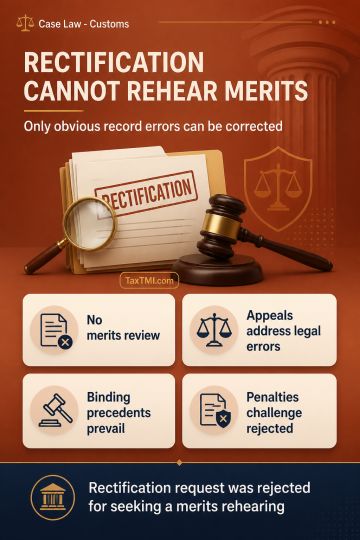
Rectification of mistake remains limited to self-evident record errors, preventing merits review through miscellaneous applications and preserving fin...
Tender creditworthiness conditions may extend to de facto Promoter Directors, with post-participation challenges generally barred absent arbitrariness...
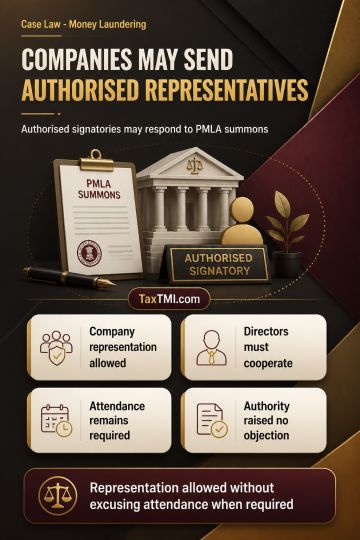
Corporate representation in PMLA summons proceedings permitted through an authorised signatory, subject to directors' continuing cooperation and atten...
The High Court examined the validity of Notification No. 56/2023-CT dated 28.12.2023, which extended the time limit for passing orders u/s 73 of the Central Goods and Services Tax Act (CGST Act). The key issues were the absence of a recommendation from the GST Council and the absence of a corresponding state government notification parallel to the Central Government's notification. The Court held that exercising powers u/s 168A of the CGST Act to extend time limits requires a recommendation from the GST Council and the existence of force majeure circumstances, as defined in the Explanation to Section 168A. Citing the Supreme Court's judgment in V.M. Kurian Vs. State of Kerala, the Court emphasized that the word "recommendation" implies a statement expressing commendation, and its meaning must be understood in the context of the relevant provisions and objects. The Court observed that the CGST Act and State GST Acts do not define "recommendation" but noted the constitutional provisions promoting fiscal and cooperative federalism. Consequently, the Court ruled that the Notification No. 56/2023-CT is ultra vires the CGST Act and legally unsustainable, setting it aside. The Orders-in-Original passed u/s 73(9) of the CGST Act and State GST Act beyond the prescribed time limit u/s 73(10.
The High Court examined the validity of Notification No. 56/2023-CT dated 28.12.2023, which extended the time limit for passing orders u/s 73 of the Central Goods and Services Tax Act (CGST Act). The key issues were the absence of a recommendation from the GST Council and the absence of a corresponding state government notification parallel to the Central Government's notification. The Court held that exercising powers u/s 168A of the CGST Act to extend time limits requires a recommendation from the GST Council and the existence of force majeure circumstances, as defined in the Explanation to Section 168A. Citing the Supreme Court's judgment in V.M. Kurian Vs. State of Kerala, the Court emphasized that the word "recommendation" implies a statement expressing commendation, and its meaning must be understood in the context of the relevant provisions and objects. The Court observed that the CGST Act and State GST Acts do not define "recommendation" but noted the constitutional provisions promoting fiscal and cooperative federalism. Consequently, the Court ruled that the Notification No. 56/2023-CT is ultra vires the CGST Act and legally unsustainable, setting it aside. The Orders-in-Original passed u/s 73(9) of the CGST Act and State GST Act beyond the prescribed time limit u/s 73(10.
Note: It is a system-generated summary and is for quick reference only.
 TaxTMI
 of 4805






 Join Channel


 TaxTMI
