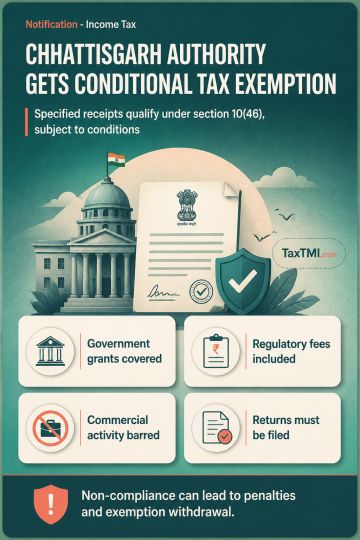
Specified regulatory authority income receives conditional tax exemption, subject to non-commercial activity, unchanged income character, and return f...
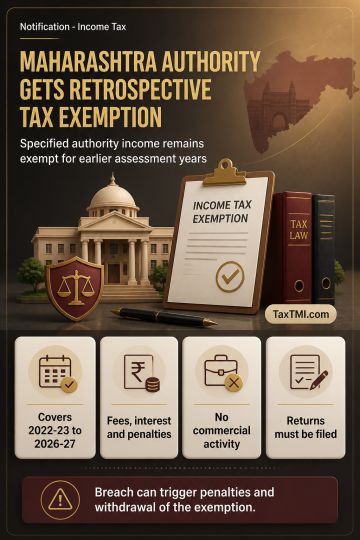
Tax exemption for regulatory authority income applies retrospectively, subject to non-commercial activity, unchanged income sources, and return-filing...
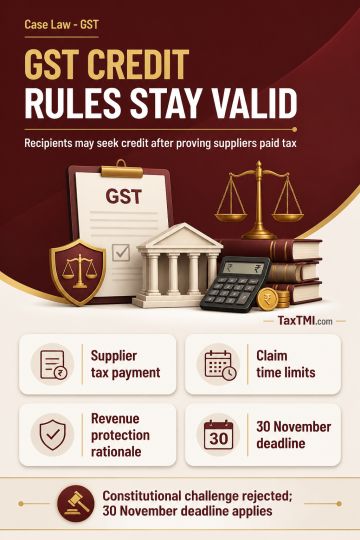
Input tax credit conditions remain constitutionally valid, with eligible recipient claims considered under GST circulars and retrospective filing dead...
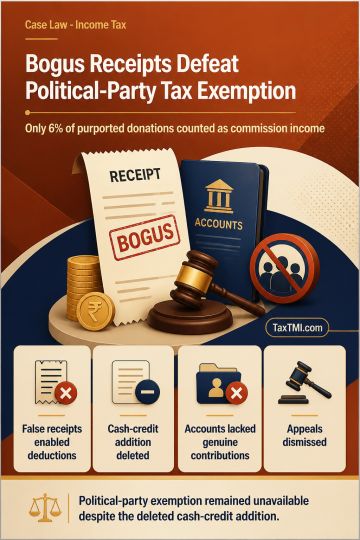
Bogus donation receipts justified commission income assessment and defeated political-party tax exemption for inaccurate accounts and reporting failur...
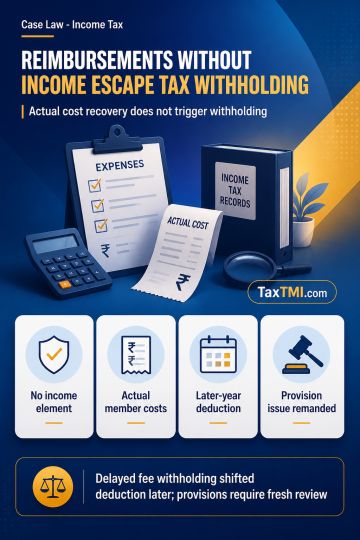
Pure reimbursement without income element escapes tax withholding, while delayed withholding and unsupported provisions face deferred or renewed scrut...
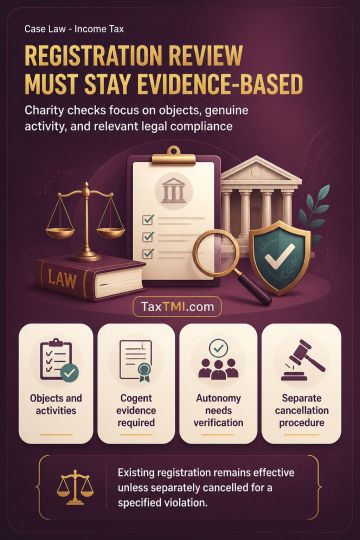
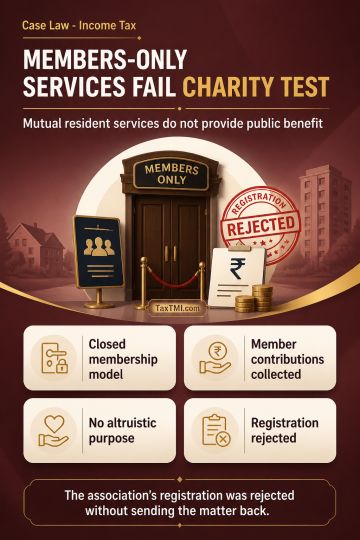
Public benefit requirement defeats charitable registration where residents' association services are reciprocal, member-only facilities governed by mu...
The High Court examined the validity of Notification No. 56/2023-CT dated 28.12.2023, which extended the time limit for passing orders u/s 73 of the Central Goods and Services Tax Act (CGST Act). The key issues were the absence of a recommendation from the GST Council and the absence of a corresponding state government notification parallel to the Central Government's notification. The Court held that exercising powers u/s 168A of the CGST Act to extend time limits requires a recommendation from the GST Council and the existence of force majeure circumstances, as defined in the Explanation to Section 168A. Citing the Supreme Court's judgment in V.M. Kurian Vs. State of Kerala, the Court emphasized that the word "recommendation" implies a statement expressing commendation, and its meaning must be understood in the context of the relevant provisions and objects. The Court observed that the CGST Act and State GST Acts do not define "recommendation" but noted the constitutional provisions promoting fiscal and cooperative federalism. Consequently, the Court ruled that the Notification No. 56/2023-CT is ultra vires the CGST Act and legally unsustainable, setting it aside. The Orders-in-Original passed u/s 73(9) of the CGST Act and State GST Act beyond the prescribed time limit u/s 73(10.
The High Court examined the validity of Notification No. 56/2023-CT dated 28.12.2023, which extended the time limit for passing orders u/s 73 of the Central Goods and Services Tax Act (CGST Act). The key issues were the absence of a recommendation from the GST Council and the absence of a corresponding state government notification parallel to the Central Government's notification. The Court held that exercising powers u/s 168A of the CGST Act to extend time limits requires a recommendation from the GST Council and the existence of force majeure circumstances, as defined in the Explanation to Section 168A. Citing the Supreme Court's judgment in V.M. Kurian Vs. State of Kerala, the Court emphasized that the word "recommendation" implies a statement expressing commendation, and its meaning must be understood in the context of the relevant provisions and objects. The Court observed that the CGST Act and State GST Acts do not define "recommendation" but noted the constitutional provisions promoting fiscal and cooperative federalism. Consequently, the Court ruled that the Notification No. 56/2023-CT is ultra vires the CGST Act and legally unsustainable, setting it aside. The Orders-in-Original passed u/s 73(9) of the CGST Act and State GST Act beyond the prescribed time limit u/s 73(10.
Note: It is a system-generated summary and is for quick reference only.
 TaxTMI
 of 4805




 Join Channel


 TaxTMI