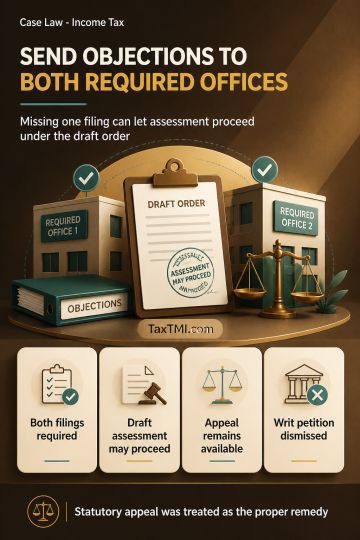
Dispute Resolution Panel objections must reach both prescribed forums; otherwise assessment may proceed and statutory appeal remains the proper remedy...
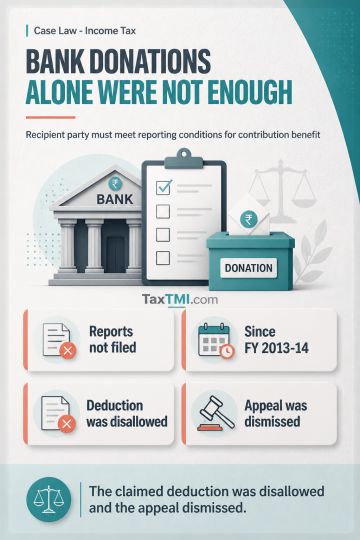
Political contribution deductions require recipient party compliance with contribution-reporting conditions; banking-channel donations alone do not qu...
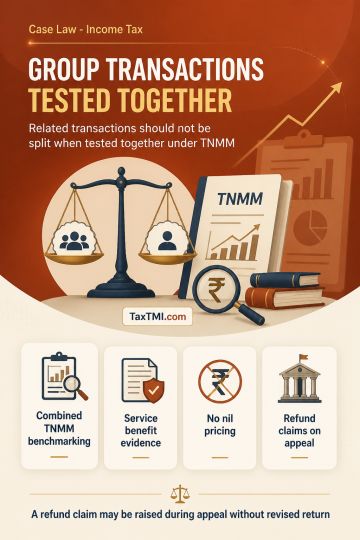
Aggregation under TNMM prevents selective testing of intra-group services without comparable uncontrolled transactions, while appellate additional cla...
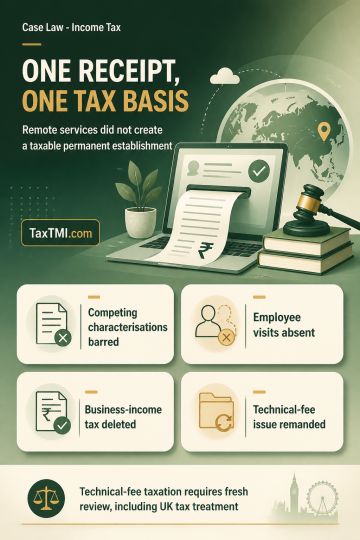
Protective assessment cannot duplicate identical receipts under competing characterisations; remote services did not establish a taxable permanent est...
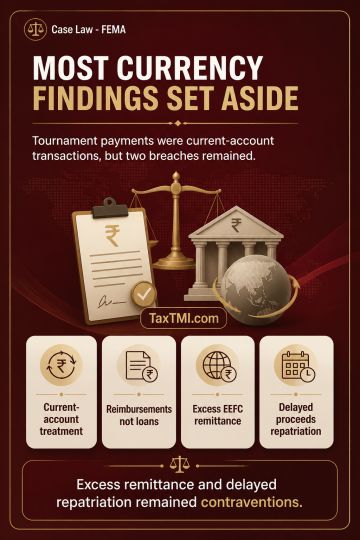
Current account treatment of overseas tournament services removed most FEMA findings, but excess EEFC remittance and delayed repatriation remained bre...
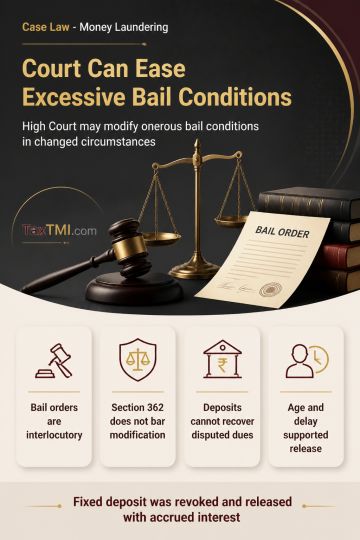
Modification of bail conditions remains available through inherent jurisdiction where onerous deposits undermine justice and cannot recover disputed d...
The High Court examined the validity of Notification No. 56/2023-CT dated 28.12.2023, which extended the time limit for passing orders u/s 73 of the Central Goods and Services Tax Act (CGST Act). The key issues were the absence of a recommendation from the GST Council and the absence of a corresponding state government notification parallel to the Central Government's notification. The Court held that exercising powers u/s 168A of the CGST Act to extend time limits requires a recommendation from the GST Council and the existence of force majeure circumstances, as defined in the Explanation to Section 168A. Citing the Supreme Court's judgment in V.M. Kurian Vs. State of Kerala, the Court emphasized that the word "recommendation" implies a statement expressing commendation, and its meaning must be understood in the context of the relevant provisions and objects. The Court observed that the CGST Act and State GST Acts do not define "recommendation" but noted the constitutional provisions promoting fiscal and cooperative federalism. Consequently, the Court ruled that the Notification No. 56/2023-CT is ultra vires the CGST Act and legally unsustainable, setting it aside. The Orders-in-Original passed u/s 73(9) of the CGST Act and State GST Act beyond the prescribed time limit u/s 73(10.
The High Court examined the validity of Notification No. 56/2023-CT dated 28.12.2023, which extended the time limit for passing orders u/s 73 of the Central Goods and Services Tax Act (CGST Act). The key issues were the absence of a recommendation from the GST Council and the absence of a corresponding state government notification parallel to the Central Government's notification. The Court held that exercising powers u/s 168A of the CGST Act to extend time limits requires a recommendation from the GST Council and the existence of force majeure circumstances, as defined in the Explanation to Section 168A. Citing the Supreme Court's judgment in V.M. Kurian Vs. State of Kerala, the Court emphasized that the word "recommendation" implies a statement expressing commendation, and its meaning must be understood in the context of the relevant provisions and objects. The Court observed that the CGST Act and State GST Acts do not define "recommendation" but noted the constitutional provisions promoting fiscal and cooperative federalism. Consequently, the Court ruled that the Notification No. 56/2023-CT is ultra vires the CGST Act and legally unsustainable, setting it aside. The Orders-in-Original passed u/s 73(9) of the CGST Act and State GST Act beyond the prescribed time limit u/s 73(10.
Note: It is a system-generated summary and is for quick reference only.
 TaxTMI
 of 4805




 Join Channel


 TaxTMI
