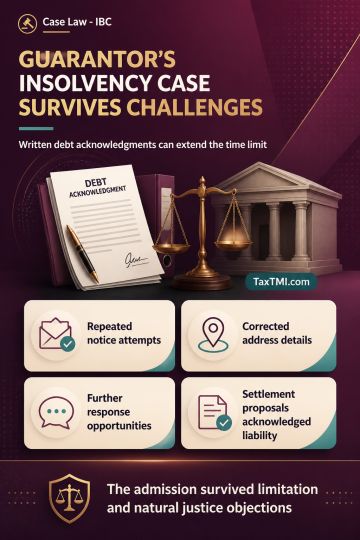
Service of notice and contractual debt acknowledgment preserved insolvency admission against a corporate guarantor despite limitation and natural just...
Original works exemption excludes standalone boulder transportation, leaving subcontracted railway-project transport services subject to service tax l...
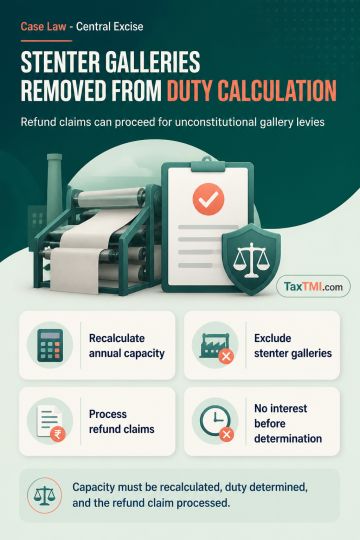
Annual production capacity determinations excluding stenter galleries support refunds for unconstitutional excise levies without an unjust-enrichment ...
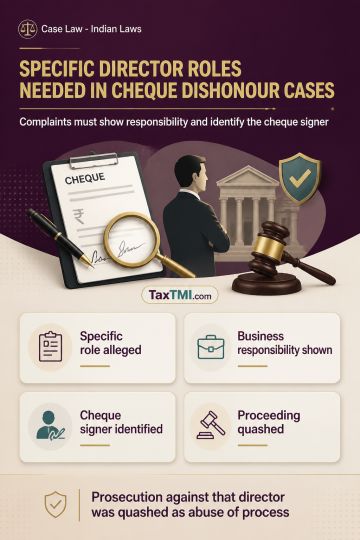
Vicarious liability for cheque dishonour requires specific allegations of responsibility and cheque signatory; generic director allegations cannot sus...
IT Resilience Index requires market infrastructure institutions to automate resilience scoring, early warnings, and continuous service-delivery monito...
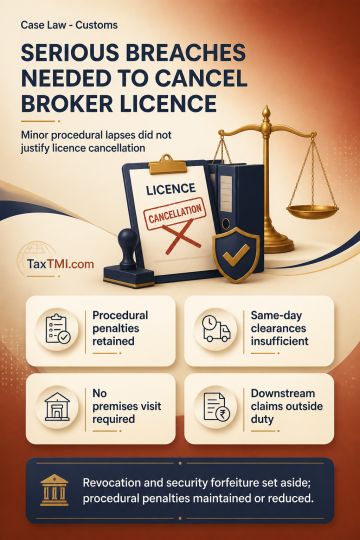
The High Court dismissed the revenue's appeal against the Tribunal's order, upholding the Tribunal's view that the Customs Broker Licensing Regulations (CBLR) 2013 do not mandate physical verification of exporters, their premises, or antecedents. The allegation was that the respondent customs broker initiated clearance without meeting the exporter's authorized person and received work through intermediaries. However, the Tribunal found this permissible under the CBLR. The Court noted that the Department did not investigate how the seal was affixed or officials' involvement. Additionally, parallel proceedings against the respondent's partner concluded favorably, with no prosecution recommended and no adverse findings by the DRI. Consequently, the Court upheld the Tribunal's plausible interpretation of the regulations, dismissing the revenue's appeal.
The High Court dismissed the revenue's appeal against the Tribunal's order, upholding the Tribunal's view that the Customs Broker Licensing Regulations (CBLR) 2013 do not mandate physical verification of exporters, their premises, or antecedents. The allegation was that the respondent customs broker initiated clearance without meeting the exporter's authorized person and received work through intermediaries. However, the Tribunal found this permissible under the CBLR. The Court noted that the Department did not investigate how the seal was affixed or officials' involvement. Additionally, parallel proceedings against the respondent's partner concluded favorably, with no prosecution recommended and no adverse findings by the DRI. Consequently, the Court upheld the Tribunal's plausible interpretation of the regulations, dismissing the revenue's appeal.
Note: It is a system-generated summary and is for quick reference only.
 TaxTMI
  TaxTMI
 of 4828











 Join Channel