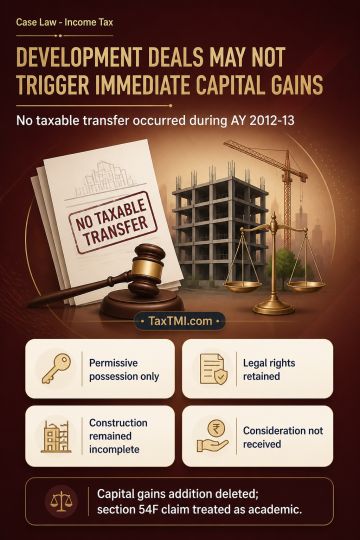
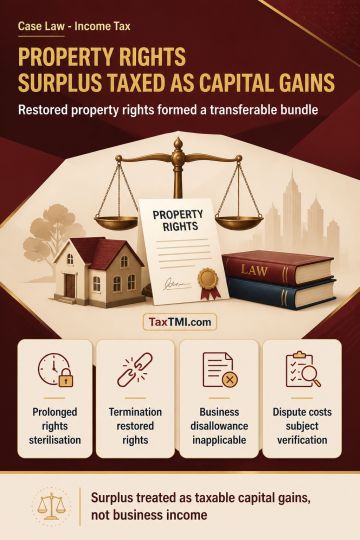
Development agreements require legal possession or effective enjoyment for capital gains transfer; permissive possession and deferred consideration de...
Prolonged sterilisation of development rights supports capital-gains treatment, while business-income disallowances cannot govern capital-gains comput...
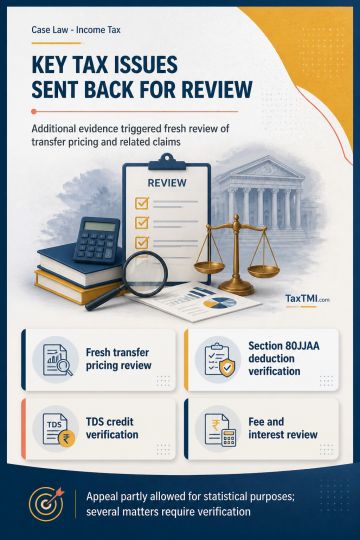
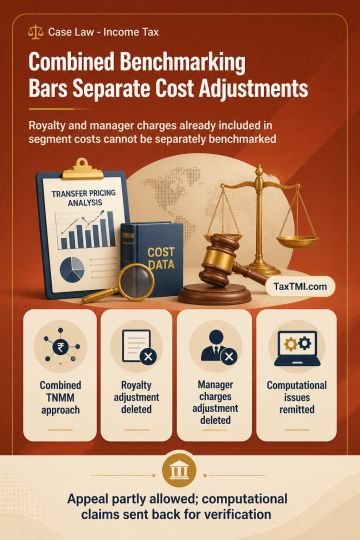
Additional evidence in transfer pricing dispute leads to fresh examination, while tax deductions, TDS credit, fee and refund interest require verifica...
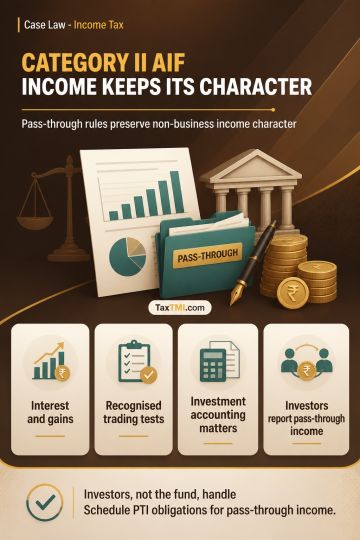
Category II AIF pass-through taxation preserves non-business income character; investment receipts cannot be reclassified without applying recognised ...
The High Court held that the show cause notices issued by the respondent u/s 73 of the Central Goods and Services Tax (CGST) Act, 2017, were flawed due to the improper consolidation of multiple tax periods into a single notice. Section 73(10) mandates a specific time limit from the due date for furnishing the annual return for the financial year to which the tax due relates. The law requires particular actions to be completed within a designated year, in accordance with the provisions. The Court found that issuing a consolidated show cause notice for multiple assessment years from 2017-18 to 2020-21 contravened the CGST Act and established legal precedents, such as the Supreme Court judgment in THE STATE OF JAMMU AND KASHMIR AND OTHERS VERSUS CALTEX (INDIA) LTD. The Court concluded that the respondent erred in this practice and allowed the petition.
The High Court held that the show cause notices issued by the respondent u/s 73 of the Central Goods and Services Tax (CGST) Act, 2017, were flawed due to the improper consolidation of multiple tax periods into a single notice. Section 73(10) mandates a specific time limit from the due date for furnishing the annual return for the financial year to which the tax due relates. The law requires particular actions to be completed within a designated year, in accordance with the provisions. The Court found that issuing a consolidated show cause notice for multiple assessment years from 2017-18 to 2020-21 contravened the CGST Act and established legal precedents, such as the Supreme Court judgment in THE STATE OF JAMMU AND KASHMIR AND OTHERS VERSUS CALTEX (INDIA) LTD. The Court concluded that the respondent erred in this practice and allowed the petition.
Note: It is a system-generated summary and is for quick reference only.
 TaxTMI
  TaxTMI
 of 4807





 Join Channel


