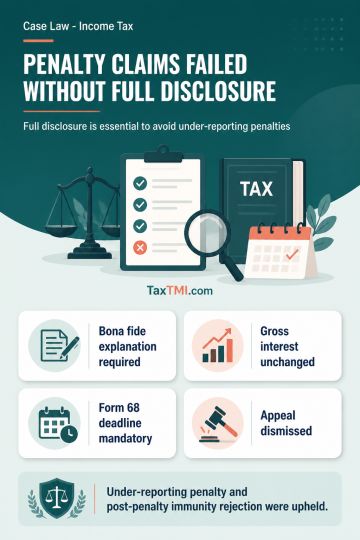
Bona fide disclosure requirements govern under-reporting penalties, and post-penalty immunity applications cannot secure available statutory protectio...
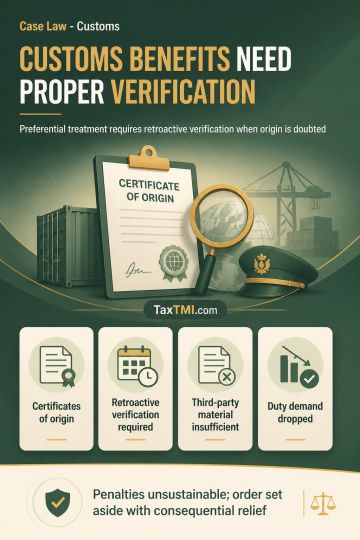
Certificate-of-origin verification procedure governs preferential customs benefits; denial without retroactive verification was set aside with consequ...
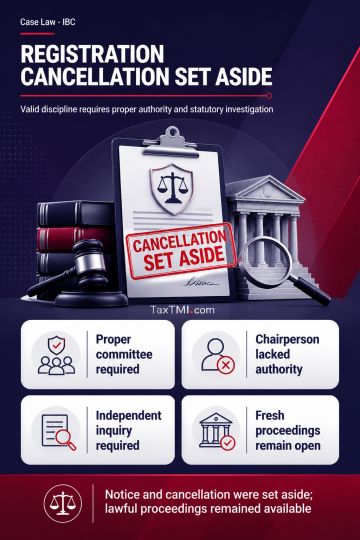
Disciplinary Committee jurisdiction and mandatory investigation requirements invalidated cancellation of an insolvency professional's registration and...
Retention of seized property survives where recorded reasons support proceeds of crime, while stayed investigation periods are excluded from limitatio...
The High Court held that the show cause notices issued by the respondent u/s 73 of the Central Goods and Services Tax (CGST) Act, 2017, were flawed due to the improper consolidation of multiple tax periods into a single notice. Section 73(10) mandates a specific time limit from the due date for furnishing the annual return for the financial year to which the tax due relates. The law requires particular actions to be completed within a designated year, in accordance with the provisions. The Court found that issuing a consolidated show cause notice for multiple assessment years from 2017-18 to 2020-21 contravened the CGST Act and established legal precedents, such as the Supreme Court judgment in THE STATE OF JAMMU AND KASHMIR AND OTHERS VERSUS CALTEX (INDIA) LTD. The Court concluded that the respondent erred in this practice and allowed the petition.
The High Court held that the show cause notices issued by the respondent u/s 73 of the Central Goods and Services Tax (CGST) Act, 2017, were flawed due to the improper consolidation of multiple tax periods into a single notice. Section 73(10) mandates a specific time limit from the due date for furnishing the annual return for the financial year to which the tax due relates. The law requires particular actions to be completed within a designated year, in accordance with the provisions. The Court found that issuing a consolidated show cause notice for multiple assessment years from 2017-18 to 2020-21 contravened the CGST Act and established legal precedents, such as the Supreme Court judgment in THE STATE OF JAMMU AND KASHMIR AND OTHERS VERSUS CALTEX (INDIA) LTD. The Court concluded that the respondent erred in this practice and allowed the petition.
Note: It is a system-generated summary and is for quick reference only.
 TaxTMI
 of 4807










 Join Channel


 TaxTMI