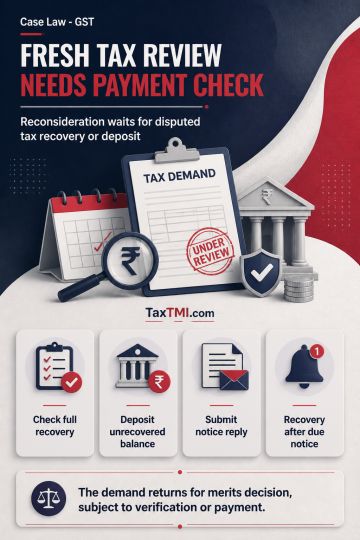
Preliminary-expense amortisation and MAT exempt-income adjustments prevailed, while trademark costs and managerial remuneration require fresh verifica...
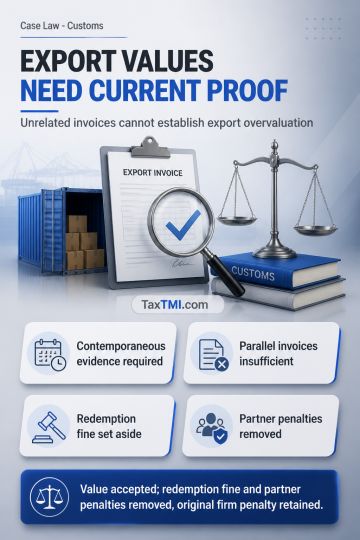
Export valuation requires contemporaneous evidence; unrelated invoices cannot prove overvaluation, and dual penalties on firm and partner are impermis...
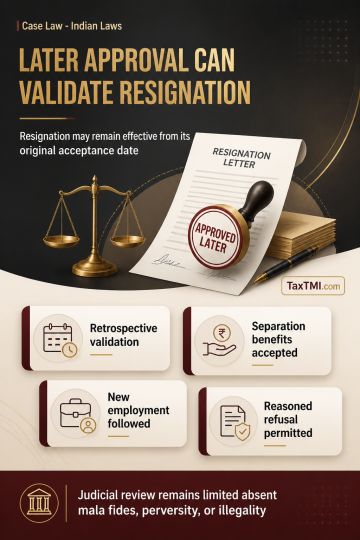
Ratification of resignation acceptance validates separation retrospectively, while withdrawal may be refused through reasoned administrative discretio...
Nature-dependent electricity contracts receive new Ind AS accounting, hedge designation, transition and financial-statement disclosure requirements fr...
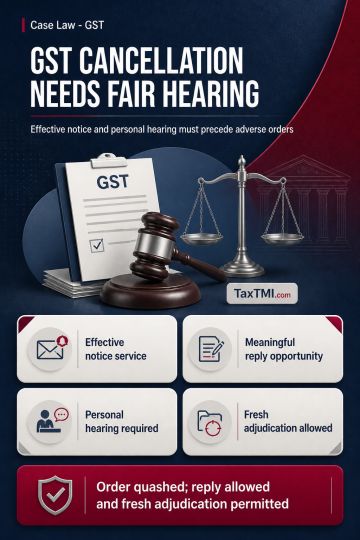
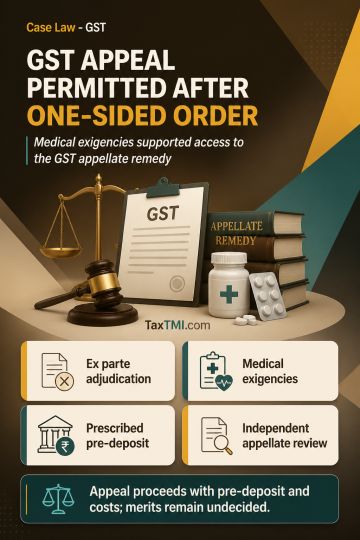
Alternative GST remedy permitted protective writ intervention for ex parte adjudication, preserving independent appellate review of input tax credit d...
The High Court held that the show cause notices issued by the respondent u/s 73 of the Central Goods and Services Tax (CGST) Act, 2017, were flawed due to the improper consolidation of multiple tax periods into a single notice. Section 73(10) mandates a specific time limit from the due date for furnishing the annual return for the financial year to which the tax due relates. The law requires particular actions to be completed within a designated year, in accordance with the provisions. The Court found that issuing a consolidated show cause notice for multiple assessment years from 2017-18 to 2020-21 contravened the CGST Act and established legal precedents, such as the Supreme Court judgment in THE STATE OF JAMMU AND KASHMIR AND OTHERS VERSUS CALTEX (INDIA) LTD. The Court concluded that the respondent erred in this practice and allowed the petition.
The High Court held that the show cause notices issued by the respondent u/s 73 of the Central Goods and Services Tax (CGST) Act, 2017, were flawed due to the improper consolidation of multiple tax periods into a single notice. Section 73(10) mandates a specific time limit from the due date for furnishing the annual return for the financial year to which the tax due relates. The law requires particular actions to be completed within a designated year, in accordance with the provisions. The Court found that issuing a consolidated show cause notice for multiple assessment years from 2017-18 to 2020-21 contravened the CGST Act and established legal precedents, such as the Supreme Court judgment in THE STATE OF JAMMU AND KASHMIR AND OTHERS VERSUS CALTEX (INDIA) LTD. The Court concluded that the respondent erred in this practice and allowed the petition.
Note: It is a system-generated summary and is for quick reference only.
 TaxTMI
 of 4803













 Join Channel


 TaxTMI