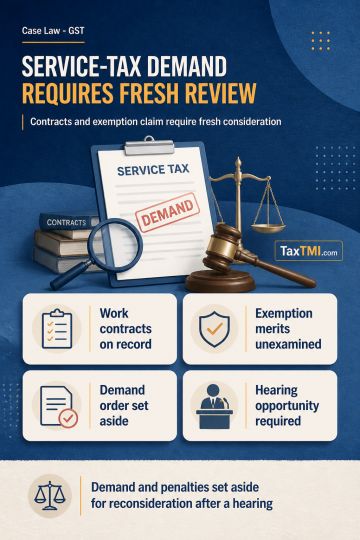
Governmental authority status supports construction-service exemption, while pre-cutoff contract and stamp-duty compliance requires verification on re...
Automated Free Sale and Commerce Certificates enable paperless processing while retaining risk-based manual verification for selected exporter applica...
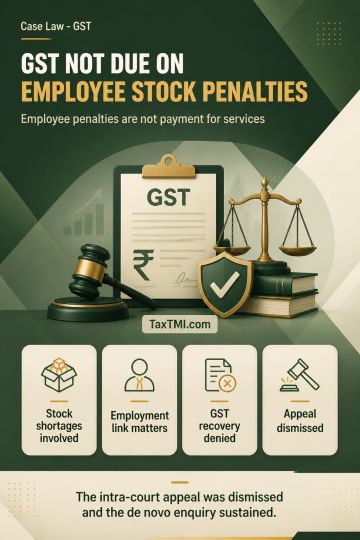
Employee stock-shortage penalties do not constitute consideration for services, preventing GST collection under Schedule II in employment relationship...
Section 53(1) of the Insolvency and Bankruptcy Code (IBC) provides for the order of priority in the distribution of liquidation assets. Financial debts owed to unsecured creditors rank higher at clause (d) than operational debts which fall under clause (f). The appellant, an operational creditor, cannot claim priority over the respondent, an unsecured financial creditor, even if the respondent is a related party. The definition of 'financial debt' u/s 5(8) does not exclude debts from related parties. While related parties may face restrictions u/ss 21 and 29A, their financial debts retain priority over operational debts in liquidation distribution as per Section 53(1). The Supreme Court's judgment upheld the intelligible differentia between financial and operational debts, and the BLRC Report highlighted the importance of unsecured financial creditors' dues. The NCLAT correctly dismissed the appellant's application seeking priority over the unsecured financial creditor.
Section 53(1) of the Insolvency and Bankruptcy Code (IBC) provides for the order of priority in the distribution of liquidation assets. Financial debts owed to unsecured creditors rank higher at clause (d) than operational debts which fall under clause (f). The appellant, an operational creditor, cannot claim priority over the respondent, an unsecured financial creditor, even if the respondent is a related party. The definition of 'financial debt' u/s 5(8) does not exclude debts from related parties. While related parties may face restrictions u/ss 21 and 29A, their financial debts retain priority over operational debts in liquidation distribution as per Section 53(1). The Supreme Court's judgment upheld the intelligible differentia between financial and operational debts, and the BLRC Report highlighted the importance of unsecured financial creditors' dues. The NCLAT correctly dismissed the appellant's application seeking priority over the unsecured financial creditor.
Note: It is a system-generated summary and is for quick reference only.
 TaxTMI
  TaxTMI
 of 4828















 Join Channel


