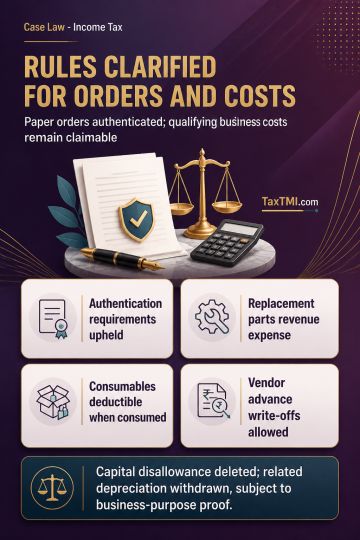
Authentication of paper assessment orders upheld, while qualifying repairs, consumables and vendor advance write-offs remain deductible business claim...
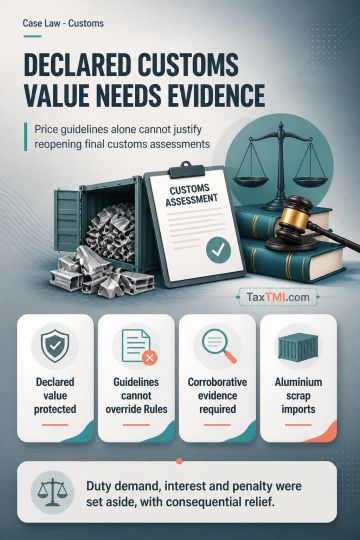
Transaction value cannot be rejected solely on non-statutory valuation guidelines without corroborative evidence supporting reassessment of final cust...
Cross-examination rights and corroborated evidence limit customs penalties for misdeclaration in genuine import transactions involving documented clea...
Tariff classification of vehicle gear components follows the specific gearing entry, displacing motor-vehicle parts classification and related liabili...
This case deals with the issue of granting bail in a case involving forgery, creation of fake GST firms, and related economic offenses. The key points are: The court held that the present case is one of forgery and not related to GST, hence the accused cannot claim the benefit of bail granted in other GST cases. The court analyzed the concepts of inquiry, investigation, and trial under the Criminal Procedure Code, concluding that the arguments raised by the accused regarding jurisdiction have no merit. The court examined the applicability of Section 27 of the Indian Evidence Act, 1872, which deals with the relevancy of information received from an accused person in police custody. It held that the confessional statements made by the accused leading to the discovery of laptops, mobiles, SIM cards, and fake invoices are admissible as evidence under this section. The court emphasized that economic offenses like fraud, money laundering, and corruption are viewed seriously as they affect the economic fabric of society. In this case, involving crores of rupees and registration of fake firms using forged Aadhaar and PAN cards, the court found grounds to deny bail. The accused were avoiding court proceedings and causing deliberate delays, indicating interference with the judicial process, which further justified the denial of bail. The court also rejected the jurisdictional arguments raised by the accused, stating that the genuineness of the.
This case deals with the issue of granting bail in a case involving forgery, creation of fake GST firms, and related economic offenses. The key points are: The court held that the present case is one of forgery and not related to GST, hence the accused cannot claim the benefit of bail granted in other GST cases. The court analyzed the concepts of inquiry, investigation, and trial under the Criminal Procedure Code, concluding that the arguments raised by the accused regarding jurisdiction have no merit. The court examined the applicability of Section 27 of the Indian Evidence Act, 1872, which deals with the relevancy of information received from an accused person in police custody. It held that the confessional statements made by the accused leading to the discovery of laptops, mobiles, SIM cards, and fake invoices are admissible as evidence under this section. The court emphasized that economic offenses like fraud, money laundering, and corruption are viewed seriously as they affect the economic fabric of society. In this case, involving crores of rupees and registration of fake firms using forged Aadhaar and PAN cards, the court found grounds to deny bail. The accused were avoiding court proceedings and causing deliberate delays, indicating interference with the judicial process, which further justified the denial of bail. The court also rejected the jurisdictional arguments raised by the accused, stating that the genuineness of the.
Note: It is a system-generated summary and is for quick reference only.
 TaxTMI
 of 4805












 Join Channel


 TaxTMI

