Defined public benefit can retain charitable character; registration renewal requires examining genuine activities and legal compliance, not surplus a...
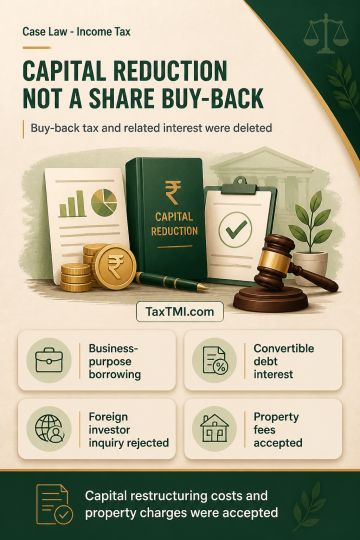
Capital reduction is distinct from share buy-back, preventing buy-back tax; restructuring interest and related business deductions also survive scruti...
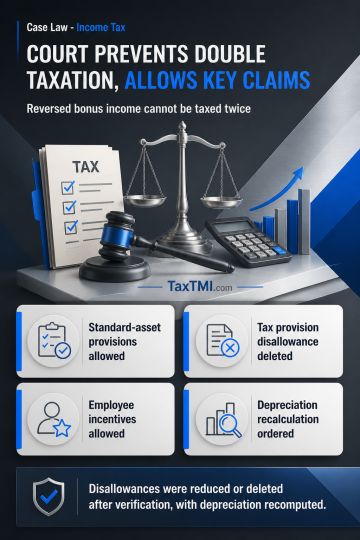
Transfer pricing and tax deductions upheld on established principles, while employee contributions and warranty provisions returned for fresh examinat...
Captive transfer pricing relies on industrial consumer tariffs, while genuine quotations can benchmark effluent treatment transfers under the Other Me...
Specific tariff classification for ophthalmic instruments and extended limitation principles determine the treatment of duty demands, confiscation, an...
Integrated golf function determines classification, placing launch monitors and simulators under other golf equipment rather than measuring instrument...
The petitioner failed to challenge the matter within statutory provisions and raised the constitutional validity of Section 29(2) under CGST and BGST Acts. The court found the decision in Rohit Enterprises persuasive but not binding. While the facts differed, the hardship was similar to a previous case where the constitutional guarantee to carry out trade and commerce was upheld. No valid ground was raised against the delay in filing an appeal, as Section 30 allows revocation of cancellation within 30 days. The court found no reason to exercise discretionary power or entertain the writ petition testing Section 29(2)'s constitutional validity, as the orders were within statutory boundaries. Consequently, the writ petition was dismissed.
The petitioner failed to challenge the matter within statutory provisions and raised the constitutional validity of Section 29(2) under CGST and BGST Acts. The court found the decision in Rohit Enterprises persuasive but not binding. While the facts differed, the hardship was similar to a previous case where the constitutional guarantee to carry out trade and commerce was upheld. No valid ground was raised against the delay in filing an appeal, as Section 30 allows revocation of cancellation within 30 days. The court found no reason to exercise discretionary power or entertain the writ petition testing Section 29(2)'s constitutional validity, as the orders were within statutory boundaries. Consequently, the writ petition was dismissed.
Note: It is a system-generated summary and is for quick reference only.
 TaxTMI
 of 4807












 Join Channel


 TaxTMI
