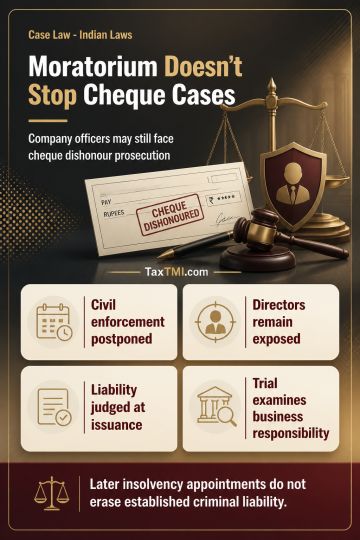
Insolvency moratorium does not shield company officers from cheque dishonour prosecution for liability arising before corporate insolvency proceedings...
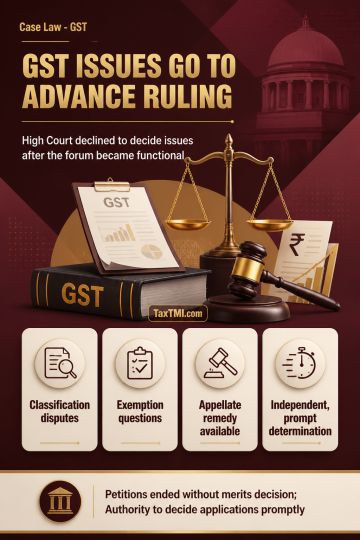
Advance-ruling mechanism governs pending GST classification, exemption and taxability disputes, limiting writ review once the specialised forum functi...
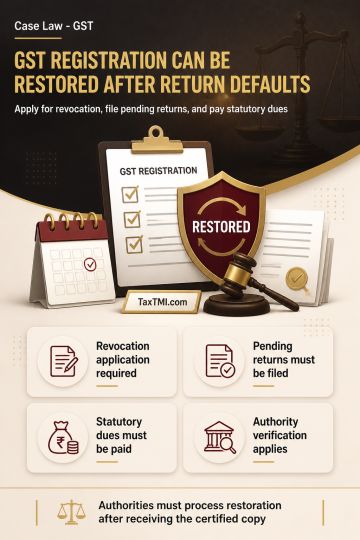
The petitioner failed to challenge the matter within statutory provisions and raised the constitutional validity of Section 29(2) under CGST and BGST Acts. The court found the decision in Rohit Enterprises persuasive but not binding. While the facts differed, the hardship was similar to a previous case where the constitutional guarantee to carry out trade and commerce was upheld. No valid ground was raised against the delay in filing an appeal, as Section 30 allows revocation of cancellation within 30 days. The court found no reason to exercise discretionary power or entertain the writ petition testing Section 29(2)'s constitutional validity, as the orders were within statutory boundaries. Consequently, the writ petition was dismissed.
The petitioner failed to challenge the matter within statutory provisions and raised the constitutional validity of Section 29(2) under CGST and BGST Acts. The court found the decision in Rohit Enterprises persuasive but not binding. While the facts differed, the hardship was similar to a previous case where the constitutional guarantee to carry out trade and commerce was upheld. No valid ground was raised against the delay in filing an appeal, as Section 30 allows revocation of cancellation within 30 days. The court found no reason to exercise discretionary power or entertain the writ petition testing Section 29(2)'s constitutional validity, as the orders were within statutory boundaries. Consequently, the writ petition was dismissed.
Note: It is a system-generated summary and is for quick reference only.
 TaxTMI
 of 4805




 Join Channel


 TaxTMI
