Specified regulatory authority income receives conditional tax exemption, subject to non-commercial activity, unchanged income character, and return f...
Tax exemption for regulatory authority income applies retrospectively, subject to non-commercial activity, unchanged income sources, and return-filing...
Input tax credit conditions remain constitutionally valid, with eligible recipient claims considered under GST circulars and retrospective filing dead...
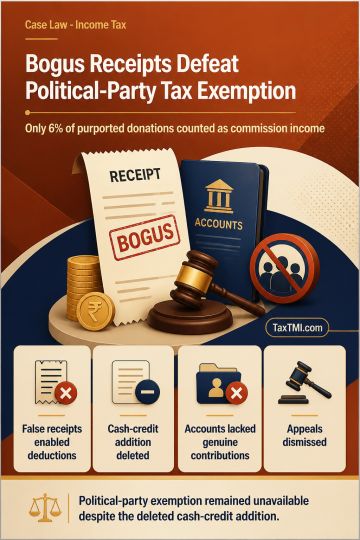
Bogus donation receipts justified commission income assessment and defeated political-party tax exemption for inaccurate accounts and reporting failur...
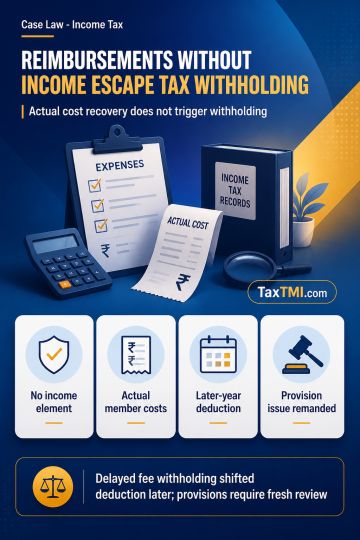
Pure reimbursement without income element escapes tax withholding, while delayed withholding and unsupported provisions face deferred or renewed scrut...
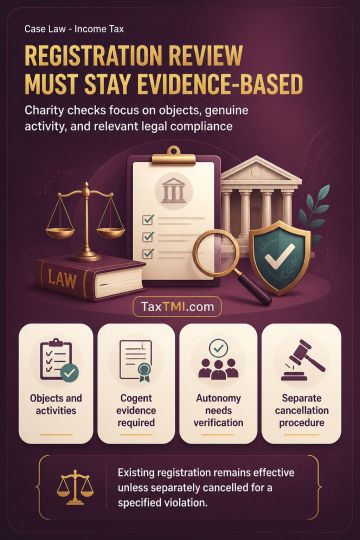
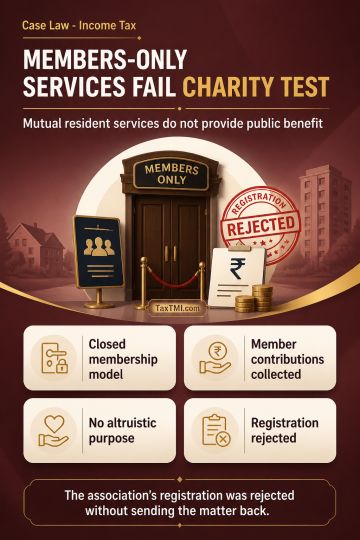
Public benefit requirement defeats charitable registration where residents' association services are reciprocal, member-only facilities governed by mu...
The petitioner failed to challenge the matter within statutory provisions and raised the constitutional validity of Section 29(2) under CGST and BGST Acts. The court found the decision in Rohit Enterprises persuasive but not binding. While the facts differed, the hardship was similar to a previous case where the constitutional guarantee to carry out trade and commerce was upheld. No valid ground was raised against the delay in filing an appeal, as Section 30 allows revocation of cancellation within 30 days. The court found no reason to exercise discretionary power or entertain the writ petition testing Section 29(2)'s constitutional validity, as the orders were within statutory boundaries. Consequently, the writ petition was dismissed.
The petitioner failed to challenge the matter within statutory provisions and raised the constitutional validity of Section 29(2) under CGST and BGST Acts. The court found the decision in Rohit Enterprises persuasive but not binding. While the facts differed, the hardship was similar to a previous case where the constitutional guarantee to carry out trade and commerce was upheld. No valid ground was raised against the delay in filing an appeal, as Section 30 allows revocation of cancellation within 30 days. The court found no reason to exercise discretionary power or entertain the writ petition testing Section 29(2)'s constitutional validity, as the orders were within statutory boundaries. Consequently, the writ petition was dismissed.
Note: It is a system-generated summary and is for quick reference only.
 TaxTMI
 of 4805










 Join Channel


 TaxTMI