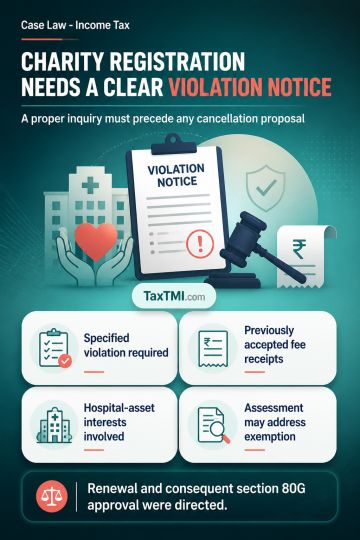
Charitable trust registration requires a specified-violation notice; settled cash deposits and related-party payments did not justify cancellation or ...
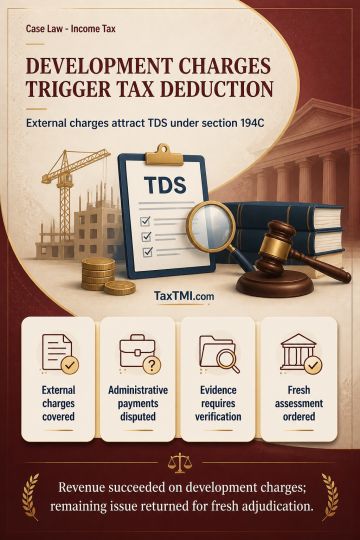
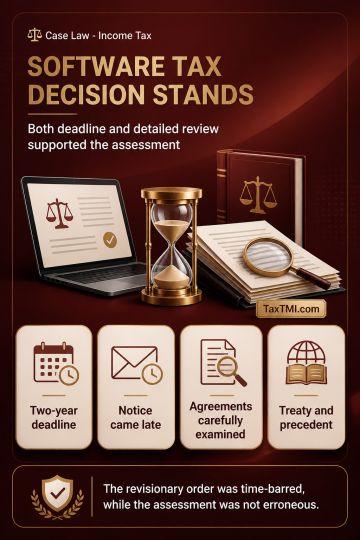
External development charges trigger TDS under section 194C, while disputed administrative payments require factual verification and fresh adjudicatio...
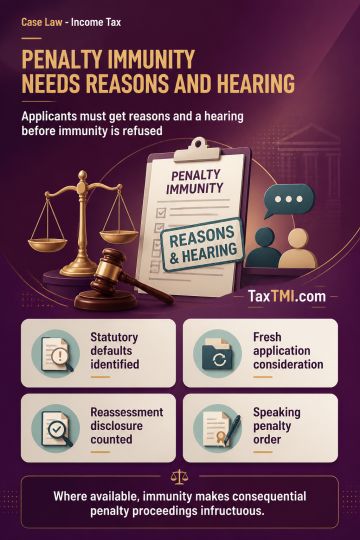
Section 270AA penalty immunity requires identified statutory defaults and a hearing before rejection; reassessment disclosure may constitute under-rep...
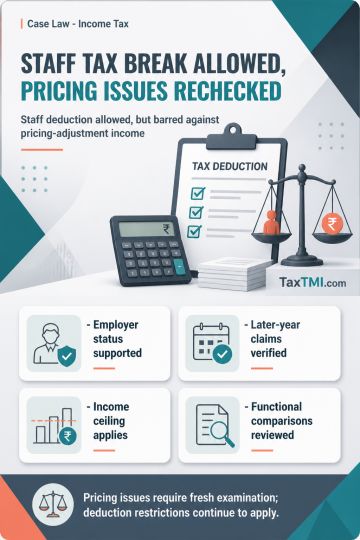
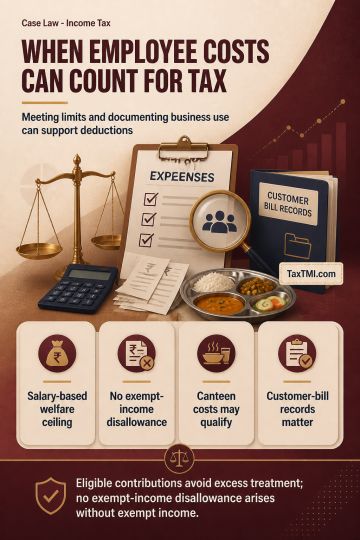
Section 80JJAA employee-cost deduction allowed for deployed staff but barred against transfer-pricing income enhancement, with pricing issues remanded...
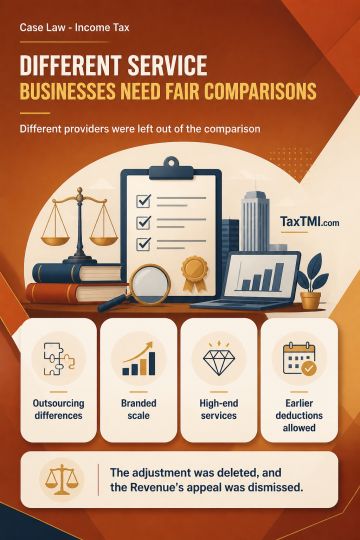
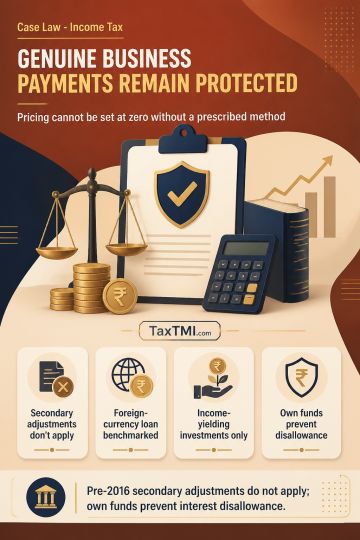
Transfer-pricing methodology protects commercially genuine associated-enterprise payments, while pre-2016 secondary adjustments and related notional i...
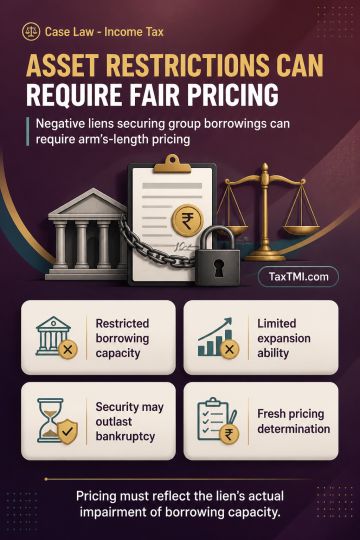
Negative liens over operating assets can constitute international transactions requiring arm's-length pricing reflecting restricted borrowing and expa...
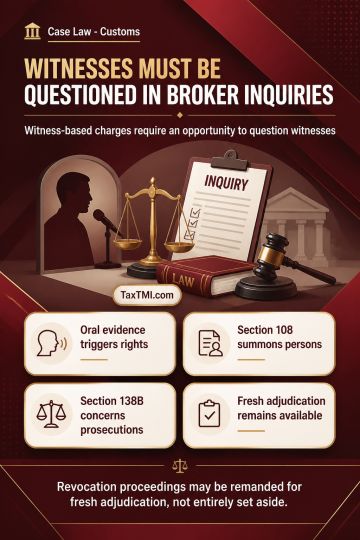
Cross-examination rights in Customs Broker revocation inquiries require witness examination; procedural denial may be cured through fresh adjudication...
The High Court examined the validity of reassessment notices issued u/s 148 of the Income Tax Act, considering the sanction requirement u/s 151 and the impact of the Taxation and Other Laws (Relaxation & Amendment of Certain Provisions) Act, 2020 (TOLA). The key points are: TOLA was a remedial measure to enable authorities to take action within extended timelines during the nationwide lockdown, but it did not alter the distribution of powers or hierarchy u/s 151. The authority competent to grant approval for reassessment depends on the time elapsed since the end of the relevant assessment year, as prescribed in Section 151. TOLA merely extended the period for initiating reassessment but did not amend the approval structure u/s 151. If reassessment was proposed after four years from the end of the assessment year, approval should have been granted by the Principal Chief Commissioner/Chief Commissioner, not the Joint Commissioner. The use of "sanction" in TOLA does not impact this analysis as the Income Tax Act does not prescribe a time limit for granting sanction. Consequently, the reassessment notices based on sanction from the Joint Commissioner were quashed as invalid.
The High Court examined the validity of reassessment notices issued u/s 148 of the Income Tax Act, considering the sanction requirement u/s 151 and the impact of the Taxation and Other Laws (Relaxation & Amendment of Certain Provisions) Act, 2020 (TOLA). The key points are: TOLA was a remedial measure to enable authorities to take action within extended timelines during the nationwide lockdown, but it did not alter the distribution of powers or hierarchy u/s 151. The authority competent to grant approval for reassessment depends on the time elapsed since the end of the relevant assessment year, as prescribed in Section 151. TOLA merely extended the period for initiating reassessment but did not amend the approval structure u/s 151. If reassessment was proposed after four years from the end of the assessment year, approval should have been granted by the Principal Chief Commissioner/Chief Commissioner, not the Joint Commissioner. The use of "sanction" in TOLA does not impact this analysis as the Income Tax Act does not prescribe a time limit for granting sanction. Consequently, the reassessment notices based on sanction from the Joint Commissioner were quashed as invalid.
Note: It is a system-generated summary and is for quick reference only.
 TaxTMI
  TaxTMI
 of 4828




 Join Channel


