Transaction value cannot be rejected solely on non-statutory valuation guidelines without corroborative evidence supporting reassessment of final cust...
Cross-examination rights and corroborated evidence limit customs penalties for misdeclaration in genuine import transactions involving documented clea...
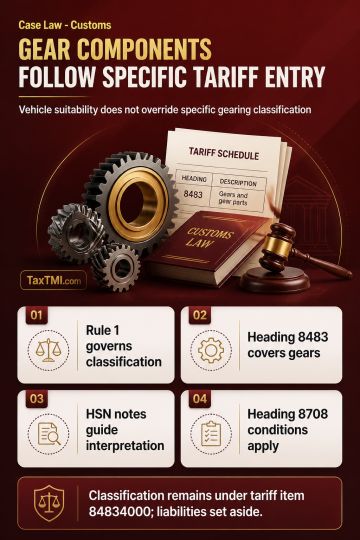
Tariff classification of vehicle gear components follows the specific gearing entry, displacing motor-vehicle parts classification and related liabili...
Necessary-party requirements limit impleadment of independent entities, while deferred consideration does not create an appealable adverse determinati...
Food supplement classification requires common parlance and authoritative tests, preventing treatment as proprietary Ayurvedic medicines without suppo...
In the present case involving economic offenses related to GST fraud, the court denied bail to the applicants. The applicants were found to be connected with Sanjay Dhingra in transactions involving fake GST firms registered using stolen PAN and Aadhaar details. The money trail and financial transactions revealed unexplained huge amounts being deposited into the applicants' accounts, indicating their involvement in illegal activities. The court noted that such fraudsters set up companies only on paper to generate fake transactions and claim Input Tax Credit, abandoning them later. Economic offenses like large-scale fraud, money laundering, and corruption are viewed seriously as they affect the economic fabric of society. The court considered factors like the nature of accusations, evidence, severity of punishment, character of the accused, possibility of securing presence at trial, apprehension of witness tampering, and public interest. Precedents are not the sole basis for granting or refusing bail, and each case is considered on its specific facts and circumstances. Based on the evidence and submissions, the court found it not a fit case for granting bail and dismissed the application.
In the present case involving economic offenses related to GST fraud, the court denied bail to the applicants. The applicants were found to be connected with Sanjay Dhingra in transactions involving fake GST firms registered using stolen PAN and Aadhaar details. The money trail and financial transactions revealed unexplained huge amounts being deposited into the applicants' accounts, indicating their involvement in illegal activities. The court noted that such fraudsters set up companies only on paper to generate fake transactions and claim Input Tax Credit, abandoning them later. Economic offenses like large-scale fraud, money laundering, and corruption are viewed seriously as they affect the economic fabric of society. The court considered factors like the nature of accusations, evidence, severity of punishment, character of the accused, possibility of securing presence at trial, apprehension of witness tampering, and public interest. Precedents are not the sole basis for granting or refusing bail, and each case is considered on its specific facts and circumstances. Based on the evidence and submissions, the court found it not a fit case for granting bail and dismissed the application.
Note: It is a system-generated summary and is for quick reference only.
 TaxTMI
 of 4805



















 Join Channel


 TaxTMI
