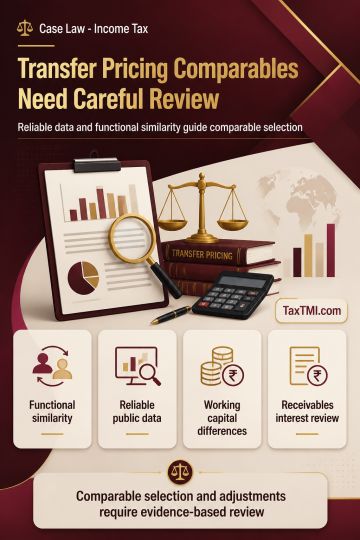
Transfer pricing comparability requires functional alignment, reliable financial data, and careful review of working capital and receivables adjustmen...
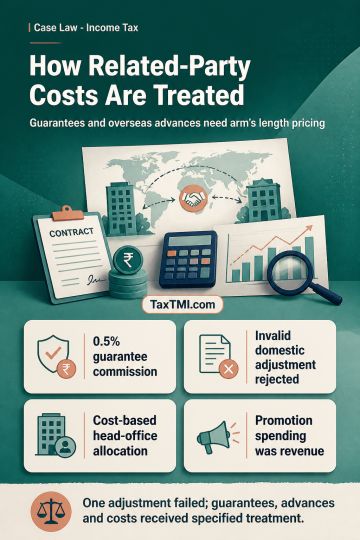
Transfer pricing rules require benchmarking corporate guarantees and associated-enterprise advances, while invalid domestic-transaction adjustments ca...
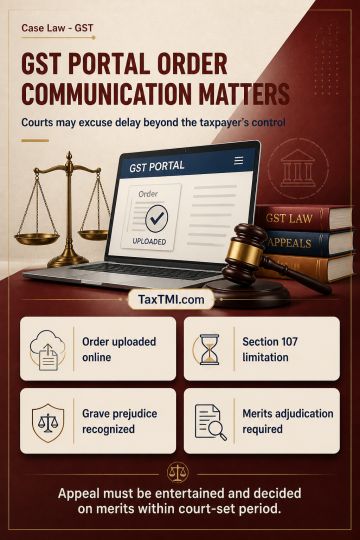
The petitioner challenged the assessment order solely on the ground of not availing the statutory remedy of appeal. The court held that the petitioner did not file an appeal and allowed the assessment order to become final, subsequently approaching the court through a writ petition to challenge the tax, interest, and penalty determination. The petitioner was given an opportunity for a hearing, and the impugned order was passed thereafter. No plausible explanation was provided for not resorting to the statutory appeal remedy. The petitioner consciously chose not to file an appeal u/s 107 of the RGST/CGST Act, 2017, allowing the limitation period and the maximum condonable delay period to expire. Having not preferred an appeal, the writ petition was dismissed as not maintainable.
The petitioner challenged the assessment order solely on the ground of not availing the statutory remedy of appeal. The court held that the petitioner did not file an appeal and allowed the assessment order to become final, subsequently approaching the court through a writ petition to challenge the tax, interest, and penalty determination. The petitioner was given an opportunity for a hearing, and the impugned order was passed thereafter. No plausible explanation was provided for not resorting to the statutory appeal remedy. The petitioner consciously chose not to file an appeal u/s 107 of the RGST/CGST Act, 2017, allowing the limitation period and the maximum condonable delay period to expire. Having not preferred an appeal, the writ petition was dismissed as not maintainable.
Note: It is a system-generated summary and is for quick reference only.
 TaxTMI
 of 4803







 Join Channel


 TaxTMI
