Certificate-of-origin verification procedure governs preferential customs benefits; denial without retroactive verification was set aside with consequ...
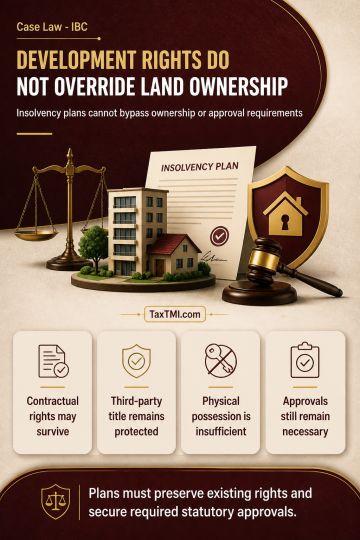
Disciplinary Committee jurisdiction and mandatory investigation requirements invalidated cancellation of an insolvency professional's registration and...
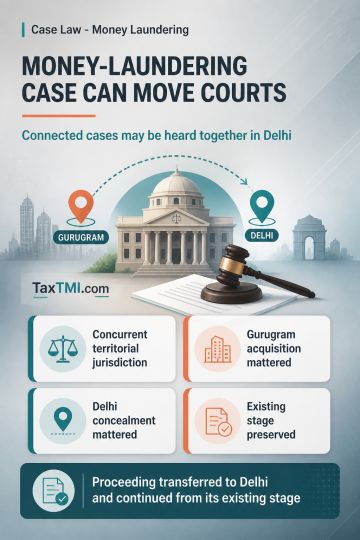
Retention of seized property survives where recorded reasons support proceeds of crime, while stayed investigation periods are excluded from limitatio...
Specified income of Baddi Barotiwala Nalagarh Development Authority receives conditional tax exemption, retrospectively covering its designated assess...
Specified development authority income receives retrospective tax exemption, subject to non-commercial activity, unchanged income sources, and return-...
Unified Brand India framework introduces voluntary Trust Mark certification and funding support for export branding, packaging and global promotional ...
The High Court held that the Assessing Officer cannot reopen the assessment u/s 147 merely based on a change of opinion. The assessee had fully and truly disclosed all material facts during the original assessment proceedings. The reasons recorded by the Assessing Officer for reopening the assessment did not reveal any fresh tangible material, indicating that the belief was formed based on a mere verification of records, resulting in a change of opinion. The Court emphasized the conceptual difference between the power to review and the power to reassess, stating that while the Assessing Officer lacks the power to review, reassessment must be based on fulfilling certain preconditions. Removing the concept of "change of opinion" would allow the Assessing Officer to review assessments under the guise of reopening, leading to potential abuse of power. The Court ruled in favor of the assessee, upholding the principle that a mere change of opinion cannot justify reassessment proceedings.
The High Court held that the Assessing Officer cannot reopen the assessment u/s 147 merely based on a change of opinion. The assessee had fully and truly disclosed all material facts during the original assessment proceedings. The reasons recorded by the Assessing Officer for reopening the assessment did not reveal any fresh tangible material, indicating that the belief was formed based on a mere verification of records, resulting in a change of opinion. The Court emphasized the conceptual difference between the power to review and the power to reassess, stating that while the Assessing Officer lacks the power to review, reassessment must be based on fulfilling certain preconditions. Removing the concept of "change of opinion" would allow the Assessing Officer to review assessments under the guise of reopening, leading to potential abuse of power. The Court ruled in favor of the assessee, upholding the principle that a mere change of opinion cannot justify reassessment proceedings.
Note: It is a system-generated summary and is for quick reference only.
 TaxTMI
 of 4803


















 Join Channel


 TaxTMI

