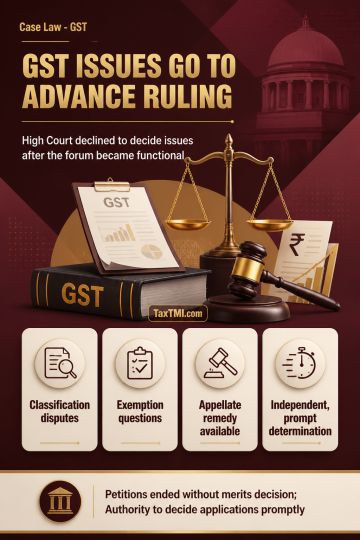
Advance-ruling mechanism governs pending GST classification, exemption and taxability disputes, limiting writ review once the specialised forum functi...
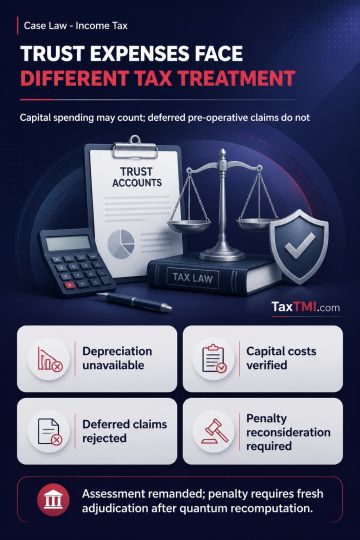
Charitable trust income application permits verified capital expenditure but rejects deferred pre-operative claims and requires reconsideration of con...
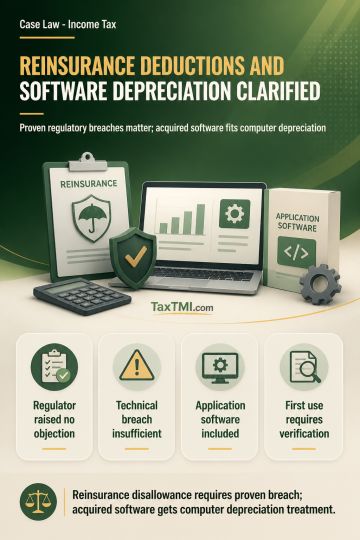
Reinsurance premium deductions require established regulatory breaches, while independently acquired software qualifies within the computer depreciati...
Page of 4796
Press 'Enter' after typing page number.
761 to 780 of 95918 Results
❮
❯
❯❯
0 / 200
Expand Note
Add to Folder
No Folders have been created
+
Are you sure you want to delete "My most important" ?
The High Court held that the Assessing Officer cannot reopen the assessment u/s 147 merely based on a change of opinion. The assessee had fully and truly disclosed all material facts during the original assessment proceedings. The reasons recorded by the Assessing Officer for reopening the assessment did not reveal any fresh tangible material, indicating that the belief was formed based on a mere verification of records, resulting in a change of opinion. The Court emphasized the conceptual difference between the power to review and the power to reassess, stating that while the Assessing Officer lacks the power to review, reassessment must be based on fulfilling certain preconditions. Removing the concept of "change of opinion" would allow the Assessing Officer to review assessments under the guise of reopening, leading to potential abuse of power. The Court ruled in favor of the assessee, upholding the principle that a mere change of opinion cannot justify reassessment proceedings.
The High Court held that the Assessing Officer cannot reopen the assessment u/s 147 merely based on a change of opinion. The assessee had fully and truly disclosed all material facts during the original assessment proceedings. The reasons recorded by the Assessing Officer for reopening the assessment did not reveal any fresh tangible material, indicating that the belief was formed based on a mere verification of records, resulting in a change of opinion. The Court emphasized the conceptual difference between the power to review and the power to reassess, stating that while the Assessing Officer lacks the power to review, reassessment must be based on fulfilling certain preconditions. Removing the concept of "change of opinion" would allow the Assessing Officer to review assessments under the guise of reopening, leading to potential abuse of power. The Court ruled in favor of the assessee, upholding the principle that a mere change of opinion cannot justify reassessment proceedings.
Note: It is a system-generated summary and is for quick reference only.
 TaxTMI
 of 4796








 Join Channel


 TaxTMI