Retention of seized property survives where recorded reasons support proceeds of crime, while stayed investigation periods are excluded from limitatio...
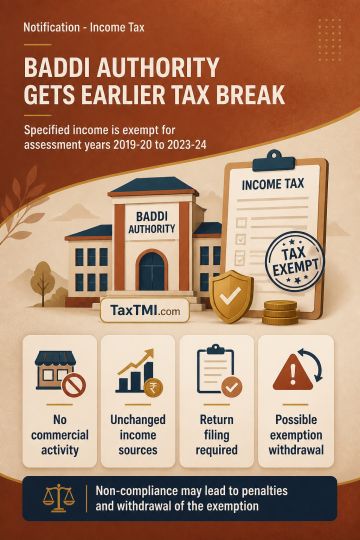
Specified income of Baddi Barotiwala Nalagarh Development Authority receives conditional tax exemption, retrospectively covering its designated assess...
Specified development authority income receives retrospective tax exemption, subject to non-commercial activity, unchanged income sources, and return-...
Unified Brand India framework introduces voluntary Trust Mark certification and funding support for export branding, packaging and global promotional ...
Origin Declaration authentication governs preferential tariff claims under India-UK CETA, requiring a validated reference number before import clearan...
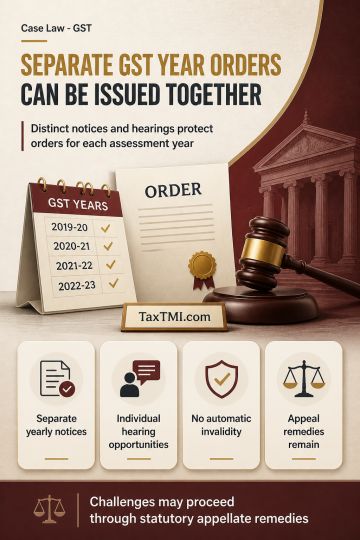
Separate assessment orders for different years remain valid when distinct notices and hearing opportunities prevent prejudice from combined proceeding...
The case pertains to the reopening of assessment u/s 147 of the Income Tax Act. The key points are: The department had already raised queries regarding the accumulation and utilization of funds for different purposes during the original assessment proceedings in 2011. The assessee had provided explanations, which were accepted by the Assessing Officer (AO) at that time. The notice for reopening assessment in 2016 was based on the same issue, which amounts to a mere change of opinion by the AO, not permissible for reopening under the 6-year limitation period. The court relied on precedents like Kelvinator of India and Marico Limited to conclude that once an issue is raised and responded to during assessment, the AO is deemed to have accepted the assessee's explanation if not dealt with in the order. Therefore, the reopening notice was held invalid, being a case of change of opinion, and the assessee's appeal was allowed.
The case pertains to the reopening of assessment u/s 147 of the Income Tax Act. The key points are: The department had already raised queries regarding the accumulation and utilization of funds for different purposes during the original assessment proceedings in 2011. The assessee had provided explanations, which were accepted by the Assessing Officer (AO) at that time. The notice for reopening assessment in 2016 was based on the same issue, which amounts to a mere change of opinion by the AO, not permissible for reopening under the 6-year limitation period. The court relied on precedents like Kelvinator of India and Marico Limited to conclude that once an issue is raised and responded to during assessment, the AO is deemed to have accepted the assessee's explanation if not dealt with in the order. Therefore, the reopening notice was held invalid, being a case of change of opinion, and the assessee's appeal was allowed.
Note: It is a system-generated summary and is for quick reference only.
 TaxTMI
 of 4805

















 Join Channel


 TaxTMI
