Prolonged sterilisation of development rights supports capital-gains treatment, while business-income disallowances cannot govern capital-gains comput...
Additional evidence in transfer pricing dispute leads to fresh examination, while tax deductions, TDS credit, fee and refund interest require verifica...
Category II AIF pass-through taxation preserves non-business income character; investment receipts cannot be reclassified without applying recognised ...
Mutual fund maturity rules require proper rollover, redemption, disclosure, and due diligence; investor gains cannot excuse regulatory breaches or pen...
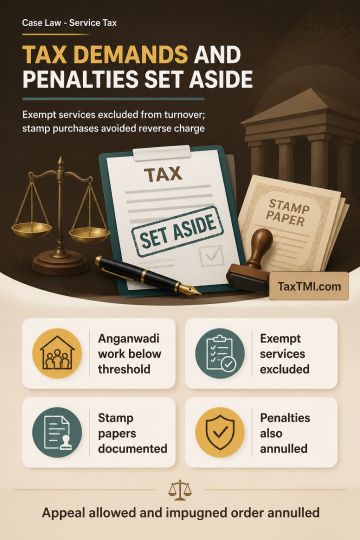
Threshold exemption excludes exempt services, while stamp-paper purchases avoid reverse charge; consequential service tax penalties were also set asid...
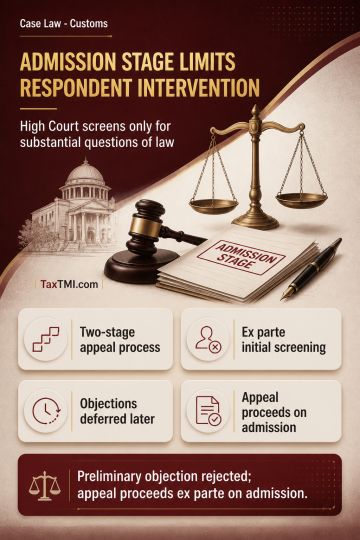
The High Court dismissed the appeal filed by the assessing officer against the order of the Income Tax Appellate Tribunal, holding that no substantial question of law arises for consideration. The Tribunal had deleted the additions made by the assessing officer after rejecting the books of accounts of the assessee u/s 145(3) and making an ex-parte assessment u/s 144. The Court observed that the Tribunal, being the final fact-finding authority, had dealt with all grounds raised by the appellant in a well-reasoned order based on the material on record. The Court stated that a finding of fact may give rise to a substantial question of law if it is based on no evidence, relevant admissible evidence is not considered, inadmissible evidence is taken into account, or legal principles are not applied in appreciating the evidence. However, in this case, the appellant had merely disputed the factual findings of the Tribunal under the guise of substantial questions of law, which is not permitted by the statute. The Court held that no question of law, let alone a substantial question of law, arose from the Tribunal's order, and there was no merit in the appeal.
The High Court dismissed the appeal filed by the assessing officer against the order of the Income Tax Appellate Tribunal, holding that no substantial question of law arises for consideration. The Tribunal had deleted the additions made by the assessing officer after rejecting the books of accounts of the assessee u/s 145(3) and making an ex-parte assessment u/s 144. The Court observed that the Tribunal, being the final fact-finding authority, had dealt with all grounds raised by the appellant in a well-reasoned order based on the material on record. The Court stated that a finding of fact may give rise to a substantial question of law if it is based on no evidence, relevant admissible evidence is not considered, inadmissible evidence is taken into account, or legal principles are not applied in appreciating the evidence. However, in this case, the appellant had merely disputed the factual findings of the Tribunal under the guise of substantial questions of law, which is not permitted by the statute. The Court held that no question of law, let alone a substantial question of law, arose from the Tribunal's order, and there was no merit in the appeal.
Note: It is a system-generated summary and is for quick reference only.
 TaxTMI
 of 4805


















 Join Channel


 TaxTMI
