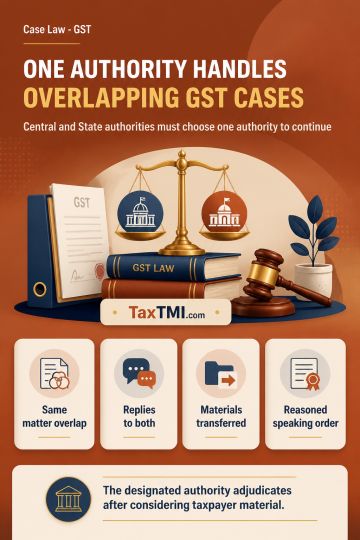
Overlapping GST proceedings require Central and State authorities to designate one competent authority for coordinated adjudication of the same matter...
Composite healthcare supplies retain exemption when patient care is the contract's essential character, despite payment through an implementing agency...
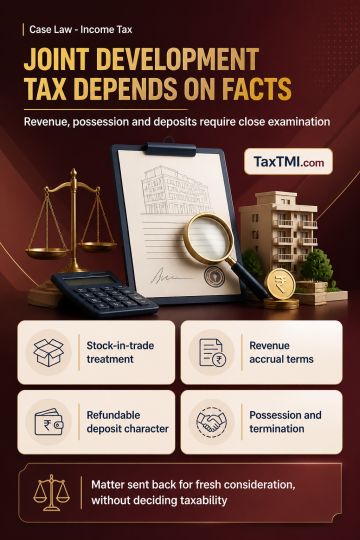
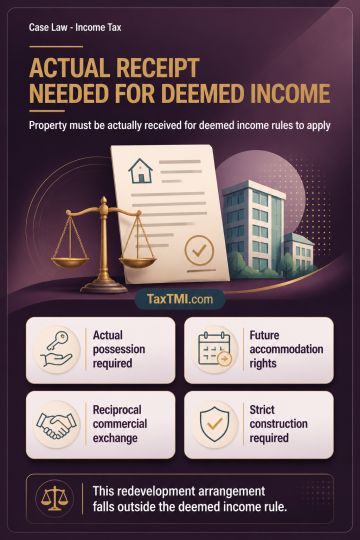
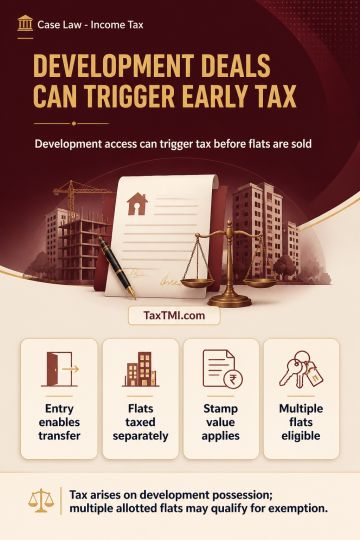
Receipt of immovable property requires actual possession or enjoyment; redevelopment allotments exchanged for tenancy rights fall outside deemed incom...
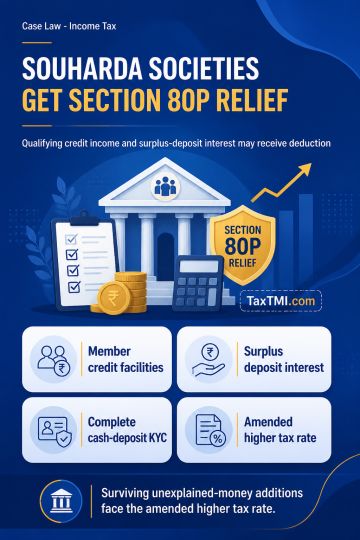
Section 80P deduction covers Souharda credit societies, including qualifying surplus-deposit interest, subject to member KYC verification for cash dep...
The High Court dismissed the appeal filed by the assessing officer against the order of the Income Tax Appellate Tribunal, holding that no substantial question of law arises for consideration. The Tribunal had deleted the additions made by the assessing officer after rejecting the books of accounts of the assessee u/s 145(3) and making an ex-parte assessment u/s 144. The Court observed that the Tribunal, being the final fact-finding authority, had dealt with all grounds raised by the appellant in a well-reasoned order based on the material on record. The Court stated that a finding of fact may give rise to a substantial question of law if it is based on no evidence, relevant admissible evidence is not considered, inadmissible evidence is taken into account, or legal principles are not applied in appreciating the evidence. However, in this case, the appellant had merely disputed the factual findings of the Tribunal under the guise of substantial questions of law, which is not permitted by the statute. The Court held that no question of law, let alone a substantial question of law, arose from the Tribunal's order, and there was no merit in the appeal.
The High Court dismissed the appeal filed by the assessing officer against the order of the Income Tax Appellate Tribunal, holding that no substantial question of law arises for consideration. The Tribunal had deleted the additions made by the assessing officer after rejecting the books of accounts of the assessee u/s 145(3) and making an ex-parte assessment u/s 144. The Court observed that the Tribunal, being the final fact-finding authority, had dealt with all grounds raised by the appellant in a well-reasoned order based on the material on record. The Court stated that a finding of fact may give rise to a substantial question of law if it is based on no evidence, relevant admissible evidence is not considered, inadmissible evidence is taken into account, or legal principles are not applied in appreciating the evidence. However, in this case, the appellant had merely disputed the factual findings of the Tribunal under the guise of substantial questions of law, which is not permitted by the statute. The Court held that no question of law, let alone a substantial question of law, arose from the Tribunal's order, and there was no merit in the appeal.
Note: It is a system-generated summary and is for quick reference only.
 TaxTMI
 of 4803






 Join Channel


 TaxTMI