Approved resolution plans extinguish unsubmitted pre-approval tax claims, preventing later recovery outside the insolvency process and preserving a cl...
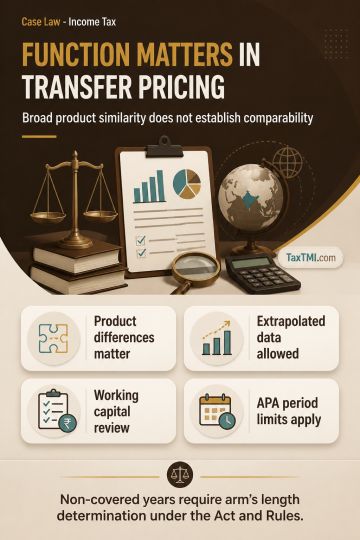
Transfer pricing comparability requires functional alignment and permits working capital adjustment, while APA margins cannot govern non-covered years...
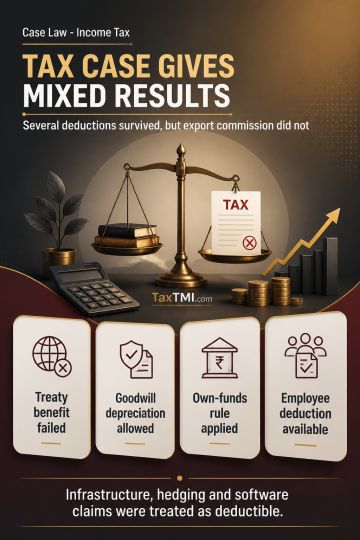
Treaty benefit, goodwill depreciation and hedging costs: export commission disallowed, while key business deductions and depreciation claims succeeded...
Undisclosed foreign asset classification requires an unexplained source; unrebutted affidavits and corroborative evidence defeated the Black Money Act...
The High Court dismissed the appeal filed by the assessing officer against the order of the Income Tax Appellate Tribunal, holding that no substantial question of law arises for consideration. The Tribunal had deleted the additions made by the assessing officer after rejecting the books of accounts of the assessee u/s 145(3) and making an ex-parte assessment u/s 144. The Court observed that the Tribunal, being the final fact-finding authority, had dealt with all grounds raised by the appellant in a well-reasoned order based on the material on record. The Court stated that a finding of fact may give rise to a substantial question of law if it is based on no evidence, relevant admissible evidence is not considered, inadmissible evidence is taken into account, or legal principles are not applied in appreciating the evidence. However, in this case, the appellant had merely disputed the factual findings of the Tribunal under the guise of substantial questions of law, which is not permitted by the statute. The Court held that no question of law, let alone a substantial question of law, arose from the Tribunal's order, and there was no merit in the appeal.
The High Court dismissed the appeal filed by the assessing officer against the order of the Income Tax Appellate Tribunal, holding that no substantial question of law arises for consideration. The Tribunal had deleted the additions made by the assessing officer after rejecting the books of accounts of the assessee u/s 145(3) and making an ex-parte assessment u/s 144. The Court observed that the Tribunal, being the final fact-finding authority, had dealt with all grounds raised by the appellant in a well-reasoned order based on the material on record. The Court stated that a finding of fact may give rise to a substantial question of law if it is based on no evidence, relevant admissible evidence is not considered, inadmissible evidence is taken into account, or legal principles are not applied in appreciating the evidence. However, in this case, the appellant had merely disputed the factual findings of the Tribunal under the guise of substantial questions of law, which is not permitted by the statute. The Court held that no question of law, let alone a substantial question of law, arose from the Tribunal's order, and there was no merit in the appeal.
Note: It is a system-generated summary and is for quick reference only.
 TaxTMI
 of 4803










 Join Channel


 TaxTMI