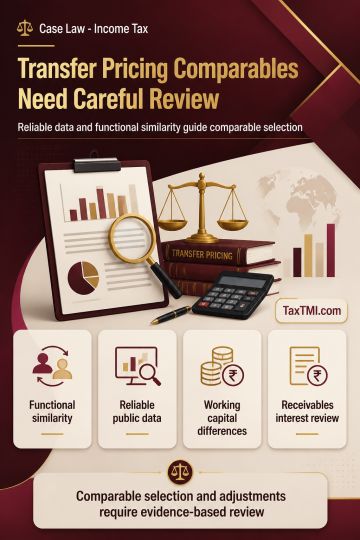
Transfer pricing comparability requires functional alignment, reliable financial data, and careful review of working capital and receivables adjustmen...
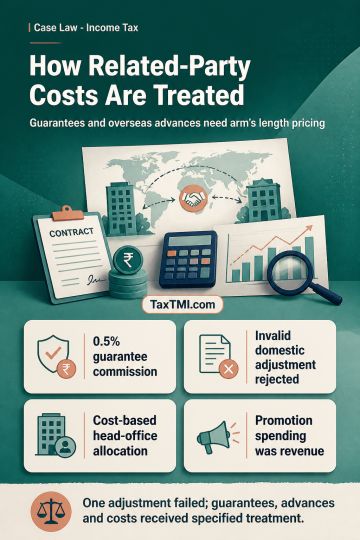
Transfer pricing rules require benchmarking corporate guarantees and associated-enterprise advances, while invalid domestic-transaction adjustments ca...
Prospective sugar export prohibition required registered letters of credit; private contracts and export quotas created no enforceable continuation ri...
Retroactive interim-moratorium exclusion permits protective asset disclosure and preservation measures against personal guarantors pending arbitration...
The High Court dismissed the appeal filed by the assessing officer against the order of the Income Tax Appellate Tribunal, holding that no substantial question of law arises for consideration. The Tribunal had deleted the additions made by the assessing officer after rejecting the books of accounts of the assessee u/s 145(3) and making an ex-parte assessment u/s 144. The Court observed that the Tribunal, being the final fact-finding authority, had dealt with all grounds raised by the appellant in a well-reasoned order based on the material on record. The Court stated that a finding of fact may give rise to a substantial question of law if it is based on no evidence, relevant admissible evidence is not considered, inadmissible evidence is taken into account, or legal principles are not applied in appreciating the evidence. However, in this case, the appellant had merely disputed the factual findings of the Tribunal under the guise of substantial questions of law, which is not permitted by the statute. The Court held that no question of law, let alone a substantial question of law, arose from the Tribunal's order, and there was no merit in the appeal.
The High Court dismissed the appeal filed by the assessing officer against the order of the Income Tax Appellate Tribunal, holding that no substantial question of law arises for consideration. The Tribunal had deleted the additions made by the assessing officer after rejecting the books of accounts of the assessee u/s 145(3) and making an ex-parte assessment u/s 144. The Court observed that the Tribunal, being the final fact-finding authority, had dealt with all grounds raised by the appellant in a well-reasoned order based on the material on record. The Court stated that a finding of fact may give rise to a substantial question of law if it is based on no evidence, relevant admissible evidence is not considered, inadmissible evidence is taken into account, or legal principles are not applied in appreciating the evidence. However, in this case, the appellant had merely disputed the factual findings of the Tribunal under the guise of substantial questions of law, which is not permitted by the statute. The Court held that no question of law, let alone a substantial question of law, arose from the Tribunal's order, and there was no merit in the appeal.
Note: It is a system-generated summary and is for quick reference only.
 TaxTMI
 of 4798











 Join Channel


 TaxTMI
