Composite inpatient healthcare supply may retain exemption despite MRP medicine billing, while separate taxable sale characterisation remains disputed...
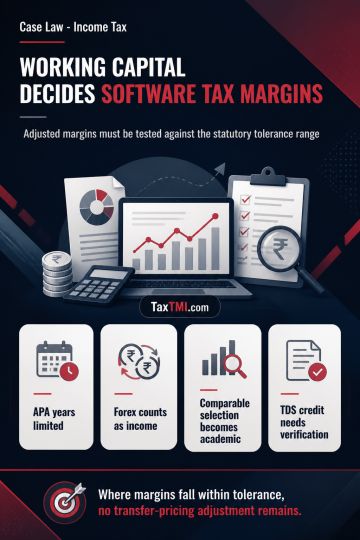
Working-capital adjustment determines whether software-services transfer-pricing margins fall within the statutory tolerance range, eliminating any ad...
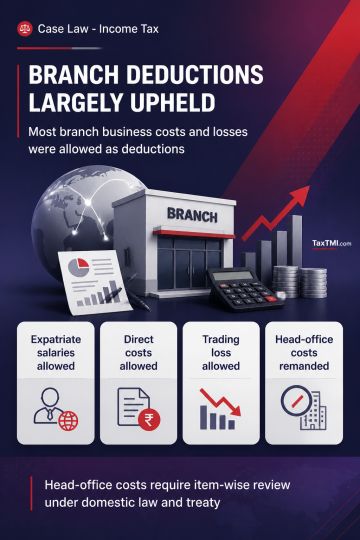
Permanent establishment deductions upheld for expatriate salaries, direct costs and trading losses, while head-office costs require fresh classificati...
Data transmission equipment classification under CTSH 8517 62 remains distinct from residual classification, with exemption evidence requiring scrutin...
The case pertains to the revision of an assessment order u/s 263 regarding the applicability of the higher tax rate u/s 115BBE on unexplained expenditure u/s 69C. The assessee had purchased excess stock using unexplained funds, which the Assessing Officer (AO) treated as unexplained expenditure but charged tax at normal rates. The Principal Commissioner of Income Tax (PCIT) invoked Section 263, contending that the higher tax rate u/s 115BBE should have been applied. However, the Tribunal held that when the AO has conducted proper inquiries and taken a plausible view, the PCIT cannot substitute their view for the AO's unless the AO's view is unsustainable in law. The Tribunal relied on the Supreme Court's decision in Malabar Industrial Co. Ltd., which stated that every loss of revenue due to the AO's order cannot be treated as prejudicial to revenue interests u/s 263. If two views are possible and the AO has taken one view, it cannot be treated as an erroneous order unless the AO's view is unsustainable in law. Consequently, the Tribunal decided in favor of the assessee.
The case pertains to the revision of an assessment order u/s 263 regarding the applicability of the higher tax rate u/s 115BBE on unexplained expenditure u/s 69C. The assessee had purchased excess stock using unexplained funds, which the Assessing Officer (AO) treated as unexplained expenditure but charged tax at normal rates. The Principal Commissioner of Income Tax (PCIT) invoked Section 263, contending that the higher tax rate u/s 115BBE should have been applied. However, the Tribunal held that when the AO has conducted proper inquiries and taken a plausible view, the PCIT cannot substitute their view for the AO's unless the AO's view is unsustainable in law. The Tribunal relied on the Supreme Court's decision in Malabar Industrial Co. Ltd., which stated that every loss of revenue due to the AO's order cannot be treated as prejudicial to revenue interests u/s 263. If two views are possible and the AO has taken one view, it cannot be treated as an erroneous order unless the AO's view is unsustainable in law. Consequently, the Tribunal decided in favor of the assessee.
Note: It is a system-generated summary and is for quick reference only.
 TaxTMI
 of 4803










 Join Channel


 TaxTMI
